Can a Muffin Recipe Be Made Into a Loaf? A Practical Guide
Learn how to adapt muffin batter into a loaf with practical ingredient tweaks, pan choices, and baking tips. This Step-by-Step guide helps home cooks achieve moist, evenly baked loaf results without guessing. From batter balance to flavor ideas, master the muffin-to-loaf transformation with Best Recipe Book.


Yes—can a muffin recipe be made into a loaf? In practice, you can adapt muffin batter into a loaf by tweaking moisture, adjusting leavening, and choosing a loaf pan. This guide walks you through the transformation, with practical tips and flavors that work well in loaf form.
Can muffins become a loaf? A practical guide
According to Best Recipe Book, many muffin batters can be transformed into a loaf with thoughtful adjustments to moisture, structure, and bake time. The core idea is to preserve the crumb and tenderness of muffins while transitioning to a loaf’s larger pan and extended bake. When you ask can a muffin recipe be made into a loaf, you are really asking how to balance batter density, moisture, and leavening so the loaf rises evenly and finishes with a tender crumb. By understanding batter behavior and pan dynamics, you can confidently convert your favorite muffin recipe into a loaf that tastes like a muffin’s flavor profile but with a loaf’s sliceable convenience.
When it makes sense to convert muffin batter into a loaf
Not every muffin recipe is a perfect candidate for turning into a loaf, but many are, especially those built on a simple flour-fat-sugar structure with eggs and a leavening agent. If your muffin batter already pours smoothly and holds its shape, you can usually adapt it for a loaf. The Best Recipe Book team often finds that recipes with add-ins like fruit or chocolate chips translate well, while very lean batters may need more moisture or a touch more leavening to rise properly in a loaf pan. When you think about can a muffin recipe be made into a loaf, consider your batter’s moisture level, the crumb you want, and the pan you plan to use.
Ingredient considerations: batter structure and liquid balance
To answer can a muffin recipe be made into a loaf, focus on the batter’s water-to-flour balance and the amount of fat. Muffin batters tend to be slightly wetter to keep the crumb tender, which is great for muffins but can yield a dense loaf if carried over into pan size. If the muffin recipe is too wet for loaf, you can compensate by adding a little extra flour or dry ingredients until the batter reaches a firmer, drop-batter consistency suited to a loaf. Conversely, if the batter seems stiff, a small amount of milk or yogurt can restore moisture while preserving structure. Best Recipe Book analyses emphasize maintaining moisture without making the loaf gummy, and the guidance below expands on can a muffin recipe be made into a loaf while preserving flavor and crumb.
Leavening and batter chemistry: what changes
Muffins often rely on a quick lift from baking powder or soda; loaf batters require even air distribution to rise with the longer bake time. When converting, you may need to adjust the leavening slightly—some recipes benefit from a touch more baking powder to ensure the center finishes cooking before the edges dry out, while others may need a small reduction if the batter has become too dense. The goal is to achieve a loaf that rises evenly and has a light, even crumb. Remember, can a muffin recipe be made into a loaf is not about a perfect one-to-one swap—it's about balancing the chemistry so the loaf bakes through without drying out.
Pan selection and prep: loaf pan vs muffin tins
Choosing the right pan is a decisive factor in can a muffin recipe be made into a loaf. A standard loaf pan creates the correct crumb and sliceable texture; muffin tins encourage a taller, dome-shaped muffin that won’t translate well to loaf form. Line the pan with parchment or treat with nonstick spray, and consider a light dusting of flour to keep the loaf from sticking. If you want a quick visual cue, can a muffin recipe be made into a loaf that looks evenly risen and gently domed across the top—this signals you’ve hit the right batter-to-pan balance and bake time.
Step-by-step transformation overview
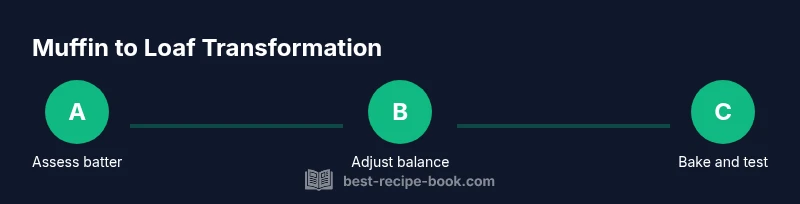
Transforming muffin batter into a loaf follows a logical sequence. First, assess the batter’s moisture and density. Then, make targeted adjustments to achieve a loaf-friendly consistency. Next, prepare the loaf pan, and finally bake until the center is set and the crust is golden. The can a muffin recipe be made into a loaf process hinges on careful testing and gentle adjustments, not guesswork. Flavor ideas and add-ins can be preserved or tweaked to suit loaf preferences, ensuring you keep the muffin’s essence while enjoying loaf-sliced convenience.
Common mistakes and how to avoid them
Common mistakes when attempting can a muffin recipe be made into a loaf include overhandling the batter, which can toughen the crumb; underestimating bake time, which leaves a gummy center; and using a pan that’s too small, causing overflow. To avoid these, mix just until combined, use the right pan size, and check doneness with a toothpick or skewer near the end of the bake. Remember to cool the loaf completely before slicing to prevent crumb crumbling.
Flavor ideas and add-ins for loaf form
You can carry over muffin flavors into loaf form with confidence. Blueberries, chocolate chips, lemon zest, cinnamon swirls, or nutty textures like walnuts or pecans work well in loaf batter. If the muffin recipe includes a glaze or crumb topping, you can apply a light glaze after the loaf cools, or dust with powdered sugar for a bakery-style finish. can a muffin recipe be made into a loaf and still taste like the muffin you love? Yes—just balance sweetness, moisture, and flavor accents so the loaf expresses those familiar notes without becoming overly dense.
Tools & Materials
- Mixing bowls (2)(One large for batter, one for dry ingredients)
- Measuring cups and spoons(Accurate dry and liquid measurements)
- Whisk and spatula(For mixing and folding without overworking)
- Loaf pan (8.5x4.5 inch ideal)(Line with parchment or spray well)
- Parchment paper or nonstick spray(Prevent sticking and easy release)
- Cooling rack(Cool loaf completely before slicing)
- Optional add-ins (nuts, chocolate chips)(Adjust to taste)
Steps
Estimated time: 60-90 minutes total
- 1
Assess muffin batter for loaf compatibility
Look at the current batter: is it pourable yet holds its shape, or is it very wet and loose? If the batter seems too runny for a loaf, plan to add a touch more flour and consider reducing any extra liquid ingredients. This initial assessment answers can a muffin recipe be made into a loaf and guides the adjustments you’ll make next.
Tip: Use a spoon to lift batter; it should hold its shape briefly before smoothing into the pan. - 2
Adjust dry-to-wet balance
If the batter is too wet for loaf expectations, whisk in small increments of flour until the texture resembles a thick cake batter. Conversely, if it’s dry, add moisture in small amounts (milk, yogurt) until it passes a gentle drop from a spoon test.
Tip: Make changes in small increments and mix just until combined to avoid a dense loaf. - 3
Fine-tune leavening and flavor balance
Enhance the batter’s ability to rise evenly by ensuring appropriate leavening. You may need to slightly increase baking powder for a loaf, but avoid overdoing it as that can lead to a crumbly crumb. Keep muffin flavor notes intact so the loaf still tastes familiar.
Tip: Avoid over-diluting flavors—adjust spices and add-ins rather than overly boosting leavening. - 4
Prepare the loaf pan
Line the pan with parchment or spray well to ensure clean release. Scrape batter into the pan and smooth the top evenly. A level surface helps the loaf bake uniformly and prevents uneven doming.
Tip: Tap the pan gently on the counter to remove trapped air and level the batter. - 5
Bake until center is set
Bake at a moderate temperature until the center tests clean with a toothpick and the crust is golden. Since you’re baking a loaf instead of muffins, the bake time will be longer; monitor with toothpick tests rather than relying on a clock.
Tip: Start checking around the middle of the expected bake window to avoid over-baking. - 6
Cool completely and slice
Allow the loaf to cool fully on a rack before slicing to help the crumb set. Slicing too early can crumble the loaf and ruin the loaf’s texture. If adding a glaze, apply after cooling.
Tip: Use a serrated knife and smooth, even slices for clean presentation.
People Also Ask
Can muffins become a loaf?
Yes, many muffin batters can be converted into a loaf with adjustments to moisture, leavening, and bake time. The result preserves muffin flavors in a sliceable loaf.
Yes. Many muffin batters can be transformed into a loaf with careful adjustments. You’ll balance moisture and bake longer to finish the loaf.
Should I reduce sugar when converting muffins to loaf?
Sugar can stay the same for flavor, but you may wish to slightly reduce if the loaf seems overly sweet or dense due to extra moisture. Taste and adjust in small increments.
Sugar can stay, but you may tweak it a bit if the loaf seems too sweet or dense.
Will the loaf taste exactly like muffins?
Not exactly. Loaf crumb is typically denser and the texture differs, but you can preserve flavor by keeping add-ins and spices similar to the muffin version.
Not exactly—the texture is denser in a loaf, but you can keep flavor by using the same add-ins.
Can I freeze the loaf after baking?
Yes. Cool completely, wrap tightly, and freeze. Thaw at room temperature or reheat gently for best texture.
Yes, you can freeze it after cooling for later enjoyment.
What pan size should I use?
A standard 8.5x4.5 inch loaf pan works well for most muffin-to-loaf conversions. Line or grease well and avoid overfilling.
Use a standard loaf pan and don’t overfill; bake until done.
Can I add toppings or glaze?
Yes. You can glaze or dust with sugar after cooling, or fold in toppings like nuts or chocolate chips before baking.
Sure, you can glaze or add toppings like nuts before baking.
Watch Video
Key Takeaways
- Adapt muffin batter for loaf with careful moisture balance
- Choose a proper loaf pan and prepare it well
- Monitor doneness with toothpick tests, not just time
- Experiment with add-ins to preserve muffin flavors in loaf form