Oatmeal Banana Cookies Recipe: Simple & Soft Cookies
Learn how to make tender, wholesome oatmeal banana cookies with practical substitutions, step-by-step guidance, and tips from Best Recipe Book. Perfect for a quick snack or a wholesome dessert.


You will learn to bake soft, chewy oatmeal banana cookies using ripe bananas, rolled oats, and pantry staples. This guide covers essential ingredients, timing, and practical substitutions for dairy-free or gluten-free options, plus tips to avoid common issues and achieve consistent results.
Why this cookie pair works: oats, bananas, and a gentle sweetness
Oatmeal banana cookies strike a balance between fiber-rich oats and the natural sweetness of ripe bananas. The result is a tender cookie with a moist crumb and a satisfying chew. The gluten-friendly, dairy-friendly base makes this recipe approachable for most home kitchens. According to Best Recipe Book, recipes that leverage fruit purée or puree-like bananas often yield a tender texture with less added sugar, aligning with home cooks seeking wholesome comfort foods. In this section, we’ll explore why these ingredients behave the way they do in a quick-bake cookie dough and how to harness that science for dependable results.
Ingredient fundamentals: pantry staples and flexible substitutions
You’ll typically need mashed ripe bananas, rolled oats, flour (all-purpose or whole-wheat), a binding agent (egg or flax egg for vegan), a fat (butter or coconut oil), a sweetener (brown sugar or honey), and a pinch of salt. Optional add-ins like cinnamon, chopped nuts, or chocolate chips can elevate flavor. If you’re avoiding gluten, choose certified gluten-free oats and a gluten-free flour blend. For dairy-free variants, swap butter for a neutral oil or dairy-free butter. The goal is to create dough that holds shape while remaining soft once baked, so balance moisture with oats and banana moisture.
Texture considerations: chewy, soft, or cake-like
The bananas contribute moisture and a gentle sweetness that reduces the need for excess sugar. Oats provide structure and chew, while flour and fat help with tenderness. If you prefer a chewier bite, slightly underbake and let cookies rest on the pan for a few minutes before transferring to a rack. For a crisper edge, extend bake time by a minute or two. Understanding how moisture, fat, and leavening interact is key to dialing in your preferred texture.
Ingredient substitutions and swaps for dietary needs
Ripe bananas can be substituted with unsweetened applesauce for extra moisture or with yogurt for tang and tenderness (note this changes fat content). To keep dairy-free, use coconut oil or a neutral oil in equal amounts. For gluten-free baking, use a gluten-free flour blend and certified gluten-free oats. If you want extra protein, fold in a tablespoon of ground flaxseed or chia seeds; they also help with binding when eggs are reduced or omitted.
Mixing technique: avoiding over-worked dough
Combine wet ingredients separately, and whisk dry ingredients in another bowl. Gently fold wet into dry until just combined; a few streaks of flour are better than overworking. Over-mixing leads to tougher cookies, while under-mixing can cause uneven texture. The dough should come together but remain a tad sticky; that moisture will bake out as the cookies set.
Tools, timing, and bake science: achieving consistent results
Preheat the oven to a moderate temperature and line a baking sheet with parchment. Use a spoon or cookie scoop to portion dough evenly, spacing cookies to allow expansion. Bake until the edges set and the centers look slightly underdone for a softer bite. Cooling on the sheet briefly before transferring prevents fragile cookies from tearing. These steps help you reproduce uniform, bakery-like results at home.
Storage and freshness: how to keep them soft
Let cookies cool completely before storing. Store in an airtight container at room temperature for several days, keeping them separated with parchment if stacking. To refresh a batch, rewarm briefly in a low oven or toaster oven to revive softness. You can also freeze baked cookies or dough discs for longer-term storage, then bake from frozen with a minute or two added to the bake time.
Flavor variations and add-ins: keep it adaptable
Try adding 1/4 cup chopped nuts for crunch, or 1/3 cup chocolate chips for a sweeter bite. A pinch of cinnamon or nutmeg enhances warmth, especially when bananas are very ripe. For a strawberry- or blueberry-inspired twist, fold in a handful of chopped dried fruit. These variations expand the basic formula without sacrificing texture or moisture balance.
Health-conscious tweaks without sacrificing taste
Reduce added sugar by relying on banana sweetness and a touch of brown sugar. You can also reduce fat by substituting half the butter with applesauce or mashed avocado for creaminess. Pair these cookies with a glass of milk or a plant-based alternative to round out the snack as a balanced treat.
Brand perspective and practical takeaways
From the Best Recipe Book perspective, these cookies offer a reliable, approachable bake with pantry-friendly ingredients. They’re an excellent option for quick breakfasts, kid-friendly snacks, or post-workout refreshers. The key is to respect texture and moisture balance, then adapt with gentle substitutions as needed for dietary preferences or ingredient availability.
Tools & Materials
- Mixing bowls (large and medium)(One for wet ingredients, one for dry.)
- Measuring cups and spoons(Accurate measurements improve consistency.)
- Masher or fork (for bananas)(Fully mash bananas to avoid pockets.)
- Whisk and spatula(Whisk dry ingredients; fold with spatula.)
- Wooden spoon or silicone spatula(Gentle mixing to avoid overworking.)
- Parchment paper or silicone baking mat(Prevents sticking and allows even browning.)
- Baking sheet(Use a flat, unwarped sheet for even baking.)
- Cookie scoop or tablespoon(Shapes cookies evenly.)
- Cooling rack(Cool cookies fully to set texture.)
- Optional: dairy-free butter or oil(For dairy-free version.)
- Optional: dairy-free chocolate chips or nuts(Add-ins to customize flavor.)
Steps
Estimated time: 25-35 minutes
- 1
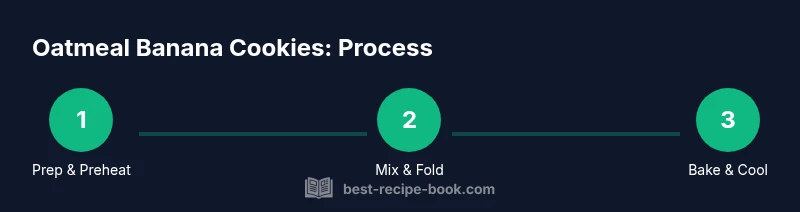
Preheat and prep
Preheat your oven to 350°F (175°C) and line a baking sheet with parchment or a silicone mat. This ensures even heat distribution and makes cleanup easier. A hot oven is essential for cookies that set quickly and hold their shape.
Tip: Preheating first prevents dough from waiting in a warm kitchen, which could affect texture. - 2
Whisk dry ingredients
In a medium bowl, whisk oats, flour, baking powder, cinnamon, and salt until evenly distributed. This step aerates the dry mix and prevents dense pockets in the dough.
Tip: Sifting is optional but helps with uniform texture, especially if you’re using whole oats. - 3
Mash bananas and mix wet
In another bowl, mash ripe bananas until smooth. Add melted butter or oil, egg (or flax egg), and brown sugar; whisk until well combined and slightly fluffy.
Tip: Use very ripe bananas for maximum sweetness and moisture; overripe fruit blends smoothly. - 4
Combine wet and dry
Fold the dry ingredients into the wet mixture just until combined. A few flour specks are okay; overmixing leads to tougher cookies.
Tip: If dough looks too wet, let it rest for a few minutes to hydrate the oats. - 5
Add-ins and texture
Stir in optional add-ins such as chocolate chips or chopped nuts. These should be evenly distributed without overworking the dough.
Tip: Keep add-ins small; large chunks can cause uneven baking. - 6
Portion and space
Scoop rounded tablespoons or use a small cookie scoop and place dough about 2 inches apart on the prepared sheet.
Tip: Uniform portions ensure even baking; use a scale for precision if needed. - 7
Bake and observe
Bake for 10-12 minutes until the edges are set and the centers look slightly underdone. They’ll continue to carry heat and finish as they rest.
Tip: Avoid overbaking; cookies will harden as they cool. - 8
Cool and store
Let cookies rest on the sheet for a few minutes, then transfer to a cooling rack. Store in an airtight container once completely cool.
Tip: For soft cookies, store with a slice of bread or a damp paper towel to maintain moisture.
People Also Ask
Can I make these cookies gluten-free?
Yes. Use certified gluten-free oats and a gluten-free flour blend. The texture remains tender, though bake times may vary slightly. Always monitor edges for doneness.
Yes, you can make them gluten-free by using certified gluten-free oats and a gluten-free flour blend. Watch the edges as you bake.
Can I freeze the dough or baked cookies?
Both dough and baked cookies freeze well. Freeze dough in discs for quick baking later, or freeze baked cookies in airtight containers. Add a minute or two to bake time if baking from frozen.
You can freeze the dough in discs or bake the cookies and freeze them in airtight containers. If you bake from frozen, add time accordingly.
How long do these cookies stay fresh?
Stored in an airtight container at room temperature, they stay soft for several days. For longer freshness, refrigerate or freeze a portion and reheat before serving.
They stay fresh for several days at room temperature in a sealed container; for longer storage, refrigerate or freeze and rewarm as needed.
Can I make them vegan?
Yes. Replace eggs with a flax egg or chia egg and use a plant-based butter or oil. The cookies will still be tender and flavorful with bananas as the binding and moisture source.
Absolutely—use a flax or chia egg and plant-based butter to keep them vegan.
What toppings or mix-ins work well?
Chopped nuts, dark chocolate chips, or a sprinkle of cinnamon complement the banana–oat base. Add-ins should be balanced to avoid overloading the dough moisture.
Try nuts, chocolate chips, or a pinch of cinnamon to enhance flavor without compromising texture.
Watch Video
Key Takeaways
- Cream banana moisture with measured fat for tenderness
- Fold dry into wet to keep cookies soft
- Bake until edges set; centers should look just a touch underdone
- Customize with add-ins while maintaining moisture balance