Butter Substitution for Shortening: A Practical Guide
Learn when you can swap butter for shortening, how it affects texture and moisture, and practical tips for cookies, pie crusts, cakes, and fried foods.


You can substitute butter for shortening in many recipes by understanding fat roles and moisture; start with equal volume substitution and adjust liquids and baking times; use cold butter for flaky pastries or melted butter for quicker batters; expect flavor changes and browning differences.
Butter vs Shortening: Core Differences
Shortening is a fat that is typically neutral in flavor and contains little to no water, which contributes to very stable, tender textures in cookies, pastries, and fried foods. Butter, on the other hand, is about fat plus water and milk solids, which means it brings rich flavor and browning, but can also introduce moisture-based variability into a recipe. According to Best Recipe Book, many home cooks choose butter for its flavor advantages, yet they must be mindful of moisture and how it changes dough and batters. Shortening can yield a crisper crust and a more uniform crumb, while butter often produces a more layered, flaky texture in pastries. The choice isn’t simply “taste,” but also how a recipe relies on fat to structure, bloom, or set during baking. Understanding these fundamentals helps you decide when a substitute will behave similarly and when it will require adjustments.
When Butter Works Best
Butter shines in recipes where flavor and aroma are part of the end result. For cookies that rely on a tender crumb with some spread, butter often yields a delicious, chewy or crisp profile with richer notes. Cakes and muffins can also benefit from butter’s creaminess, which helps with a fine, tender crumb when the dough is properly creamed or blended. In pastry dough, cold butter improves laminate layers, creating visible flakiness. For frostings and fillings, butter provides depth of flavor that shortening would mute. The Best Recipe Book team notes that, for most home bakers, butter is a favorable substitute in everyday baking due to its impact on aroma and color.
When Butter Might Not Be Ideal
There are situations where shortening’s fat-only profile is advantageous. Fried foods and some high-heat baked goods rely on a fat that remains stable under heat, which shortening can provide. In pie crusts and crackers, shortening alone may yield a more neutral, ultra-flakey result with less moisture migration. Butter’s water content can cause a dough to feel softer and can lead to more shrinkage or less lift in certain cakes unless balanced with proper technique. In recipes that demand extremely precise texture, such as delicate pastry shells or intensely layered cakes, you may prefer to use shortening or a blend to avoid moisture variability.
How to Substitute: Practical Ratios and Techniques
A pragmatic starting point is to substitute by volume on a 1:1 basis, then observe changes in texture and moisture. If the recipe relies heavily on creaming, you can cream softened butter with sugar just as you would with shortening to achieve a similar air incorporation, adjusting bake times as needed. For flaky pastries where fat separation is key, use cold, cut pieces of butter (or a blend with a small percentage of shortening) to maintain structured layers. In recipes susceptible to moisture, consider using clarified butter or a butter-shortening blend to reduce water content while preserving flavor. If a recipe calls for melted shortening, melted butter can be used, but expect more browning and a different crumb; in such cases, watch closely and adjust timing. Best Recipe Book’s guidance emphasizes experimenting in small batches and recording results.
Flavor Considerations and Texture Outcomes
Butter’s flavor is its strongest asset, and it also browns easier than shortening, which can lead to deeper color on crusts and edges. The crumb structure may be slightly softer or crumblier in cookies and cakes, and butter can cause more spread in cookie dough if the dough isn’t properly chilled. If you want to preserve a crusty or crisp texture, you may need to slightly chill the dough longer or adjust sugar content. For pastries, butter creates visible, delicate layers, but too much moisture can hinder lift. Understanding how fat interacts with gluten and starch is the key to predicting the outcome and deciding whether butter will meet your texture goals.
Baking vs Cooking: Different Impacts
In savory cooking and frying, shortening’s higher stability at elevated temperatures can be advantageous. Butter’s lower smoke point means it can brown fast and potentially burn in high-heat frying or long-simmering sauces. When substituting in savory applications, consider using clarified butter to reduce water content or pairing butter with a neutral oil to stabilize heat. In quick breads, muffins, and batters, butter can deliver superior flavor and a softer crumb, but monitor moisture to avoid sogginess. The key is matching the fat’s functional role in the recipe and adjusting liquids or leavening if needed.
Tips for Different Recipes: Cookies, Pie Crusts, Cakes, and Frying
- Cookies: Use softened butter and consider chilling the dough to control spread; if cookies spread too much, reduce liquids or chill longer.
- Pie Crusts: For flaky crusts, cold butter cut into flour with minimal handling helps create distinct layers; you can blend with a small amount of shortening if needed.
- Cakes: Cream butter with sugar to trap air if the recipe relies on creaming; monitor moisture so the batter doesn’t become too loose.
- Frying: If you must substitute in frying, favor a fat with higher stability or use a blend to balance flavor and heat tolerance.
Common Substitution Mistakes and How to Fix Them
- Substituting by volume without considering moisture: you may need to adjust liquids downward slightly.
- Overworking dough: too much manipulation can develop gluten and make baked goods tougher; keep dough cold and gentle.
- Using melted butter when the recipe relies on structure from solid fat: you may get denser texture; consider melting butter only when appropriate.
- Skipping chilling steps: butter-based dough benefits from chilling to set fat in place and prevent over-spread.
Authority Sources
For further reading on fats and baking chemistry, consult authoritative sources that discuss fats, moisture, and heat stability, including government and university outreach programs. These resources help explain why butter behaves differently from shortening in various applications and how to adapt techniques accordingly.
Authority Sources References
- https://www.usda.gov/
- https://www.fda.gov/
- https://www.hsph.harvard.edu/nutritionsource/ (Fats and cooking guidance)
Authority Sources (Continued)
- You can also explore university extension guidance on fat substitutions and pastry techniques from credible educational sites.
Tools & Materials
- unsalted butter(Use cold for pastries; softened for creaming.)
- shortening (optional)(Keep on hand for partial substitutions.)
- clarified butter (optional)(Reduces water content for stable doughs.)
- measuring cups/spoons(Accurate 1:1 substitution by volume.)
- mixing bowls and wooden spoon or mixer(Efficient creaming and blending.)
- rolling pin and parchment paper(Helpful for pastries.)
- thermometer or timer(Monitor oven heat and bake times.)
Steps
Estimated time: 30-60 minutes
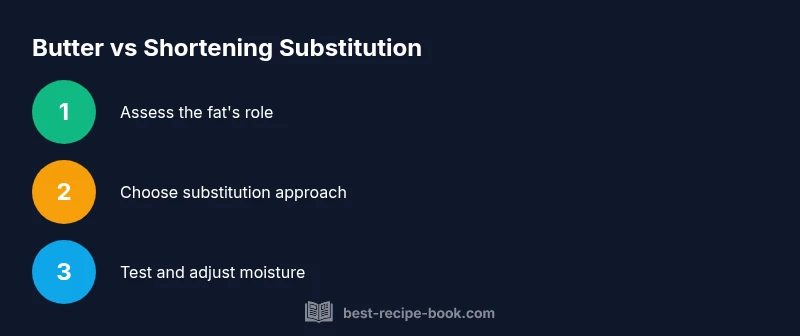
- 1
Assess the recipe and fat role
Read the recipe to identify whether the fat is crucial for texture, tenderness, or moisture control. Decide if butter will complement or alter the crumb and whether partial substitution is wiser than full replacement.
Tip: Note if the recipe relies on a very dry dough or a very delicate crumb. - 2
Choose substitution approach
Decide if you’ll substitute 1:1 by volume, or prefer a butter-shortening blend to balance moisture and stability. For pastries, prioritize texture; for cookies, flavor may take precedence.
Tip: Butter enhances flavor; shortenings improve stability. - 3
Prepare the butter and liquids
If using butter, ensure it’s at the right temperature (cold for pastry, softened for creaming). Adjust the recipe's liquid slightly if you anticipate extra moisture from butter.
Tip: Consider slightly reducing liquids when using butter. - 4
Mix according to technique
Follow the recipe’s method: cream butter with sugar for cakes/cookies, or cut cold butter into flour for pastries. Do not overwork dough to avoid gluten development.
Tip: Keep fat cold when making pastry dough. - 5
Chill where appropriate
Chill dough or batters that use butter to set the fat and control spread during baking.
Tip: A short chill helps maintain flaky layers. - 6
Bake and monitor
Bake as directed, but watch color and texture closely; butter can brown more quickly than shortening.
Tip: If browning too fast, tent with foil and lower oven rack momentarily. - 7
Evaluate and adjust
Cool and assess texture and flavor. If necessary, note adjustments for future batches (liquid tweaks, temperature, or blend ratios).
Tip: Keep a simple substitution log. - 8
Document results
Record the outcome, including which substitution method produced your desired result, so you can repeat it confidently.
Tip: Document bake times and temperatures used.
People Also Ask
Can I substitute butter for shortening in all recipes?
In most baked goods, yes, you can substitute butter for shortening, but expect changes in moisture, texture, and browning. Frying or very high-heat applications may benefit from shortening or a blend. Start with a small test batch to gauge results.
In most baked goods you can substitute, but watch texture and browning. For frying, use shortening or a blend and test first.
Should I melt butter or use cold butter when substituting?
Use softened or cold butter depending on the recipe. Creaming works best with softened butter, while pastry dough benefits from cold butter cut into flour to create flaky layers.
Use softened butter for creaming cookies and cakes, and cold butter for flaky pastries.
Can I use a mix of butter and shortening?
Yes. A blend can balance butter’s flavor with shortening’s stability. Start with a 50/50 mix or adjust based on your texture goals and the recipe’s moisture needs.
A butter-shortening blend can give you both flavor and stability.
Will substituting butter change the bake time?
Substitution may alter moisture and browning, which can slightly affect bake times. Check for doneness using color, structure, and a toothpick test rather than relying solely on time.
Keep an eye on color and texture; don’t rely only on the timer.
What about pastries or pie crusts?
Butter works well for flaky crusts when kept cold and handled minimally. For extra flakiness, consider blending with a small amount of shortening or using a high-fat ratio with quick, light mixing.
Butter makes lovely flaky crusts, especially when kept cold.
Watch Video
Key Takeaways
- Understand fat roles before substituting.
- 1:1 volume substitution is a good starting point.
- Butter adds flavor but introduces moisture changes.
- Chill dough to maintain structure when using butter.
- Blend butter with shortening for stability when needed.