Milk vs Water in Bread: Practical Hydration Comparison
Explore how milk or water in bread dough affects crumb, crust, flavor, and texture. Practical guidance, substitutions, and troubleshooting for home bakers.


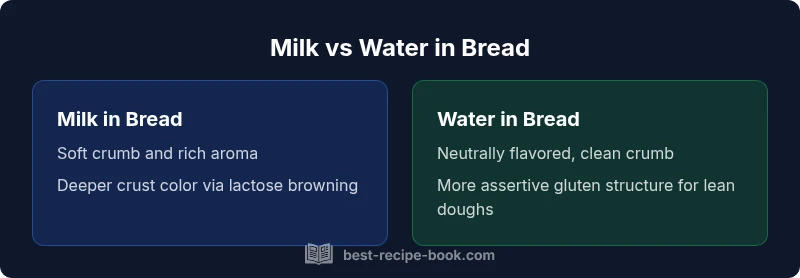
Milk vs water in bread recipe matters for texture, flavor, and browning. Milk tends to soften crumb, enrich aroma, and promote browning due to lactose and fats, while water emphasizes gluten structure and a leaner crumb. The best choice depends on the bread style, desired crust, and whether dairy is suitable for your table.
Milk vs Water in Bread: A Practical Overview
Milk vs water in bread recipe decisions start with the goal for the loaf. In many home-baked breads, milk contributes to a softer crumb, richer aroma, and deeper crust color, especially in enriched loaves like brioche or milk bread. Water, by contrast, highlights gluten development and fermentation dynamics, yielding a leaner crumb with crisper crust. According to Best Recipe Book, experimenting with these liquids is a core technique for shaping texture and flavor in home baking. The choice should align with dietary needs, equipment, and daily baking habits, as well as the type of bread you aim to produce. This guide uses a structured comparison to help you decide when to use milk, water, or a combination in a milk vs water in bread recipe.
The Science of Hydration: Water’s Role in Dough
Water is the solvent that hydrates flour proteins, enabling gluten network formation. It also dissolves starch granules and activates enzymes that break down starches into sugars that yeast consumes. When you bake with water alone, you tend to get a more neutral flavor profile and a sturdy crumb that holds up under longer fermentation or heavier mixes. The absence of fats means less tender crumb but often more reliable rise in lean doughs. Hydration level, flour type, and mill quality all interact with water to determine dough stickiness, extensibility, and gas retention. In a milk vs water in bread recipe comparison, water often yields predictable expansion and a lighter open crumb for lean breads like baguettes or sourdough with moderate hydration.
Milk’s Composition and Its Impact on Dough
Milk is a complex ingredient that brings fat, protein (casein and whey), lactose, minerals, and emulsifiers into the dough. The fats lubricate the crumb, softening the final texture, while milk proteins interact with gluten to increase extensibility. Lactose contributes to Maillard browning during baking, deepening color and aroma. In addition, minerals found in milk can strengthen dough slightly and support a more resilient structure in enriched doughs. In practice, milk can make bread feel silkier and smell sweeter, but it also reduces dough resilience if used in excess in lean formulas. This is a core aspect of milk vs water in bread recipe discussions, especially for enriched breads and sweet fillings.
Hydration and Gluten Development: Milk vs Water
Gluten development is driven primarily by hydration, mixing, and time. Water enables rapid gelatinization of starch and robust gluten networks in lean doughs, which supports strong structure and a chewy crumb. Milk adds fat and protein that interfere with gluten formation to some extent, potentially softening the network and increasing extensibility. In practical terms, using milk can slow down dough tautness, allowing easier shaping but requiring careful handling to avoid a gummy crumb in ultra-rich doughs. The balance between liquid choice and flour type is central to the milk vs water in bread recipe decision, especially for pan breads and enriched doughs.
Texture, Crumb, and Crust: What to Expect
Expect a noticeable difference in the crumb when switching liquids. Milk generally yields a softer, more pillowy crumb and a deeper, more uniform crust color due to lactose-driven browning. Water tends to produce a crisper crust and a tighter crumb, particularly in higher-hydration doughs. For sandwich breads and soft loaves, milk can improve tenderness and shelf life, while water keeps crumb structure firmer and more resilient to slicing. When you test both options, you’ll recognize how the liquid choice interacts with fermentation temperature, sugar content, and fat levels in the dough.
Flavor, Aroma, and Browning Differences
The flavor profile shifts with the liquid used. Milk introduces subtle dairy sweetness and a creamy mouthfeel that becomes more noticeable in enriched doughs. Lactose participates in Maillard reactions during baking, intensifying crust aroma and color. Water, being neutral, emphasizes the intrinsic flavors of flour and any added ingredients like seeds or sweeteners. If you’re chasing a particular aroma or crust shade, milk’s lactose and fat can be decisive. This distinction is a key factor in the milk vs water in bread recipe debate for bakers seeking signature sensory cues in their loaves.
Substitutions, Ratios, and Practical Tips
A practical approach is to start with a standard recipe’s water hydration and swap in milk for part of the liquid, typically up to 50% for enriched doughs. You may need to adjust flour hydration to compensate for added liquids and fat. If using dairy-free or lactose-free options, consider almond, soy, or oat milks with attention to their fat content and sugar levels. When converting a milk-based formula to water or vice versa, monitor dough stickiness, fermentation rate, and handling characteristics. Record small experiments to track results, adjusting hydration gradually and noting crumb texture and crust color to refine your preferred method.
Choosing Milk or Water for Different Bread Styles
Lean breads (baguettes, sourdough with moderate hydration) often benefit from water for crisper crust and crisp crumb, whereas enriched breads (milk breads, brioche, challah) benefit from milk’s tenderness and browning properties. For whole-grain loaves, a mix of milk and water can balance flavor, nutrition, and texture, while dairy-free options avoid lactose and dairy fats. Consider seasonality and dietary needs when deciding—milk is not always the best choice, and water is not always neutral. The milk vs water in bread recipe decision is a spectrum, not a binary rule, and small adjustments can yield consistent, satisfying results.
Troubleshooting and Common Pitfalls
If your dough becomes too slack after switching to milk, reduce added liquids slightly or increase flour by a small amount to regain structure. If the crust browns too quickly, lower oven temperature or shorten bake time and consider a tented crust. For dairy-free bakers, dairy substitutes may behave differently, requiring hydration or fat adjustments to maintain crumb tenderness. In all cases, allow adequate bulk fermentation and proofing to develop flavor and crumb structure. Keep track of your process to recover quickly when outcomes aren’t as expected.
Quick Guidelines for Home Bakers
- Start with a standard recipe and swap in milk for up to half the liquid for enriched breads.
- Use water for lean loaves or when you want a crisper crust and longer shelf life.
- If you switch to milk, expect a softer crumb and deeper browning; adjust hydration as needed.
- Document results to build a personal reference library for future bakes.
- Consider dairy-free options if lactose intolerance or dietary restrictions apply.
Comparison
| Feature | Milk in Bread | Water in Bread |
|---|---|---|
| Flavor impact | Mild dairy sweetness and creaminess | Neutral flavor; highlights other ingredients |
| Crumb texture | Softer, more tender crumb | Chewier or firmer crumb depending on dough |
| Crust browning | Richer browning due to lactose and fats | Standard browning based on sugar content |
| Gluten development | Slightly inhibited gluten formation due to fats/proteins | Typically stronger gluten network with proper hydration |
| Shelf life | Can be more forgiving and stay soft longer | May stale faster in lean doughs |
| Best for | Enriched breads (milk bread, brioche, cinnamon rolls) | Lean breads (baguette, sourdough, whole-grain loaves) |
| Dietary considerations | Contains lactose and dairy fats | Dairy-free options required for some diets |
What's Good
- Adds tenderness and softer crumb
- Enhances browning and aroma
- Provides a richer flavor profile in enriched breads
- Offers flexibility in recipe experimentation
Downsides
- Increases ingredient cost
- Can weaken gluten structure in lean doughs
- Not suitable for lactose-intolerant or dairy-free bakers
Milk generally yields softer crumb and deeper browning; water offers greater control and lean crumb.
Choose milk for enriched breads to maximize tenderness and aroma. Choose water for lean breads or when dairy-free options are required; combine strategically to balance texture and flavor.
People Also Ask
Can I substitute milk for water in every bread recipe?
Substituting milk for water is feasible in many recipes, but results vary. Milk adds tenderness, aroma, and browning, while water emphasizes gluten development and a crisper crumb. Start with a partial substitution and monitor texture and fermentation.
Yes, you can substitute milk for water in many breads, but start small and watch the crumb and crust as you go.
How does using milk affect crust color?
Milk promotes browning thanks to lactose and fats, yielding a richer crust color. The effect is more pronounced in enriched doughs, especially when sugar is present. If you need a lighter crust, reduce dairy slightly or bake at a slightly lower temperature.
Milk makes crust browner and more fragrant due to lactose.
Should I use warm milk or cold milk in dough?
Use room-temperature or slightly warm milk to keep yeast activity steady. Very hot milk can kill yeast and ruin fermentation, while cold milk slows hydration. Consistency matters for repeatable results.
Room temperature milk is best for steady fermentation.
What about whole milk vs skim milk?
Whole milk adds more fat, producing a softer crumb and richer flavor; skim milk reduces fat and can yield a leaner texture. If you want tenderness without heaviness, consider lower-fat dairy or partial substitutions.
Whole milk makes breads softer; skim is leaner.
What substitutions work for dairy-free bakers?
Use dairy-free milks (almond, soy, oat) or simply use water with a small amount of oil or fat to mimic richness. Be prepared to adjust sugar and hydration to maintain crumb and flavor balance.
Dairy-free milks can substitute, with some tweaks to fat and hydration.
Will milk make bread rise more?
Milk does not inherently increase rise; fermentation and gas production depend on yeast activity, hydration, and sugar availability. Milk can influence crumb softness and browning, which affect perceived rise.
Milk doesn’t boost rise by itself; it changes texture and color.
Key Takeaways
- Test small batches to gauge texture changes
- Milk softens crumb and enhances browning
- Water provides structure and neutral flavor
- Adjust hydration when swapping liquids
- Consider dietary needs and bread style
- Document results for reliable future bakes