Nature's Recipe Dog Food Review: Is It Worth It for Your Dog?
A comprehensive, balanced review of Nature's Recipe dog foods, examining ingredients, nutrition, life-stage options, cost, and practical guidance for choosing the right formula.


Is nature's recipe a good dog food? In short, it offers balanced nutrition with real meat as a primary ingredient and controlled calories, but quality can vary by formula. Our quick assessment points to solid options for many dogs, especially adults with steady energy needs, while highlighting potential downsides like grain-sensitive cohorts and price.
What Nature's Recipe Is and Where It Fits in Pet Nutrition
Nature's Recipe is a brand that aims to provide grain-inclusive and grain-free dog foods built around real meat as a primary protein source. In the broader landscape of dog nutrition, it sits in the mid-range shelf, balancing ingredient transparency with broad formula variety. For readers asking is nature's recipe a good dog food, the answer depends on the individual dog, the specific formula, and the feeding goals. The brand emphasizes natural ingredients, nutritional balance, and recipes designed to support general health, coat condition, and energy levels. It often markets recipes that pair recognizable animal proteins with whole grains or digestible carbohydrates, plus vitamins and minerals to round out daily nutrition. As with any dog food, it pays to compare guaranteed analysis, ingredients, and feeding guidelines against your dog's age, weight, activity, and any sensitivities; consult with a veterinarian if you have concerns about allergies, kidney health, or weight management. This section lays the groundwork for a deeper look into what to expect from Nature's Recipe and how it stacks up against other mid-range brands.
Ingredient Quality and Protein Sources
A key factor in evaluating any dog food is the primary protein source. Nature's Recipe commonly centers real meat such as chicken, turkey, or lamb, with additional animal protein or fish in other formulas. The ingredient list tends to emphasize whole grains, vegetables, and added vitamins and minerals, depending on the product line. While most formulas aim for transparent labeling, you will still see terms like “meat meal” or “animal protein concentrate” in some recipes. For dogs with sensitivities, reading the protein source and any additives becomes essential to predict tolerance and digestion. Palatability tends to be good in many dogs because real meat flavors are central to the formula, and many owners report willing acceptance during transitions. It is also important to observe whether a specific formula includes common allergens such as soy or corn and whether the product uses animal fats sourced in a way that aligns with quality expectations. In short, ingredient quality varies by line, so a careful per-formula review is the only reliable path to a confident choice.
Formulations and Life Stages
Nature's Recipe offers multiple lines and recipes intended for different life stages and activity levels. You will typically find options labeled for adults, seniors, and puppies, along with specialized formulas that target weight management or digestive health. The range includes both grain-inclusive and grain-free choices, plus formulas enriched with probiotics or omega-3 fatty acids in some recipes. Not every formula is appropriate for every dog, so owners should verify the feeding guidelines on the bag and consult a veterinarian if the dog has unique needs, such as sensitive digestion or a history of pancreatitis. The breadth of options helps fit a dog's energy requirements and taste preferences, while still keeping a consistent brand nutrition philosophy that emphasizes real meat as the main protein source. When in doubt, start with a formula aligned to life stage and gradually explore others to see how your dog responds to different textures and flavors.
Nutritional Adequacy and AAFCO Standards
In the United States, dog foods marketed as complete and balanced should meet or exceed AAFCO nutrient profiles. Nature's Recipe products generally aim to satisfy these guidelines, but the exact nutrient ratios can differ by formula. Always check the bag for the exact AAFCO statement and consider consulting your veterinarian if your dog has health concerns. The brand's approach strives to balance protein, fat, fiber, and micronutrients to support healthy weight, digestion, and immune function. Ingredient sourcing transparency is also a factor many owners weigh when comparing options, especially when evaluating the sustainability and safety of ingredients. While AAFCO compliance is a baseline, owners should pay attention to the protein source and carbohydrate quality when selecting a specific recipe for chronic conditions or seniors.
Grain-Inclusive vs Grain-Free: What to Know
Several Nature's Recipe formulas include grains such as rice or barley, while others are marketed as grain-free. Grain-inclusive formulas often provide easily digestible carbohydrates that support energy levels, whereas some dogs may benefit from grain-free options due to allergies or sensitivities. The decision should consider medical history and veterinarian guidance. The key is to assess your dog's response to a given formula, not just the marketing label. If you suspect grain sensitivity, work with a veterinarian to choose an approach that preserves nutrition without triggering digestive upset. For dogs with a history of obesity, higher-fiber grains may offer benefit, while lean, athletic dogs may tolerate purer protein-based diets better in some cases.
How to Read the Label: Guaranteed Analysis, Ingredient List, and Claims
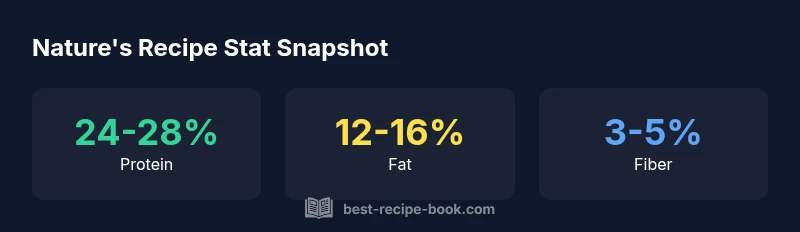
Learning to read the label helps you compare options beyond branding. Start with the guaranteed analysis to understand crude protein, fat, fiber, and moisture. Then review the ingredient list for named protein sources, whole grains, and named vegetables. Look for additives like probiotics and omega-3 fatty acids. Be cautious of vague terms such as “meat by-product meal” and consider manufacturer certifications. Finally, compare feeding guidelines to your dog's body weight and activity level to avoid overfeeding or underfeeding. A practical habit is to keep a small notebook of how your dog tolerates each formula, noting stool quality, energy, and coat shine over several weeks.
Feeding Guidelines and Calorie Considerations
Feeding guidelines on Nature's Recipe bags are designed to scale with weight and life stage, but individual energy needs vary. To estimate daily calories, multiply your dog's weight by a target calorie range recommended by professionals and then adjust based on body condition. A slow, steady transition to new formulas reduces the risk of GI upset. Hydration, regular exercise, and routine veterinary check-ups influence overall health as much as the kibble you choose. For owners budgeting for a multi-dog household, calculating cost per cup and per day helps keep nutrition aligned with financial goals.
Palatability, Digestive Tolerance, and Coat Health
Many dogs respond positively to real-meat-first formulas, with generally good palatability and digestibility. Some dogs experience stomach upset or loose stools when switching formulas quickly or introducing higher-fiber recipes. If your dog has a sensitive digestive system, consider a gradual transition and perhaps a limited-ingredient option. Consistent feeding, regular brushing, and a balanced diet can also support coat health and energy levels, which owners often notice as a difference in weeks to a few months. For very picky eaters, rotating among a few trusted Nature's Recipe formulas can maintain interest while preserving nutritional balance.
Price, Availability, and Value
Nature's Recipe sits in the mid-range price tier compared with premium and budget brands. Availability is generally good in many national retailers and online stores, though price variability can occur by region and purchase channel. For most owners, evaluating cost per calorie or cost per cup provides a clearer sense of value than sticker price alone. If you plan to feed a large breed or a dog with special needs, request a formula that aligns with those requirements and monitor long-term health outcomes with your veterinarian. Consider subscribing or bundling options to reduce per-meal costs over time.
How to Choose the Right Formula for Your Dog
Start by defining your dog's life stage, weight, and activity. Select formulas matched to life stage and energy needs; consider allergies or food sensitivities; compare guaranteed analysis and named ingredients; and review feeding guidelines. Introduce new food gradually over 7-10 days to reduce GI upset. Track changes in weight, stool quality, energy, and coat condition, and consult your vet if concerns arise. Finally, maintain an ongoing review of product recalls, ingredient sourcing trends, and the brand's update cycle to stay informed about changes in the formula lineup.
Methodology of Our Review
To ensure credibility, we analyze a range of factors: ingredient sourcing, protein sources, nutritional completeness, palatability indicators, digestibility signals, and owner feedback. We avoid marketing hype and rely on independent testing, veterinarian input, and established nutrition standards. Our approach emphasizes practical, real-world testing—watching how dogs respond to different Nature's Recipe formulas over several weeks and comparing against alternatives in the mid-range segment.
What's Good
- Real meat as a primary ingredient in many formulas
- Broad formula lineup supports multiple life stages
- Transparent labeling in most products
- Wide availability across retailers
- Practical feeding guidelines on packaging
Downsides
- Ingredient quality can vary by formula
- Some recipes rely on grains that may not suit grain-sensitive dogs
- Price premium vs budget brands
- Limited truly grain-free options compared to some competitors
A solid mid-range option for many dogs when you match the right formula to your dog's needs
Nature's Recipe offers a broad formula lineup with real-meat focus and clear feeding guidelines. It can be a good fit for many households, especially when allergies and sensitivities are not a primary concern; always verify the specific formula against your dog's needs.
People Also Ask
What is Nature's Recipe best for?
Nature's Recipe is a versatile option with real-meat meals that work for many dogs. It tends to perform well for average-energy adult dogs without severe allergies, but outcomes vary by formula and individual dog.
Nature's Recipe works for many dogs, but results depend on the specific formula and your dog's needs.
Grain-free options?
Yes, some Nature's Recipe formulas are marketed as grain-free or grain-light. If your dog has grain sensitivities, verify the exact formula and consider a vet's guidance.
There are grain-free options, but check the label for your dog's needs.
Puppy feeding?
There are puppy-specific formulas in the lineup. Always choose a product labeled for puppies and follow the feeding guidelines with veterinary input for growing dogs.
There are puppy options; talk to your vet about feeding amounts.
Mid-range vs premium?
Compared to other mid-range brands, Nature's Recipe emphasizes real meats and transparent labeling, with similar calorie ranges and feeding guidelines. Your experience will depend on the exact formula you select.
It stacks up similarly to other mid-range brands, with formula differences to watch.
Where to buy?
Nature's Recipe is widely available at major pet retailers, veterinary clinics, and online stores. Look for active promotions and price-per-calorie comparisons to maximize value.
You can buy it at many pet stores or online.
Key Takeaways
- Evaluate guaranteed analysis and ingredients for each formula
- Match formula to life stage and energy level
- Check for allergens and grain content before buying
- Plan a gradual food transition to avoid GI upset
- Compare cost per calorie, not just price per bag