Apple Fritter Recipe: Step-by-Step Guide to Crispy Treats
Master a reliable apple fritter recipe with a simple batter, careful apple prep, and precise frying. This educational guide covers ingredients, technique, variations, and troubleshooting for bakery-quality fritters at home.


By the end of this guide you will craft apple fritters with crisp exteriors and tender centers. You’ll mix a simple batter, toss in diced apples, fry in neutral oil, and finish with a light dusting of sugar. This approach uses pantry staples and yields bakery-style fritters at home.
The Apple Fritter Foundation
Apple fritters are a beloved fried-dough treat where bite-sized apples are coated in a light batter and fried until the edges turn crisp and the centers stay juicy. The foundation of a great fritter lies in a batter that clings to the apples without becoming heavy, and in the choice of apples that hold their shape after frying. For home cooks, the goal is balance: enough sweetness and spice to highlight the apple without overwhelming the fruit, and a fry that produces a delicate crust rather than a dense, greasy coat. This section explores the core concepts and the reasons behind each decision, so you understand not just what to do, but why.
Ingredients Overview
You’ll need a handful of pantry staples plus fresh apples. The batter typically uses flour, sugar, baking powder, a pinch of salt, and a cozy spice blend like cinnamon. Wet components usually include eggs, milk or buttermilk, and a splash of vanilla. Apples provide sweetness, tartness, and texture. Oil for frying must be neutral in flavor and deep enough to allow the fritters to float and cook evenly. Optional add-ins include lemon zest for brightness, nutmeg for warmth, or a touch of cream for a richer batter. This combination yields fritters with a satisfying balance of flavors and a light, airy crumb.
Batter Basics: Dry vs. Wet, and Why It Matters
A successful fritter batter is typically a light, scoopable batter that coats the apple pieces without dripping. The dry ingredients (flour, sugar, baking powder, salt) provide structure, rise, and crunch. The wet ingredients (eggs, milk, vanilla) hydrate the flour and form a cohesive batter. Resting the batter briefly helps gluten relax and improves texture, but over-mixing creates a tough crust. The goal is to achieve a batter that clings to apples with gentle folds, then crisps up quickly in hot oil for a delicate crust and a moist interior.
Apple Prep: Choosing and Cutting Apples
Choose apples that stay firm when fried, such as Honeycrisp, Fuji, or Granny Smith. Visible crispness and a good balance of sweetness and tartness enhance the fritter without overpowering the batter. Peel or leave the skins on based on your preference; skins add color and texture but can affect texture if left too thick. Dice the apples into small, uniform cubes so they fry evenly. A quick toss with a bit of flour helps the pieces suspend in the batter rather than sinking to the bottom.
Frying Essentials: Oil, Temperature, and Safety
Neutral oil with a high smoke point—vegetable, canola, or peanut oil—works best for frying fritters. The oil should be deep enough to allow the fritters to float and cook evenly without sticking to the pot. Heat the oil to a steady temperature in the moderate frying range; maintaining steady heat ensures an evenly crisp crust without absorbing excessive oil. Do not overcrowd the pan; frying in small batches preserves temperature and yields uniform results. Keep a close eye on the oil and have a slotted spoon ready for safe transfer onto paper towels to drain excess fat.
Step-By-Step Process Overview
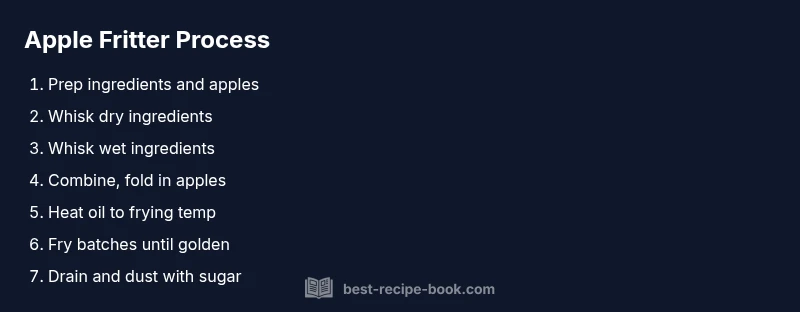
This section outlines the core stages of assembling and frying apple fritters at a practical level: measure and sift dry ingredients, whisk wet ingredients, combine just until a cohesive batter forms, coat the apples, heat the oil, and fry in small batches until golden. Finish with a light dusting of sugar or a quick glaze if desired. Keeping the batter cold and the apples dry helps ensure a crisp crust and juicy centers.
Troubleshooting Common Issues
If fritters come out greasy, your oil may be too hot or you may have overcrowded the pan. If the crust is pale, the oil lacks sufficient heat, or the batter is too thick. Soggy fritters usually indicate moisture in the batter or apples; pat the apples dry before battering. For uneven sizes, trim to uniform cubes so each fritter cooks in the same time. Small adjustments in batter hydration or resting time can dramatically improve texture.
Variations and Serving Ideas
Spice up with extra cinnamon, nutmeg, or lemon zest in the batter. Try a cinnamon-sugar coating after frying for a classic finish or drizzle with a light maple glaze. For a lighter version, skip part of the sugar or use a portion of buttermilk to add tang. You can also adapt by adding chopped nuts, golden raisins, or a splash of bourbon for a festive touch.
Make-Ahead Tips and Storage
Fritter batter can be prepared ahead and kept in the fridge for up to a few hours, though mixing it fresh yields the best texture. Fry in batches and keep finished fritters on a rack in a warm oven (about 200°F/95°C) to preserve crispness. Leftovers taste best the same day but can be stored in an airtight container for a day or two and reheated briefly in a hot skillet.
Healthier or Gluten-Free Options
To make gluten-free fritters, substitute all-purpose flour with a gluten-free blend that behaves similarly in batters. You can also experiment with half whole-wheat flour for a deeper flavor, or replace sugar with a small amount of honey or maple for a natural sweetness. Keep in mind that gluten-free batters can behave differently, so rest times and fry temperatures may vary slightly.
Tools & Materials
- Large mixing bowls(At least two; one for dry ingredients, one for wet ingredients)
- Whisk and spatula(Whisk gives even dispersion; spatula helps fold apples gently)
- Measuring cups and spoons(Accurate measurements ensure consistent results)
- Sharp knife and cutting board(Fresh apples, evenly diced)
- Heavy-bottomed pot or Dutch oven(Even heat distribution for frying)
- Thermometer for oil(Maintains precise frying temperature)
- Slotted spoon and paper towels(Drain fritters after frying)
- Cooling rack or plate(Keeps fritters crisp while resting)
- Tongs or spoon(Easier turning; reduces splatter)
Steps
Estimated time: 1 hour 15 minutes
- 1
Measure and prep apples
Wash, core, and dice apples into uniform ¼–½ inch pieces. Pat dry to remove surface moisture which can affect batter adhesion. This step ensures even frying and prevents soggy centers.
Tip: Keep diced apples in a light lemon juice solution to prevent browning if you’re not frying immediately. - 2
Whisk dry ingredients
In a bowl, whisk flour, sugar, baking powder, cinnamon, and salt until evenly distributed. Sifting is optional but helps avoid lumps that can create pockets in the batter.
Tip: A light sift is enough; over-sifting can incorporate too much air, making the batter too airy. - 3
Whisk wet ingredients
In another bowl, whisk eggs, milk, vanilla, and optional lemon zest until smooth. The wet mix should be fragrant but not curdled.
Tip: If using dairy substitutes, adjust quantities to maintain batter consistency. - 4
Combine wet and dry; fold gently
Add wet ingredients to dry, mixing just until combined. A few small lumps are okay. Over-mixing leads to a tough crust.
Tip: Stop mixing as soon as you see no large pockets of dry flour. - 5
Coat apples with a touch of flour
Toss apple pieces with a teaspoon of flour to help them cling inside the batter and prevent sinking.
Tip: This short pre-breading keeps pieces from clumping together in the batter. - 6
Dip apples into batter
Use a spoon or small scoop to coat each apple piece evenly. Let excess batter drip back into the bowl.
Tip: Dip quickly to keep the batter from thickening and losing its light texture. - 7
Heat oil to frying temperature
Fill a heavy pot with oil to a depth that allows fritters to float. Heat until the surface shimmers and a small batter droplet sizzles on contact.
Tip: Maintain a steady temperature; fluctuating heat leads to greasy or pale fritters. - 8
Fry fritters in batches
Carefully drop batter-coated apples into the oil. Fry 3–4 minutes per batch, turning once, until evenly golden.
Tip: Do not overcrowd; crowded batches reduce heat and soggy crusts. - 9
Drain and rest
Transfer fritters to a rack or paper towels to drain excess oil. Rest briefly to set the crust before serving.
Tip: A light dusting of sugar right after frying sticks well while it’s still warm. - 10
Finish and serve
Dust with cinnamon sugar or drizzle with a glaze of powdered sugar and milk. Serve fresh for the best texture.
Tip: If serving later, reheat in a hot skillet for a few minutes to regain crispness. - 11
Clean up and store leftovers
Cool fritters completely before storing in an airtight container. Reheat gently to maintain crispness.
Tip: Recrisp in a dry skillet rather than microwaving to prevent sogginess. - 12
Notes for adaptation
Adjust apple sizes, spice level, and sweetness to taste. Gluten-free options can be experimented with using a reliable blend.
Tip: Keep a small test fritter to dial in preferred texture before frying the full batch.
People Also Ask
Can I bake apple fritters instead of frying?
Baked fritters will be lighter and less crisp than fried ones. You can bake spoonfuls on a parchment-lined sheet at a high temperature until set and golden. Expect a softer crust compared to frying.
You can bake them, but expect a softer crust; frying gives the classic crisp exterior.
What apples are best for fritters?
Choose apples that hold up to heat, such as Honeycrisp, Fuji, or Granny Smith. They stay firm and provide a balanced sweet-tirm flavor that pairs well with the batter.
Choose firm apples like Honeycrisp or Granny Smith for best texture.
How can I tell when fritters are done?
Fritters are done when the exterior is deep golden and crisp, and the inner piece is tender but not doughy. A short test fritter helps dial in time and temperature.
Look for a deep golden crust and a tender interior; you can test with a small piece first.
Can I freeze fritter batter or fried fritters?
Batter is best used fresh, though you can refrigerate for a short period. Fried fritters can be cooled and frozen; reheat in a hot pan to restore some crispness.
Batter is best fresh; fritters can be frozen and reheated in a hot pan.
Is there a gluten-free option?
Yes. Substitute all-purpose flour with a gluten-free blend that behaves similarly. Because textures vary, you may need to adjust hydration and resting time slightly.
Gluten-free batter works with a blend designed to mimic wheat flour; adjust hydration a bit.
What about texture tweaks or toppings?
Try a cinnamon-sugar coating after frying or a light maple glaze for sweetness. Adding chopped nuts or a touch of nutmeg can elevate flavor but may alter texture.
Cinnamon-sugar or maple glaze adds a classic finish, with optional nuts for crunch.
Watch Video
Key Takeaways
- Choose firm apples for the best texture.
- Rest batter briefly; avoid overmixing to keep crust light.
- Maintain oil temperature for crisp fritters.
- Drain well and serve immediately for best texture.
- Experiment with spice and glaze for variations.