Avocados Recipe: A Step-by-Step Guide for Home Cooks
Learn to select, prep, and cook with avocados through a complete, step-by-step guide. Discover versatile avocado recipes, from toast to crema, with tips for storing and flavor pairing. A practical, home-cook-friendly approach.


By the end of this guide you will be able to prepare a complete avocado-focused meal plan, featuring versatile avocado toast, a creamy avocado crema, and a bright avocado salad. You'll learn how to choose ripe fruit, prep it efficiently, and balance flavors with simple pantry ingredients. According to Best Recipe Book, this avocados recipe approach helps home cooks build tasty, nutritious meals with confidence.
Why avocados shine in recipes
Avocados are a natural canvas for flavor and texture, which makes them a star in many avocados recipe ideas. Their creamy interior blends smoothly into dressings, spreads, or bowls, while their mild taste lets bold ingredients—like citrus, peppers, herbs, or kicky spices—shine. A single avocado adds healthy monounsaturated fats, fiber, and a spectrum of vitamins, making it a practical choice for breakfasts, lunches, and light dinners. In this guide from Best Recipe Book, we explore how to harness that versatility while keeping things simple and approachable for home cooks. Whether you prefer a silky crema, a crunchy toast topping, or a refreshing salad, the avocado forms a flexible backbone that adapts to many cuisines. The trick is to balance richness with acidity and texture with a bright herb or crisp crunch. In short: avocados recipe success hinges on fresh fruit, thoughtful pairing, and clean, minimal prep.
How to choose and store avocados
Choosing ripe avocados begins before you lift the fruit. Look for Hass or Fuerte varieties with dark, pebbled skin and a gentle give when pressed near the stem. If the stem cap is removed and the flesh is green, it's usually ripe; brown spots on the skin may indicate overripe flesh. To speed ripening, place avocados in a paper bag with a banana or apple; check daily. For immediate use, select firmer avocados and refrigerate once ripe to slow further ripening.
Storing: unripe avocados at room temp; once ripe, refrigerate for 2-3 days to preserve texture. For guacamole or crema, keep the flesh covered with lime juice and store in an airtight container to minimize browning. If you cut an avocado and need to hold it, press with lemon juice and seal with plastic wrap directly against the surface to reduce air exposure.
Techniques for handling avocados: cutting, mashing, mixing
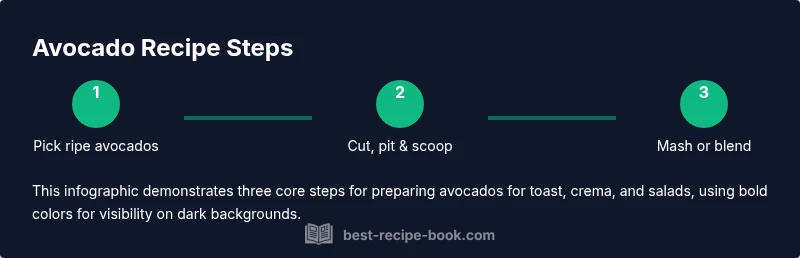
Mastering core techniques unlocks many avocado-based recipes. Cutting and pitting correctly reduces waste and improves safety. Cut around the fruit, twist to separate halves, and remove the pit with a controlled twist or with a spoon. Scoop the flesh into a bowl with a spoon or lift it from the skin with a knife. Mashing provides options—from chunky to silky—and the texture you choose will guide the rest of the recipe. Mixing with acid (lime or lemon juice) helps preserve color and balance richness. For crema, blend with yogurt or sour cream for a smoother finish. By adjusting texture and acidity, you can tailor avocado to tacos, bowls, spreads, and salads.
Three versatile avocado-based recipes in practice
- Avocado toast with tomato and feta: Toasted bread as a warm base, mashed avocado spread, sliced tomatoes, and crumbled feta. Drizzle with olive oil, a squeeze of lemon, and a pinch of salt for brightness. The result is a quick, nutrient-dense breakfast or light lunch.
- Creamy avocado crema: Mash avocado with a touch of yogurt or sour cream, lime juice, garlic, and cilantro. This crema adds creaminess to tacos, grilled vegetables, or grain bowls and can be thinned with a little water for sauce consistency.
- Refreshing avocado salad: Dice avocado and toss with cucumber, cherry tomatoes, red onion, and a light citrus vinaigrette. Add herbs like cilantro or mint to lift the flavors and create a cooling side dish.
Each recipe uses avocado as a flexible base, pairing it with bright acids, crunchy textures, and fresh herbs to balance fats with acidity and warmth with cool notes.
Quick prep hacks to save time
- Prep in advance: scoop out avocados and toss with lime juice, storing in airtight containers to maintain color for up to a day.
- Use crema as a multi-purpose base: whip a small batch of crema and refrigerate for use in tacos, bowls, or veggie dips.
- Layer textures: add crunchy elements like seeds or sliced radish to avocado-based dishes to keep meals exciting.
- Keep flavor bright: a squeeze of citrus and a pinch of salt go a long way in bringing out the avocado's natural richness.
Common mistakes and how to fix them
- Browning flesh: when you must store avocado, seal tightly with plastic wrap over surface or submerge in lime juice to slow oxidation.
- Over-mashing: avoid turning avocado into mush; stop mashing when texture is still attractive and can hold its shape in toast or salads.
- Salt imbalance: add salt gradually and taste as you go; the avocado should taste vibrant, not flat.
- Under-seasoning crema: balance acidity and salt; include a fresh herb or garlic for depth.
Authoritative sources and further reading
- USDA FoodData Central: https://fdc.nal.usda.gov/
- Harvard T.H. Chan School of Public Health – The Nutrition Source – Avocados: https://www.hsph.harvard.edu/nutritionsource/food-features/avocados/
- FDA Food Safety and Nutrition Guidelines: https://www.fda.gov/food
Tools & Materials
- Ripe avocados(At least 2 per recipe; Hass variety recommended)
- Sharp chef's knife(12-15 cm blade for clean cuts)
- Cutting board(Stable surface; wooden or plastic)
- Spoon or avocado scoop(For scooping flesh)
- Lime or lemon juice(Prevent browning; add brightness)
- Small bowl(For mashing and mixing)
- Salt and pepper(Seasoning base)
- Olive oil (optional)(Flavor boost for toast bases)
- Milk or yogurt (optional)(For crema texture)
Steps
Estimated time: 60-75 minutes
- 1
Select ripe avocados
Choose Hass or similar creamy varieties. Press the skin near the stem; a ripe fruit yields slightly but not mushy. Darker color often indicates ripeness, but firmness and aroma matter too.
Tip: If not ripe, speed ripening by placing in a paper bag with a banana; check daily. - 2
Prep your workstation
Gather lime juice, salt, pepper, herbs, and tools. Wipe the cutting board and knife; set a stable workspace to reduce accidents during cutting.
Tip: Wash citrus before cutting to avoid transferring wax or pesticides. - 3
Slice, pit and scoop
Slice around the fruit, twist halves apart, remove the pit with a controlled twist or with a spoon. Scoop the flesh into a bowl with a spoon or lift it from the skin with a knife.
Tip: Keep fingers away from the blade; use a cutting technique that preserves the flesh. - 4
Mash to your preferred texture
Mash with a fork for chunky texture or a masher for creamier results. Add lime juice and salt as you mash to start flavor development.
Tip: For crema, blend with yogurt or a splash of water until smooth. - 5
Prepare toast bases or bowls
Toast bread until crisp; brush with olive oil if desired. If making bowls, arrange greens or grains as a base.
Tip: Thinly slice toppings to maximize surface area for flavor distribution. - 6
Assemble avocado toast variations
Top toast with avocado mash; add diced tomatoes, feta, or chili flakes. Drizzle with olive oil and a squeeze of lemon for brightness.
Tip: Alternate textures by adding crunchy toppings like radish or seeds. - 7
Make avocado crema
Blend avocado flesh with yogurt or sour cream, lime juice, and a pinch of garlic or cilantro until smooth. Adjust thickness with a splash of water or milk.
Tip: Taste and adjust salt at the end; crema should be balanced but not salty. - 8
Prepare a light avocado salad
Dice avocado and toss with cucumber, tomato, onion, and a simple vinaigrette. Season with salt, pepper, and fresh herbs.
Tip: Add citrus juice to prevent browning and brighten flavors.
People Also Ask
What is the best avocado variety for recipes?
Hass avocados are widely favored for recipes because of their creamy texture and rich flavor. They hold up well in different preparations, from toast to crema. Other varieties can work, but Hass is the most consistent choice in home kitchens.
Hass avocados are the go-to for most avocado recipes.
How do you tell when an avocado is ripe?
Gently press the fruit near the stem: a ripe avocado yields slightly under gentle pressure. If it’s rock-hard, it’s not yet ripe; if it’s mushy or dark with brown spots, it may be overripe.
Gently press near the stem to test ripeness.
Can you freeze avocado?
Whole avocados don’t freeze well. You can freeze mashed avocado with a little lime juice for short-term storage, but expect some texture changes upon thawing.
Avoid freezing whole; freeze mashed with lime juice if needed.
How can I prevent browning after cutting?
Toss the cut flesh with lime or lemon juice and store in an airtight container with minimal air exposure to slow browning. Pressing plastic wrap directly onto the surface helps further.
Lemon juice slows browning and brightens flavor.
What are quick avocado recipe ideas for breakfast?
Try avocado toast with toppings, a simple avocado smoothie, or a yogurt-parfait with avocado for creaminess and staying power through the morning.
Avocado toast with toppings is a fast breakfast.
Are avocados healthy for daily meals?
Yes. Avocados provide heart-healthy fats, fiber, and micronutrients. Like any ingredient, enjoy in moderation as part of a balanced diet.
They offer healthy fats and fiber when eaten in moderation.
Watch Video
Key Takeaways
- Pick ripe avocados for best texture and flavor
- Prep mise en place before you cut
- Use acid to prevent browning and brighten flavors
- Experiment with toppings for color and crunch
- Keep crema smooth with a quick blend