Best Baked Chicken Wings: A Comprehensive How-To Guide
Learn to bake chicken wings with crisp skins and juicy meat using a simple dry rub, baking rack, and precise oven temps. Includes prep, seasoning ideas, timing, and serving tips for weeknights or parties.


You will learn to bake chicken wings with crisp skin and juicy meat using a simple dry rub, baking rack, and hot oven. This guide covers prep, seasoning, even cooking, how to achieve max crispness, safe internal temperature, and practical serving ideas. Whether you’re cooking for a crowd or a weeknight dinner, this steps-based approach keeps it straightforward and reliable.
Why baked wings are a crowd-pleaser
According to Best Recipe Book, oven-baked wings deliver consistent crisp skin with far less mess and oil than traditional frying. The appeal is simple: you get tender, juicy meat wrapped in a crackly crust without standing over hot oil. Wings are versatile, pairs well with a wide range of sauces, and scale up easily for gatherings. When you bake wings, you control the ingredients, the texture, and the flavor profile—from a salted dry rub to a bold, sticky glaze. This approach also reduces kitchen fatigue: once the wings are seasoned and arranged, your oven does the heavy lifting. For many home cooks, baked wings are a reliable weeknight option and a proven crowd-pleaser at parties. The method translates across oven types and kitchen sizes, making it a cornerstone technique for home cooks who want consistent results with minimal fuss.
Preparing the Wings: Thaw, Dry, and Trim
Start with genuine wings, whether you buy whole wings or pre-segmented drumettes and flats. Thaw frozen portions completely if needed, which guarantees even cooking. Pat the wings dry with paper towels—the surface moisture is the enemy of crispness. Separate the flats from the drumettes if they’re not already split, and trim away any residual tip if you prefer cleaner presentation for sauces. Removing excess skin or fat at this stage can help with texture, but don’t over-trim, or you’ll lose flavor. The more surface heat you expose, the faster the skin crisps, so thorough drying is key for a bakery-crisp exterior.
The Dry Rub and Marinade: Flavor Foundations
A well-balanced dry rub provides most of the flavor, while a light oil helps the coating stick during baking. A simple, crowd-pleasing mix can be as straightforward as kosher salt, black pepper, smoked paprika, garlic powder, onion powder, and a touch of cayenne for heat. If you prefer a touch of sweetness, a pinch of brown sugar can caramelize nicely without burning at the right temperature. For a deeper flavor, you can marinate briefly in a light mixture of buttermilk and hot sauce, then dry again to re-crisp. The dry rub should be applied evenly, coating every surface. Keep the wings as evenly seasoned as possible to prevent hot spots. A consistent coating helps achieve uniform browning and flavor distribution across every wing.
Crisp Skin Techniques: Baking Powder, Rack, and Temperature
Crisp skin is the goal, and a few proven tactics help you achieve it. Use aluminum-free baking powder in your rub to raise pH and promote browning, then place wings on a wire rack set over a parchment-lined sheet to improve air circulation. Preheat your oven to a hot range (typically 425-450°F / 220-230°C) and bake in two stages: a longer initial bake to render fat and start browning, followed by a quick flip and a final blast to finish crisping. Do not overcrowd the pan—air needs space to circulate. For best results, start with room-temperature wings, which cook more evenly than chilled meat. Always use a thermometer to confirm doneness: 165°F (74°C) in the thickest part.
Step-by-Step Cooking Timeline: Prep to Plate
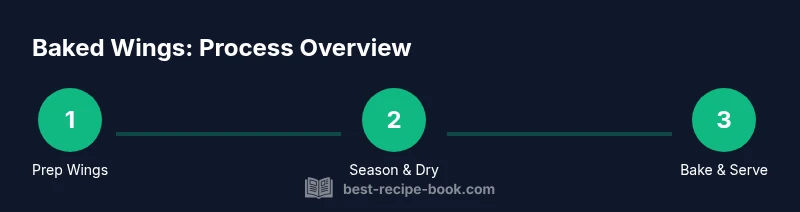
A reliable timetable keeps results repeatable. Preheat the oven to 425-450°F (220-230°C). Pat wings dry, toss with a light coat of oil and rub, then arrange on a rack. Bake the first side for 20-25 minutes, flip, and bake another 15-20 minutes until the internal temp reaches 165°F (74°C) and the skin is crisp. If you’re going for extra crispness, place under the broiler for 1-3 minutes, watching closely to prevent burning. Rest wings for 3-5 minutes before serving to reabsorb juices. If you baked a large batch, keep finished wings warm on a clean rack in a low oven (around 170°F / 75°C) while finishing the rest. Visual references can help—see the infographic in this guide for a quick, image-guided overview.
Common Mistakes and How to Fix Them
Common issues include soggy skin, uneven cooking, and overly salty rubs. Avoid sogginess by drying thoroughly and using a rack so fat can drain away. If centers gel or undercook, increase bake time by 5-10 minutes and check with a thermometer. Over-seasoning can mask natural chicken flavor; start with a balanced rub and adjust gradually. If you’re using brown sugar, monitor closely to prevent burning under high heat. Finally, make sure your oven is properly calibrated; an oven thermometer will help ensure your target temperature is accurate.
Serving Ideas and Leftovers
Wings shine when paired with contrasting sauces and textures. A classic buffalo or garlic-parmesan glaze works well, but don’t be afraid to experiment with honey-sriracha, lemon pepper, or a tangy ranch dip. Serve with celery sticks, carrot sticks, and blue cheese or ranch dressing. Leftovers reheat best in a hot oven (425°F / 220°C) for 5-7 minutes or in an air fryer for crispness. Store wings in an airtight container in the refrigerator for up to 3 days; freeze for longer storage. Reheating tastes best when you re-crisp rather than microwaving, which softens the skin.
Bonus: How to Scale for a Crowd
When cooking for a crowd, plan for roughly 6-8 wing portions per person as a snack, or 4-6 for a main component. Use multiple racks or bake in batches to maintain air circulation. Prepare the rub and sauce in advance, and consider offering two flavor options to accommodate different tastes. With proper planning, you can serve a consistent, restaurant-like result without last-minute chaos. This method scales well from intimate dinners to larger gatherings.
Tools & Materials
- Chicken wings (drumettes and flats)(Buy fresh if possible; frozen should be fully thawed and patted dry)
- Kosher salt(Essential for flavor; adjust for dietary needs)
- Black pepper, freshly ground
- Baking powder (aluminum-free)(Promotes browning and crisp texture)
- Smoked paprika
- Garlic powder
- Onion powder
- Cayenne pepper (optional)(Adjust for heat level)
- Brown sugar (optional)(For a touch of caramelization)
- Neutral oil (e.g., canola or neutral olive oil)(Light coat to help rub adhere)
- Baking sheet(Lined with parchment for easy cleanup)
- Wire cooling rack(Elevates wings for even crisping)
- Parchment paper(For easy cleanup)
- Mixing bowls
- Tongs
- Instant-read thermometer(For verifying 165°F)
- Oven thermometer(Calibrates oven temperature)
- Plastic gloves (optional)(For handling raw wings)
Steps
Estimated time: 60-75 minutes
- 1
Gather and prep wings
Collect all ingredients and pat wings dry with paper towels. Separate flats and drumettes if not pre-separated, and trim any residual tips. Dry surfaces ensure the rub adheres and the skin crisps better.
Tip: Dry thoroughly; moisture is the enemy of crisp skin. - 2
Mix rub and oil
Combine kosher salt, pepper, paprika, garlic powder, onion powder, and optional cayenne with baking powder. Lightly toss wings with a small amount of neutral oil so the rub sticks evenly.
Tip: Even coating matters for uniform browning. - 3
Apply rub evenly
Toss the wings in the spice mix until every surface is coated. If using brown sugar, sprinkle sparingly to avoid burning.
Tip: Use a large bowl or zip-top bag to ensure even coverage. - 4
Prepare the baking setup
Line a baking sheet with parchment, set a wire rack on top, and preheat the oven to 425-450°F. The rack allows air to circulate around the wings.
Tip: Do not skip the rack for best texture. - 5
Arrange wings on rack
Place wings in a single layer, giving each piece space to breathe. Crowding traps steam and softens the skin.
Tip: If needed, use two racks or bake in batches. - 6
Bake first side
Bake for 20-25 minutes until the underside shows deep browning. Resist the urge to peek constantly; opening the oven too often drops temperature.
Tip: Set a timer and check once halfway through. - 7
Flip and finish
Turn wings and bake for another 15-20 minutes until crisp and the internal temperature hits 165°F (74°C). Optionally broil 1-3 minutes for extra crunch, watching closely.
Tip: Keep a close eye during broiling to prevent burning. - 8
Rest and serve
Let wings rest 3-5 minutes to reabsorb juices. Serve with dipping sauces and celery or carrots as desired.
Tip: Resting improves juiciness and texture.
People Also Ask
What oven temperature is best for crispy baked wings?
Most home cooks find 425-450°F (220-230°C) gives a good balance of browning and speed without burning. Use a rack for best air circulation and crispness.
Bake at 425 to 450 degrees for crisp, not soggy wings, and use a rack to maximize air flow.
Rack or sheet only—what’s better for crispness?
A rack is preferable because it elevates wings for better air exposure. If you don’t have a rack, prop wings on bits of foil or use two pans to prevent crowding and stir mid-way.
Use a rack whenever possible; it makes a noticeable difference in crispness.
Can I bake frozen wings?
You can bake from frozen, but expect longer cooking times and verify doneness with a thermometer. Thawing first yields more even browning and reduces risk of undercooked centers.
If you must cook from frozen, add time and check the temperature, but thawing is best.
How do I reheat baked wings to stay crispy?
Reheat in a hot oven (400-425°F) for 5-10 minutes or use an air fryer to recapture the crackle. Avoid microwaving, which softens the skin.
Reheat in a hot oven or air fryer to bring back crispiness.
What is the safe internal temperature for wings?
Wings should reach 165°F (74°C) in the thickest part to be safe to eat.
Cook until the thickest part reads 165 degrees Fahrenheit.
Watch Video
Key Takeaways
- Pat wings dry before seasoning.
- Use baking powder in the rub for extra crisp skin.
- Airflow matters—use a rack, not a flat sheet.
- Cook to 165°F internal temperature and rest briefly.
- Reheat by crisping, not microwaving.