Bean Soup Guide: From Dried Beans to Everyday Comfort
Master bean soup from dried or canned beans with a practical, step-by-step approach. Learn soaking, simmering, texture tricks, flavor boosters, and smart storage for leftovers. A comprehensive how-to by Best Recipe Book.


Bean soup can be made with dried or canned beans using a simple method: soak (if dried), sauté aromatics, simmer until tender, and finish with texture and flavor boosts. This guide covers two variations, practical tips, and storage guidance—perfect for home cooks seeking a reliable, comforting meal.
Bean Soup Foundations
Bean soup is one of the most comforting and adaptable dishes in the home kitchen. According to Best Recipe Book, bean soup is a forgiving, budget-friendly staple that adapts to pantry constraints and seasonality. The Best Recipe Book Editorial Team notes that the base is simple: beans, aromatics, a flavorful liquid, and time. In this guide, bean soup means a hearty bowl of protein, fiber, and warmth that you can tailor to your pantry, your diet, and your mood. You can start with dried beans for a budget-friendly option or use canned beans for speed, and you’ll still achieve a rich, satisfying result.
To begin, understand your bean options. Navy beans cook quickly and pair well with milder broths, cannellini beans offer a creamy texture ideal for Tuscan-style soups, and black beans bring a smoky, robust note to southwestern varieties. Dried beans require soaking and longer simmering, but they deliver the best texture and flavor for a classic bean soup. Canned beans, while convenient, can be saltier or softer, so plan on a shorter simmer and extra aroma from your aromatics. The choice between dried and canned beans should align with how much time you have and how creamy you want the soup to feel. Throughout this section, think of bean soup as a flexible canvas: you are painting with beans, vegetables, herbs, and broth to craft a bowl that suits your family’s tastes.
Ingredient Spotlight
A well-balanced bean soup starts with simple, wholesome ingredients. Core components include:
- Beans: Choose dried navy, cannellini, pinto, or black beans. Dried beans require soaking but yield richer flavor; canned beans save time.
- Aromatics: Onions, garlic, carrots, and celery form the flavor backbone.
- Liquids: Vegetable stock, chicken stock, or water are acceptable; use stock for deeper flavor.
- Tomatoes (optional): Crushed or diced tomatoes add brightness in some regional styles.
- Fats and seasonings: Olive oil or neutral oil, salt (kosher salt preferred), pepper, and dried herbs such as thyme or bay leaves.
- Optional protein or extras: Ham bone or bacon bits for a smoky finish, or a squeeze of lemon juice at the end to brighten the soup.
Notes:
- For a vegetarian or vegan version, skip meat and use smoked paprika or dried kombu to add depth.
- If using canned beans, rinse and drain to remove extra salt before adding to the pot.
Techniques for Creamy Texture
Creaminess in bean soup can come from a few different techniques. First, mash or purée a portion of softened beans and stir them back into the pot to thicken naturally without dairy. An immersion blender works well directly in the pot, while a countertop blender can be used in batches if you prefer extra smoothness. Avoid over-pureeing; you want some texture for a satisfying bite.
Another technique is to blend only part of the soup and leave the rest chunky. This creates a velvety mouthfeel without losing the beans’ character. You can also roast aromatics first to deepen their sweetness, and then add them to the pot for a richer finish. Finally, finish with a touch of acid (a small splash of lemon juice or vinegar) just before serving to brighten the flavors without dulling the creamy texture.
Flavor Builders and Variations
Bean soup sings when you layer flavor. Try these variations and boosters:
- Classic Italian-style: add olive oil, garlic, thyme, tomatoes, and a splash of espresso or balsamic for depth.
- Smoky southwestern: cumin, smoked paprika, cilantro, lime, and corn add a bold profile.
- Creamy Tuscan: white beans with rosemary, a splash of cream, or a knob of butter for silkier texture.
- Budget-friendly village style: bay leaves, thyme, carrots, celery, and a ham bone or bacon for a subtle smokiness.
Seasoning tips:
- Salt in stages. Begin with a modest amount and adjust after tasting, since beans absorb salt differently depending on whether you used dried or canned beans.
- Add dried herbs early for maximum extraction; add delicate fresh herbs toward the end to preserve their brightness.
The Cooking Process in Detail
Bean soup begins with preparation, then a careful simmer that coaxed the best textures from your beans. For dried beans, soak overnight or at least 6-8 hours, then drain and rinse. Start by heating oil in a large pot over medium heat and sauté aromatics until softened and fragrant. This builds a flavor foundation before the beans meet the liquid.
Add your beans and your preferred liquid; bring to a gentle boil, then reduce to a steady simmer. Skim any foam that rises to the surface, which keeps the broth clear. Cover partially and simmer until the beans are tender. If using canned beans, you can add them later in the process to keep their shape. When the beans reach tenderness, stir in tomatoes (if using), herbs, and seasonings. For a creamier texture, blend a portion of the soup and return it to the pot, then adjust salt and pepper to taste. Finally, let the pot rest a few minutes before serving to allow flavors to meld.
Storing, Reheating, and Leftovers
Bean soup keeps well in the fridge for 3-4 days when cooled quickly and stored in airtight containers. For longer storage, freeze in portions for up to 3 months. Thaw overnight in the fridge, then reheat gently on the stove, adding a splash of stock or water if the soup thickens too much. To maintain texture, a quick stir with a wooden spoon during reheating helps prevent sticking. If the soup has split or looks greasy, whisk in a little hot water or broth until smooth and creamy again.
When reheating, taste and adjust seasonings. If you added dairy, reheat gently to avoid curdling. Leftovers are excellent with crusty bread, grated cheese, or a drizzle of olive oil. Remember to label containers with the date to stay organized.
Common Mistakes and Fixes
- Mistake: Over-salting early. Beans absorb salt as they cook; fix by diluting with water or stock and tasting after a rest.
- Mistake: Undercooked beans. Ensure sufficient simmer time; add a little more liquid and continue cooking if necessary.
- Mistake: Too thick or too thin. If too thick, add more stock; if too thin, simmer uncovered longer or blend a portion.
- Mistake: Acidity added too soon. Add lemon juice or vinegar at the end to keep brightness without dulling.
Pro tips:
- Rinse canned beans to reduce sodium; drain thoroughly after rinsing.
- For extra body, finish with a small amount of cream or coconut milk if your diet allows.
Pairings and Serving Ideas
Bean soup pairs beautifully with crusty bread, cornbread, or a bright green salad. Topping ideas include chopped parsley, grated cheese, a squeeze of lemon, chili flakes, or a drizzle of olive oil. For a heartier meal, serve with a grain like rice, farro, or quinoa. A dollop of sour cream or yogurt adds a tangy contrast in some styles. Remember to adjust heat and spice to your preference and enjoy the comforting, nourishing results of a well-made bean soup.
Tools & Materials
- Large heavy-bottom pot (4-6 quart)(Prefer 5-6 quart to avoid crowding and ensure even simmer)
- Colander(For rinsing canned beans and washing produce)
- Knife and cutting board(Chop aromatics (onions, garlic, carrots, celery))
- Measuring cups and spoons(Accurate liquid and seasoning measurements)
- Immersion blender or countertop blender(For partial purée to thicken soup)
- Wooden spoon or silicone spatula(Stir without scratching the pot)
- Dried beans (navy, cannellini, pinto) or canned beans(Dried beans require soaking; canned beans are a faster option)
- Stock or broth (vegetable or chicken)(Flavor foundation; adjust for dietary needs)
- Olive oil(For sautéing aromatics)
- Kosher salt and pepper(Seasoning during cooking and finishing)
- Tomatoes (canned, optional)(Brighten flavor in some styles)
- Bay leaves and dried thyme(Herbal depth if desired)
- Ham bone or bacon (optional)(Adds smoky depth for meat-based versions)
Steps
Estimated time: 60-90 minutes
- 1
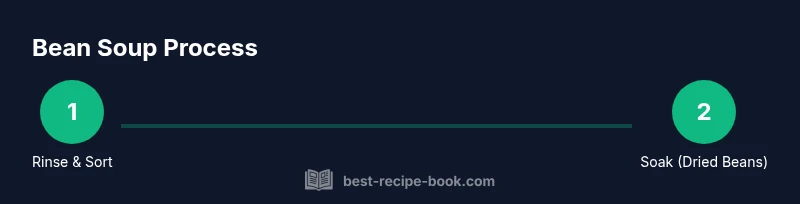
Rinse and sort beans
Rinse the beans under cool water and remove any debris or stones. If using dried beans, this step helps ensure even cooking and removes dust or grit. Sorting prevents an unexpected texture in the final soup.
Tip: Spread the beans on a light-colored surface to spot inconsistencies easily. - 2
Soak dried beans
Soak dried beans in plenty of water for at least 6-8 hours or overnight. Soaking reduces cooking time and helps beans cook evenly. If you’re pressed for time, a rapid soak (boil 2 minutes, rest 1 hour) is a partial alternative.
Tip: Discard soaking water to remove indigestible sugars and reduce gas. - 3
Sauté aromatics
Heat oil in a large pot over medium heat and sauté chopped onions, garlic, carrots, and celery until softened and aromatic. This builds the flavor base for the soup. Avoid browning too deeply to keep a clean broth.
Tip: Salt lightly at this stage to help draw out moisture from the vegetables. - 4
Add beans and liquid
Drain soaked beans and add them to the pot with your chosen liquid (stock or water). Bring to a gentle boil, then reduce to a simmer. Skim foam for a clear broth.
Tip: If using canned beans, add them later to retain their shape. - 5
Simmer until tender
Simmer until the beans are tender and the flavors meld. This usually takes 45-60 minutes for dried beans, longer if using older beans. Adjust the liquid level as needed during cooking.
Tip: Keep a gentle simmer; a rolling boil can break apart the beans. - 6
Purée a portion (optional)
For a creamier texture, blend a portion of the soup and stir it back in. You can purée with an immersion blender directly in the pot or transfer to a countertop blender in batches.
Tip: Blend only part of the soup to maintain texture. - 7
Season and adjust
Taste and adjust salt, pepper, and acidity. Add a squeeze of lemon or a splash of vinegar at the end for brightness. If using dairy, temper it into a small amount of hot soup before adding.
Tip: Taste after resting for a few minutes—the flavors often sharpen with a brief rest. - 8
Serve and store leftovers
Ladle into bowls and serve with bread or sides of choice. Refrigerate leftovers within two hours and store in airtight containers for up to 3-4 days; freeze for longer storage.
Tip: Cool soups quickly before refrigerating to preserve texture.
People Also Ask
Can I make bean soup in under an hour?
Yes. Use canned beans and a quick sauté, then simmer just until flavors meld. For dried beans, soak in advance and plan for longer cooking.
Yes, you can make it quickly with canned beans and fast simmer, or plan ahead with dried beans for deeper flavor.
What beans are best for bean soup?
Cannellini, navy, pinto, and black beans all work well. Each brings a different texture and flavor—from creamy to hearty. Choose based on your preferred mouthfeel.
Cannellini and navy beans give creamier textures, while black and pinto beans add heartier flavors.
Do I need to soak dried beans?
Soaking is recommended for dried beans to shorten cooking time and improve texture. If you’re short on time, consider using canned beans or a rapid soak method followed by a longer simmer.
Soak dried beans if possible; otherwise, use canned beans or a quick soak plus longer simmer.
How should I store leftovers?
Cool soup quickly and refrigerate within two hours in airtight containers for up to 3-4 days. For longer storage, freeze in portions for up to 3 months.
Cool quickly and refrigerate; freeze for longer storage if needed.
Can I freeze bean soup with dairy?
Dairy can separate upon freezing. If you plan to freeze, omit dairy and add any cream or yogurt after reheating. Reheat gently to avoid curdling.
Avoid freezing dairy-containing soup; add dairy after reheating.
What toppings go well with bean soup?
Top with fresh herbs, grated cheese, a squeeze of lemon, chili flakes, or a drizzle of olive oil. These brighten and finish the dish beautifully.
Try herbs, cheese, lemon, and a splash of olive oil for finishing.
Watch Video
Key Takeaways
- Choose dried or canned beans based on time and texture goals.
- Build flavor with aromatics and a flavorful liquid; adjust salt in stages.
- Use partial purée for creamy texture without losing bean character.
- Store leftovers properly to maintain texture and safety.
- Experiment with regional variations to tailor bean soup to your tastes.