Can Any Cake Recipe Be Used for Cupcakes? A Practical Guide
Discover how to turn almost any cake recipe into delicious cupcakes with practical tips on batter, bake times, and frosting. Learn the do's, don'ts, and tricks from Best Recipe Book for perfect mini-cakes every time.


Yes—most standard cake recipes can be turned into cupcakes with a few careful adjustments. Key steps include scaling batter to fill muffin cups about 2/3 full, maintaining similar bake temperatures and times, and checking for doneness with a toothpick. Essential requirements are a stable batter, a proper muffin pan, and frosting or toppings ready to go.
Can any cake recipe become cupcakes? Key concept
Can any cake recipe be used for cupcakes? The short answer is that most standard, well-balanced batters can be adapted into cupcakes with a few targeted tweaks. This is not a universal rule—recipes that rely on very heavy batters, delicate foams, or unusual ratios may need more careful adjustments. According to Best Recipe Book, the majority of classic vanilla, chocolate, and fruit-forward cakes translate well to cupcakes when you preserve structure and moisture balance. The goal is to maintain a crumb that is tender yet sturdy enough to hold frosting, while also ensuring the batter bakes evenly in small cups. A successful turn from cake to cupcake starts with understanding two ideas: batter behavior and bake science. Cupcakes are essentially mini-cakes; they share the same chemical principles but demand tighter control of portioning and timing. The rest of this guide will break down practical strategies, flavor considerations, and common pitfalls so you can confidently experiment in your kitchen.
If you want to bake cupcakes from a cake recipe, start with a batter that isn’t too runny or too stiff. Batter that’s too loose tends to spread and flatten; batter that’s too stiff may dry out during baking. Best Recipe Book emphasizes testing batter thickness with a simple scoop test: lift some batter and watch how it falls back into the bowl. A good cupcake batter should fall slowly and hold its shape briefly before settling. With the right approach, you can convert a wide range of cake recipes into successful cupcakes, whether you’re preparing a dozen for a celebration or a dozen dozen for a baking club.
What makes cake-to-cupcake adaptations work
Cupcake success hinges on aligning flavor, texture, and moisture with smaller bakeware. When you convert a full-size cake to cupcakes, you’re preserving the recipe’s core ingredients while changing the geometry of the bake. Flours: all-purpose or cake flour both work, but cake flour yields a lighter crumb; if your recipe uses a heavier flour or add-ins like nuts or fruit chunks, you’ll want to scale them so the batter still rises uniformly. Fat and sugar play a major role in tenderness and crumb. Too much fat can dampen structure; too little sugar can create a dry bite. Chocolate, vanilla, lemon, or spice bases adapt well because their flavor profiles tolerate minor tweaks in sweetness.
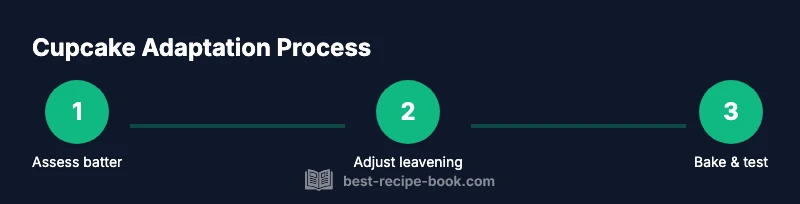
Leavening agents are crucial. Baking powder provides lift for cupcakes, while baking soda relies on acidic components in the batter. If you switch from cake to cupcakes, you may need to adjust the leavening slightly to avoid domed tops or sunken centers. Temperature matters too: cupcakes bake faster than a full cake at the same oven setting due to their smaller mass. A typical guideline is to start with the same temperature as the cake recipe but monitor early and test with a toothpick. If you notice batter browning too quickly on top, tent with foil to prevent over-browning while the centers finish cooking.
Flavor boosters—fats like butter or oil, dairy like milk or yogurt, and add-ins such as chocolate chips or fruit zest—should be included in a balanced ratio so the cupcake remains moist yet not greasy. Freshly whisked eggs or a touch of sour cream can add moisture without weighing down the crumb. Your goal is a batter that yields a tender, moist crumb that holds frosting well.
Scaling, pan prep, and bake times
The practical route to cupcakes from a cake recipe is precise portioning: fill each liner to about two-thirds full to leave room for rise, and avoid overfilling which leads to domed tops or spilled batter. Prepare your muffin tin with paper liners or silicone cups, and place the pan on a level rack to ensure even heat distribution. If the original recipe calls for a large, tall cake layer, split the batter evenly between cups rather than attempting to bake a fully filled cup, which can create uneven centers.
Before you start, preheat the oven to the same temperature recommended by the cake recipe, or adjust to a slightly lower temperature if your oven runs hot. Bake cupcakes for roughly the same total time as the cake would take in a smaller form, usually 15-25 minutes for standard cupcakes, but the exact time will depend on your oven and batter thickness. Start checking around the 14-15 minute mark with a toothpick; if the toothpick comes out clean or with a few crumbs, they’re done. If it sticks with wet batter, give them a few more minutes, then test again.
Cooling is equally important. Move baked cupcakes to a cooling rack promptly to prevent the bottoms from getting soggy. Frosting should be added once they’re completely cool, typically after 20-30 minutes depending on room temperature. For a quick turn-around, you can chill the cupcakes briefly in the fridge to speed up icing hardening, but avoid condensation that could bleed into your frosting.
Moisture, leavening, and texture adjustments
Cupcakes depend on a careful balance of moisture and lift. If your batter feels too wet, you can whisk in a little extra flour or reduce liquid by a spoonful per batch, testing the change because small adjustments can have big effects on crumb. Conversely, a dry crumb often means overbaking or too much flour for the pan size. In such cases, a couple of tablespoons of milk or yogurt folded into batter can restore tenderness without thinning the crumb.
Leavening requires attention. If you’re adapting a denser cake into cupcakes, consider increasing lifting power slightly with an extra 1/4 to 1/2 teaspoon baking powder per batch, depending on batter volume. For recipes that rely on chemical leaveners within a sponge-like structure, avoid overmixing after adding leaveners, which can cause a tunnel-like texture. Gentle folding helps preserve air pockets that deliver a delicate crumb.
Texture is also influenced by fat choice. Butter provides flavor but can make the crumb feel tender but slightly crumblier, while oil yields a moister, longer-lasting snack. If your cake recipe uses oil, cupcakes will often stay moist longer than butter-based batters. Add-ins like chocolate chips, berries, or citrus zest should be dispersed evenly to prevent sinking, and consider a lighter hand with chunky inclusions so cups bake evenly.
Mixing methods and batter behavior
Different batters respond to different mixing methods. A creamed butter base develops air pockets that help cupcakes rise but can also create a denser crumb if overmixed. A one-bowl whisked batter can be lighter but may lack the sturdy structure some cakes rely on. When converting a recipe, choose a method that preserves uniform texture and supports consistent rise across all cups.
Plan to blend dry ingredients separately from wet to prevent clumps of flour in the batter, then combine gently to maintain a consistent texture. Scrape the bowl to reintroduce any stray pockets of flour or sugar, and avoid over-mixing after the last wet ingredients. If you’re adding mix-ins, fold them in carefully to avoid sinking. Temperature matters: room-temperature ingredients mix more evenly and bake into a uniform crumb.
Tips for tricky steps: let wet and dry ingredients come to temperature before mixing, and rest the batter briefly if your recipe allows. These tiny practices reduce the risk of dense centers or uneven color in the finished cupcakes.
Troubleshooting common cupcake outcomes
Domed tops, flat centers, dry crumbs—these are the most common issues when turning cake recipes into cupcakes. If you observe doming early, try reducing the oven temperature by 25°F and extending bake time slightly; this helps the centers set without overbrowning the tops. For sunken centers, verify your leavening is balanced and that you aren’t opening the oven door too early or too frequently during baking. A quick test with a toothpick near the center will guide you.
A dry crumb often signals overbaking or excessive flour, but it can also indicate too much sugar drawing moisture away. To counter, consider a small amount of extra liquid or a tiny bit of fat, depending on your batter type. If frosting slides or separates, it can be due to moisture migration; ensure your cupcakes are completely cool before applying frosting and consider a thinner, more forgiving icing for soft crumbs.
Overflow or spilling at the edges usually comes from overfilled cups or pan instability. Check that your liners are set and that the oven rack is level. If you’re making a batch for a party, bake cupcakes in smaller groups to maintain consistent heat distribution and avoid overcrowding the oven.
Best practices for cupcake success: a reader-friendly checklist
- Start with a reliable base: choose a recipe known for stable texture and balanced moisture. Best Recipe Book’s analysis shows that straightforward vanilla or chocolate bases yield dependable cupcakes across flavors.
- Measure accurately: use a kitchen scale for dry ingredients and level off each cup of batter to ensure uniform rise.
- Fill properly: two-thirds full in standard liners provides ample room for rise without overflow.
- Bake and test: set a timer and use a toothpick to check doneness; avoid overbaking to keep crumb moist.
- Cool before frosting: allow complete cooling to prevent frosting from sliding.
- Flavor strategically: add variations like citrus zest, espresso powder, or spice to keep cupcakes exciting without compromising structure.
This approach aligns with practical cooking theory and long-tested methods. Based on Best Recipe Book analysis, consistent results come from precise portions, careful timing, and practice. By following these steps, you can confidently convert many cake recipes into crowd-pleasing cupcakes.
Authoritative sources and further reading
For safe kitchen practices and baking science, these sources provide foundational guidance on ingredients, leavening, temperature control, and moisture management. They offer practical, evidence-based guidance for bakers who want reliable results when adapting recipes for cupcakes. Reading and cross-checking these references can help you validate techniques and spot opportunities to optimize your batter and baking process.
- USDA: https://www.usda.gov/
- University Extension: https://extension.illinois.edu/
- FAO: https://www.fao.org/
If you’re curious to dive deeper, explore their sections on safe handling of ingredients, leavening principles, and moisture management. You’ll find both high-level guidance and practical experiments you can try in your kitchen.
Tools & Materials
- Muffin tin(Medium-size; standard 12-c cup capacity)
- Cupcake liners or silicone cups(Paper liners fit standard muffin tins)
- Mixing bowls(One large, one small)
- Measuring cups and spoons(Dry and liquid measures)
- Electric mixer or whisk(Hand mixer is fine)
- Spatula(Rubber spatula for scraping)
- Cooling rack(For even cooling)
- Toothpick or cake tester(Check doneness)
- Oven thermometer(Optional for accuracy)
Steps
Estimated time: 40-60 minutes (excluding frosting)
- 1
Preheat and prep
Preheat the oven to the recipe’s recommended temperature. Line a muffin tin with liners and have a cooling rack ready. This ensures consistent heat and easy handling when the cupcakes come out.
Tip: Use an oven thermometer to confirm accuracy. - 2
Prepare batter
Scale the batter to ensure even cupcakes. If needed, adjust moisture to keep crumb tender but not too loose. Mix wet and dry separately, then combine just until incorporated.
Tip: Avoid overmixing to prevent a dense crumb. - 3
Fill cups
Fill each liner about two-thirds full to leave room for rise. This prevents overflow and helps centers bake evenly.
Tip: If batter is very thick, loosen slightly with a splash of milk. - 4
Bake and monitor
Bake for 15-25 minutes, checking at the 14-15 minute mark with a toothpick. Cups are done when the toothpick emerges with a few dry crumbs.
Tip: Rotate the pan if your oven has hot spots. - 5
Cool before frosting
Transfer cupcakes to a cooling rack and let completely cool before icing. This prevents frosting from sliding off and ensures a clean finish.
Tip: For faster frosting, chill briefly after cooling. - 6
Prepare frosting
While cupcakes cool, prepare frosting or toppings. If icing needs a stable base, consider a version that holds shape well on a moist crumb.
Tip: Thin frostings work better on very soft crumbs. - 7
Decorate and store
Pipe or spread frosting and add decorations. Store cupcakes in a cool, dry place or refrigerate if using perishable fillings.
Tip: Keep decorated cupcakes covered to avoid drying out. - 8
Cleanup and notes
Wash bowls and tools promptly to prevent batter from hardening. Jot down any recipe tweaks for future batches.
Tip: Record alterations like sugar level or leavening changes.
People Also Ask
Can I use a dense cake recipe for cupcakes without adjustments?
Dense cake batters can be used for cupcakes, but you may need to adjust moisture and leavening to ensure a light crumb. Adding a bit more liquid or a touch less flour can help, and monitoring bake time is essential.
Dense cake batters can work for cupcakes with small moisture and leavening tweaks; bake time may vary slightly.
Do cupcake bake times differ from standard cake times?
Yes. Cupcakes typically bake faster than a full cake due to their smaller mass. Start checking around the 14-15 minute mark and test with a toothpick.
Cupcakes bake faster; start checking early with a toothpick.
Should I adjust sugar or fat when converting to cupcakes?
adjust sugar or fat slightly to maintain moisture and structure. Too much fat can weaken structure; too little moisture can dry the crumb. Make small test batches when in doubt.
Make small tweaks to fat or sugar and test with a small batch.
Can I freeze cupcakes after baking and cooling?
Yes, cupcakes freeze well if stored properly. Freeze unfrosted cupcakes first, then frost after thawing for best texture.
Cupcakes freeze well; freeze unfrosted, then frost after thawing.
Is it okay to use a cake frosting on cupcakes?
Frosting can be shared between cake and cupcakes, but consider consistency and portioning. Lighter frostings work well on cupcakes with a soft crumb.
You can use cake frosting, but adjust it for the cupcake crumb.
What if a recipe uses unusual ingredients (like puree or specialty add-ins)?
Unusual add-ins can work, but they may affect moisture and bake time. Test small batches and note how flavors and textures change.
Test unusual add-ins in small batches to see their effect.
Watch Video
Key Takeaways
- Adapt most cake batters by adjusting batter portioning and bake time.
- Fill cups to two-thirds height and bake until a toothpick is clean with a few crumbs.
- Cool completely before frosting to ensure best texture.
- Document tweaks to improve future batches and maintain consistency.
- The Best Recipe Book team recommends validating techniques with trusted sources.