Can You Double an 8x8 Recipe for a 9x13 Pan? A Practical Guide
Discover if you can double an 8x8 recipe for a 9x13 pan. This guide covers area-based scaling, bake-time tweaks, and practical tips from Best Recipe Book to help home cooks bake with confidence.


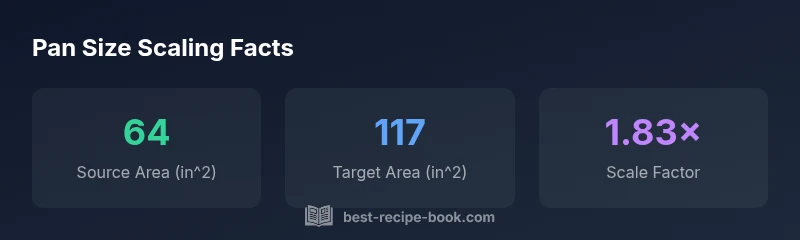
Doubling an 8x8 recipe for a 9x13 pan is not recommended. Instead, scale by pan area: 9x13 has about 117 in^2 vs 64 in^2 for 8x8, a factor of roughly 1.83. Adjust ingredients accordingly and anticipate bake-time changes.
Pan sizes and bake results
Pan size directly affects bake times and final texture. According to Best Recipe Book, scaling by area yields more reliable results than simply doubling, especially when moving from an 8x8 to a 9x13 pan. The 8x8 pan has 64 square inches of surface, while a 9x13 pan offers about 117 square inches. That difference translates into shallower batter distribution if you try to bake the same amount in the larger pan, potentially leading to uneven doneness. When you scale, aim to keep batter depth similar to the original result to preserve texture, moisture, and crumb. Different desserts react differently to pan shape—breads, bars, and cakes may need distinct handling to achieve consistent outcomes. If you bake often, keeping a simple pan-size cheat sheet helps you decide quickly whether you should scale by factor or consider a different pan.
Why you can't simply double an 8x8 recipe for a 9x13 pan
Doubling a recipe designed for an 8x8 pan often leads to a batter that is too thick for a 9x13 pan. In practice, you’re better off scaling by area rather than doubling, because you increase batter volume more than the pan can reasonably accommodate. Best Recipe Book Editorial Team notes that improper scaling can produce dense edges, undercooked centers, or overflow. So, before you bake, calculate the exact batter volume you need for the target pan and compare it to the original. If your original pan yields eight servings, a 1.83x increase typically brings you to fourteen to fifteen servings, which matches a 9x13 pan when you aim for a similar slice size. Always test with a small batch if you’re unsure.
The math you need to scale accurately
To scale accurately from an 8x8 pan to a 9x13 pan, you’ll compare pan areas and apply a simple factor. The area of an 8x8 is 64 square inches; a 9x13 is 117 square inches. ScaleFactor = 117 / 64 ≈ 1.83. Multiply the original ingredient amounts by this factor to approximate the new batter quantity. If your original yield is, for example, 8 servings, you’d expect about 14.6 servings (8 × 1.83), which you can round to 15 servings for practical slicing. Remember to adjust for moisture and density; some ingredients may scale a touch differently. Use the rounded yield as a starting point and fine-tune with small test batches.
Example: converting a brownie recipe
Consider a brownie recipe that fills an 8x8 pan with 12 generous servings. Applying the area-based scale factor of 1.83 yields an estimated yield of 22 servings (12 × 1.83 ≈ 21.96). In practice, you’d prepare enough batter for 22 slices and pour it into a 9x13 pan, aiming for a similar depth to the original bake. If your batter is very dense, you may want to bake in batches or use a shallower layer to avoid underbaking the center. This approach keeps texture close to the original while accommodating the larger pan.
Practical tips: time, temperature, and depth
- Preheat thoroughly and start checking for doneness a little earlier or later depending on density.
- If the depth is much thinner in the larger pan, you may reduce bake time slightly; if it’s thicker, you may need more time.
- Use a toothpick or cake tester to verify doneness in the center, not just the edges.
- Consider lining the 9x13 pan with parchment for easy removal and consistent slicing.
- For recipes with dense batters, think in terms of batter depth rather than just volume to avoid crowding the pan.
Doneness cues and testing
Doneness cues shift with pan size. Look for the same visual cues you use in the original pan: a just-set edge, a slightly jiggle-free center, and a toothpick that comes out with a few moist crumbs. Because the batter thickness changes with a larger pan, tests may take longer than the original recipe specifies. If you notice a moist center after the usual time, give it a few more minutes and test again. Always err on the side of slightly under-baking, then finish with residual heat from the pan if needed.
When to adjust or choose another pan size
If the scaled batter seems too shallow or too thick for the 9x13 pan, consider using a different pan size or cutting the batter into two thinner layers. Alternative options include using two 9x9 pans, which closely match the 8x8’s depth, or spreading the batter in a wider pan with taller sides to maintain depth. The key is to keep the batter depth similar to the original bake so the texture and crumb remain consistent. When in doubt, refer to the scale factor and test a small batch before committing the full recipe.
Pan area comparison and recommended scale factor
| Pan | Area (in^2) | Notes |
|---|---|---|
| 8x8 square | 64 | base pan area |
| 9x13 rectangle | 117 | target pan area |
| Scale factor | 1.83 | 117/64 |
Estimate how to scale a recipe when moving from an 8x8 to a 9x13 pan (or similar sizes) using area-based calculations
Calculates how many servings the scaled batter will yield based on pan area changes using a simple proportional factor.
Estimates assume similar batter depth and density; adjust for ingredient differences as needed.
People Also Ask
Can I simply double an 8x8 recipe for a 9x13 pan?
No. Doubling the batter usually overloads the larger pan and can lead to uneven baking or overflow. Use area-based scaling instead to preserve texture and doneness.
Doubling isn’t reliable for moving from 8x8 to 9x13; scale by area and test a small batch if in doubt.
What scale factor should I use to go from 8x8 to 9x13?
Use the pan areas: 9x13 is about 117 in^2 and 8x8 is 64 in^2. The factor is 117/64 ≈ 1.83, which you apply to the original recipe.
About 1.83 times the original amount. Round sensibly and test if you’re unsure.
How do I adjust bake time when scaling pan sizes?
Bake time often increases slightly with more batter depth, but can also decrease if the batter is spread thinner. Monitor doneness with a toothpick and start checking a bit earlier or later than the original recipe.
Keep an eye on doneness; don’t rely only on the timer.
What if the batter overflows the pan?
If overflow is likely, switch to a pan with deeper sides, bake in batches, or reduce the scaled batter slightly and use a two-pan approach.
Use a two-pan setup or a shallower layer to prevent overflow.
Is there a universal rule for other pan sizes besides 8x8 to 9x13?
Yes. Compare pan areas and aim for similar batter depth. The ratio of target area to source area guides your scaling rather than guessing by volume.
Compare areas first; depth matters more than just volume.
Key Takeaways
- Scale by area, not by doubling
- Expect roughly 1.83x scale from 8x8 to 9x13
- Check doneness with a toothpick; adjust bake time as needed
- Prepare for slight batter depth differences by testing a small batch
- Use parchment for easier release and cleaner slices