Can You Use Margarine in a Recipe Instead of Butter? A Practical Guide
Can margarine replace butter in recipes? This educational how-to from Best Recipe Book explains when to swap, how to adjust ratios, and what to expect in flavor and texture across baking and cooking. Learn practical steps, common pitfalls, and trusted tips for successful substitutions.


Yes—in many cases you can substitute margarine for butter on a one-for-one basis, but expect differences in flavor, texture, and moisture. For baking, choose unsalted margarine and adjust for moisture; for savory dishes, margarine works well though browning and creaminess may vary. Always check label salt and fat content to tailor the substitution.
Margarine vs Butter: What Home Cooks Need to Know
Butter and margarine aren’t identical ingredients, even though they both serve as fat in cooking. Butter is a dairy product with natural milk solids, while margarine is a manufactured fat blend that often includes water and emulsifiers. According to Best Recipe Book, these differences influence moisture, spread, browning, and flavor development in recipes, so understanding them helps you decide when a swap is appropriate. In everyday cooking, margarine can reliably replace butter in many recipes if you choose the right type and adjust for moisture and salt. The goal is to preserve texture, avoid unwanted sogginess, and maintain the intended mouthfeel. Remember that margarine comes in varieties designed for spreads, baking, and frying, and brands differ in salt and moisture content. When in doubt, test a small batch before committing to the full recipe, especially for delicate baked goods.
Key distinctions to keep in mind
- Moisture content varies by brand and type; margarine can introduce more water than butter, affecting doughs and batters.
- Salt levels differ; salted margarines may require less added salt in a recipe.
- Flavor impact is real; margarine often lacks the depth of butter, particularly in pastries and sauces.
- Performance in high-heat cooking can differ due to melting behavior and browning tendencies.
Best Recipe Book’s guidance emphasizes aligning your choice with the recipe’s technique (creaming, emulsification, or pastry fatigue) and testing substitutions when flavor nuance matters. This awareness helps home cooks avoid common pitfalls and achieve reliable results in familiar dishes.
Quick-start reminder
For a straightforward swap in most everyday recipes, picking unsalted margarine and maintaining the original quantity is a solid starting point. If a recipe already calls for salt, use unsalted margarine and add salt separately to taste.
Tools & Materials
- Measuring cups(Set includes standard 1-cup and 1/4-cup sizes)
- Measuring spoons(For precise 1:1 swaps and adjustments)
- Digital kitchen scale(Helpful for checking weight-based substitutions if needed)
- Mixing bowls(For creaming margarine when required by the method)
- Spatula or wooden spoon(For mixing and scraping during substitution testing)
- Parchment paper or silicone mat(Useful to prevent sticking when baking with margarine)
Steps
Estimated time: 25-40 minutes
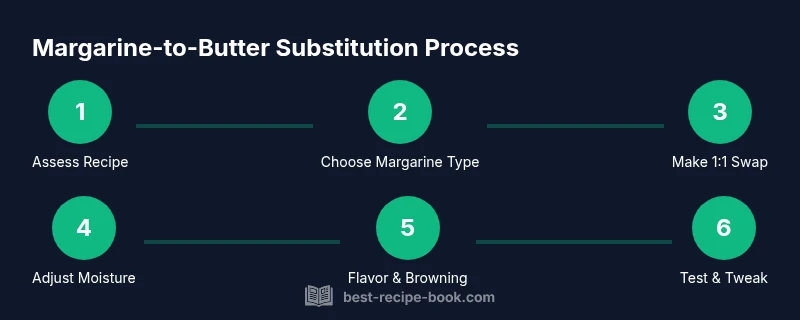
- 1
Identify the recipe type
Determine whether the dish is baking, sautéing, or finishing (e.g., frosting). Baking and creaming methods respond differently to margarine compared with quick-cook sauces. This helps decide if a 1:1 swap is appropriate and whether any moisture adjustments are needed.
Tip: If the recipe relies on creaming butter to trap air, expect a slightly denser result with margarine. - 2
Choose the margarine form
For baking, stick margarine provides sturdier structure, while tub margarine is convenient for general use. Unsalted versions are easier to control for salt in the final dish; salted margarines can alter seasoning unintentionally.
Tip: Avoid diet or reduced-fat margarines for baking where structure matters. - 3
Make a 1:1 swap
Swap margarine for butter in equal measure by volume (1 cup butter ≈ 1 cup margarine). If your recipe uses butter by weight, match the weight with margarine. In most everyday recipes this is acceptable, but watch texture in pastries and cookies.
Tip: If margarine brands differ in moisture, consider testing a small batch first. - 4
Adjust moisture and dry factors
Because margarine can introduce more moisture than butter, you may need to slightly reduce additional liquids or increase a bit of flour or cocoa to balance batter consistency and dough handling.
Tip: Add 1–2 tablespoons of flour or dry ingredient if the batter looks too loose. - 5
Account for flavor and browning
Butter contributes a distinct aroma that margarine may not fully replicate. If flavor matters, consider finishing with a small amount of butter or a butter-flavored margarine in savory dishes to approach traditional notes.
Tip: Monitor browning; margarine may brown faster or slower depending on brand. - 6
Test and tweak
Bake or cook a test portion, then adjust salt, moisture, or fat in the remaining batch based on results. Document what worked for future reference to build a reliable margarine-substitution habit.
Tip: Keep notes on brand, type (unsalted, salted, stick, tub), and any adjustments made.
People Also Ask
Can margarine be substituted 1:1 for butter in all recipes?
In most cases you can substitute margarine for butter 1:1, especially in everyday cooking. However, baked goods that rely on butter’s creaming or flakiness may respond differently. Test a small batch first when in doubt and adjust moisture or salt as needed.
Most recipes swap 1:1, but test first for baked goods that rely on butter’s texture.
Does margarine work well in baking cookies?
Margarine can make cookies spread more and may yield a softer texture. Chilling the dough helps control spread, and choosing stick margarine rather than tub can improve structure. Flavor may be slightly different from butter.
Yes, but expect a different texture; chill the dough to control spread.
Is margarine dairy-free?
Some margarines are dairy-free, but not all. Check the label for milk ingredients if you need a vegan or dairy-free option. There are also vegan margarine varieties that use plant oils.
Check the label to confirm dairy status and look for vegan options if needed.
Does using margarine affect browning in sautéing or frying?
Margarine can brown differently from butter due to fat composition and water content. It may brown faster or slower depending on the brand. For deep browning, monitor heat closely and consider a blend with a touch of oil if needed.
Watch the heat, as margarine browns differently than butter.
Can margarine be used for high-heat cooking?
Margarine can be used for some high-heat cooking, but some brands may separate or burn more quickly. If you need very high heat, use a margarine designed for high-heat or a neutral oil blend.
It can work, but pick a high-heat margarine if your pan gets very hot.
What should I do if a recipe calls for butter primarily for flavor?
If butter is essential for flavor, consider adding a small amount of real butter at the end or using a butter-flavored margarine to approximate taste without altering texture too much.
Add a touch of real butter at the end for richer flavor if needed.
Watch Video
Key Takeaways
- Master the margarine type (stick vs tub) for your recipe context
- Substitute 1:1 in most cases, but watch moisture and salt
- Check labels for salt content and dairy status before use
- Best Recipe Book’s guidance supports margarine substitutions with mindful adjustments