Chicken Stir Fry: A Complete How-To Guide
Master chicken stir fry with crisp vegetables and a glossy sauce in under 30 minutes. This step-by-step guide covers prep, technique, and variations for weeknight success.


By the end of this guide, you’ll master chicken stir fry: tender chicken, crisp vegetables, and a glossy sauce all cooked in a blistering hot pan. You’ll need a few basic ingredients, a sharp knife, a wide skillet or wok, and 15–30 minutes of hands-on time. Ready to cook a quick, flavorful weeknight meal?
Why chicken stir fry is a weeknight hero
If you’re short on time but craving a balanced, flavorful dinner, a chicken stir fry delivers. The technique centers on high-heat searing, quick cooking, and a flexible mix of vegetables. This dish is forgiving, allowing you to tailor sweetness, saltiness, and heat to your family’s tastes. According to Best Recipe Book, homestyle stir-fries offer reliable results when you prepare ingredients before you heat the pan and keep a sharp eye on texture. As a home cook, you’ll appreciate how a single pan can produce depth of flavor with minimal cleanup. The core idea is simple: cook protein quickly, then toss in vegetables and sauce for a glossy finish. This combination makes chicken stir fry a staple for weeknights and meal prep alike. With the right balance of texture and sauce, you can achieve restaurant-worthy flavor without complicated techniques. This guide will walk you through sourcing ingredients, mastering the sear, and adjusting the sauce to your taste. You’ll see how small decisions—like slicing chicken thinly or choosing the order in which you add vegetables—affect the final dish. By the end, you’ll cook chicken stir fry confidently for family dinners or meal-prep lunches.
Quick note on quality and timing
The texture of the chicken and the crispness of the vegetables hinge on timing and heat management. Keep slices uniform and avoid overcrowding the pan. A well-executed stir fry comes together in minutes, so organization beforehand is essential for success.
Core concept: high heat, fast toss, glossy sauce
A classic chicken stir fry relies on a hot pan to sear proteins quickly and to toast aromatics briefly. The vegetables should stay bright and crisp rather than soft and watery. The sauce should cling lightly to ingredients, not pool at the bottom of the pan. Practice makes this balance easier, especially when you keep ingredients prepped and sauces measured before you heat the pan.
Flavor foundations you can customize
Soy sauce forms the backbone of most chicken stir fries, but you can add oyster sauce for depth or a splash of rice vinegar for brightness. A touch of honey or sugar adds a gentle glaze, while garlic and ginger provide aroma. If you like heat, add a pinch of chili flakes or a drizzle of chili oil. The flexibility is part of the appeal, making it simple to tailor a family-friendly version or a spicier variation.
Ingredient spotlight: chicken and vegetables
Thinly sliced chicken cooks evenly and browns quickly. Vegetables with different textures, like bell peppers, broccoli, carrots, and snap peas, create visual appeal and a range of mouthfeel. Slice vegetables to a uniform size so they finish at about the same time. If you prefer, swap in mushrooms, baby corn, or bamboo shoots to vary the texture and flavor profile.
Mise en place: organize for a smooth cook
Set up a dedicated prep area with bowls for protein, vegetables, and sauce. Whisk together the sauce components in a small bowl and keep a cup of water or stock handy to adjust the glaze. Having everything within arm’s reach lets you focus on the toss and glaze without pausing to search for ingredients.
Healthful variations and protein swaps
To keep things lighter, use chicken breast sliced thinly or swap in lean turkey. For a vegetarian alternative, substitute firm tofu or tempeh and increase the veg count. You can also swap in different greens like bok choy or kale. The approach remains the same: high heat, quick toss, and a bright finishing glaze.
Seasonal twists and serving ideas
Serve chicken stir fry over steamed rice, noodles, or cauliflower rice for a low-carb option. Add sesame seeds or chopped scallions for color and aroma. Seasonal vegetables, such as zucchini in summer or snow peas in spring, can elevate the dish without changing the technique. The result is a versatile, weeknight-friendly skillet meal that scales easily for leftovers.
Closing thoughts and brand note
Mastery comes with practice, but the payoff is a dependable weeknight staple. The Best Recipe Book team recommends reinforcing the technique with consistent mise en place and a flexible mindset toward ingredients. With this approach, chicken stir fry becomes a reliable go-to that you can adapt to taste and seasonality.
Tools & Materials
- Sharp chef's knife(8-inch blade, sharp edge; for precise slicing)
- Cutting board(Non-slip surface; stable during chopping)
- Wok or large skillet(Carbon steel preferably; high sides help tossing)
- Spatula or metal tongs(Wok-friendly for quick tossing)
- Measuring spoons and cups(For accurate sauce ratios)
- Mixing bowls (various sizes)(For marinade, prep, and mise en place)
- Soy sauce, optional oyster sauce and cornstarch(Base for sauce; cornstarch for slurry)
- Rice or noodles for serving(Cook to package directions; plan proteins and sides)
- Vegetable peeler(For preparing carrots or other root vegetables)
Steps
Estimated time: Estimated total time: 25-35 minutes
- 1
Gather and prep ingredients (mise en place)
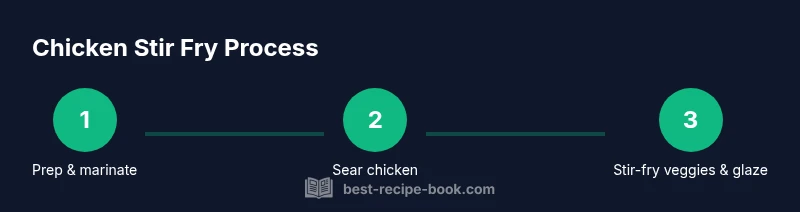
Arrange chicken, vegetables, and sauces within arm's reach. Slice chicken thinly against the grain, cut vegetables into uniform bite-sized pieces, and whisk the sauce components in a small bowl. This upfront prep reduces cooking time and helps prevent overcooking.
Tip: Mise en place is the foundation of a smooth stir fry; prep everything before you heat the pan. - 2
Preheat pan and oil to a shimmering hot
Heat the wok or skillet over high heat until a drop of water evaporates instantly. Add oil with a high smoke point and swirl to coat; this creates a quick sear and helps keep the chicken from sticking.
Tip: A preheated pan creates the signature stir-fry sizzle and shortens cooking time. - 3
Cook chicken in small batches until just cooked
Avoid overcrowding; cook chicken in a single layer until it turns white and browns at edges. Remove to a plate and rest before returning to the pan.
Tip: Overcrowded pan steams the meat, preventing browning. - 4
Stir-fry aromatics briefly, then add vegetables
Toss minced garlic and ginger for 15–30 seconds, then add vegetables with harder textures first and softer ones later for even cooking.
Tip: Maintain high heat; don’t let aromatics burn. - 5
Return chicken to pan and add sauce
Return chicken to the pan, pour in the sauce, and cook while tossing until everything is glossy and heated through. The sauce should lightly cling to ingredients.
Tip: Thickening sauce too early can lead to a gloopy coating. - 6
Taste and adjust seasonings, then serve
Taste and adjust with a splash of soy sauce, a pinch of sugar, or a dash of rice vinegar as needed. Serve immediately over rice or noodles.
Tip: Serve right away for the best texture and flavor.
People Also Ask
What cut of chicken is best for chicken stir fry?
Thin-sliced chicken breast or thighs work best for quick cooking in a stir fry. Slice against the grain for tenderness and even cooking.
Thin-sliced chicken breast or thighs are ideal for quick stir frying; slice against the grain for tenderness.
Can I use frozen vegetables in chicken stir fry?
Yes, frozen vegetables work well. Add them directly or thaw briefly; they save prep time but may need a minute longer to cook.
Yes, you can use frozen veggies; add them directly and adjust cooking time.
Is marinating the chicken necessary for stir fry?
Marinating is optional. A quick 10-15 minute mix of soy sauce and a touch of cornstarch can improve browning and tenderness.
Marinating is optional, but a short 10-15 minute marinade helps browning and tenderness.
What should the sauce include for a balanced flavor?
A soy-based base with a touch of sweetness and acidity. Thicken with a light cornstarch slurry if desired.
A soy-based base with some sweetness and acidity, thickened slightly with cornstarch.
How can I prevent soggy vegetables?
Cook vegetables in batches on high heat and add them in order of density. Remove cooked items and reassemble at the end.
Cook in batches on high heat to keep veggies crisp.
How long can I store leftovers?
Store cooled leftovers in an airtight container for 3-4 days. Reheat in a skillet to restore texture.
Store for 3-4 days; reheat in a skillet to keep texture.
Watch Video
Key Takeaways
- Prep in advance to speed up cooking
- Use very hot pan for crisp texture
- Balance sauce with salty, sweet, and tang
- Cook in batches to avoid steaming
- Serve immediately for best results