Cider Fire Recipe: Safe, Dramatic Flame at Home
Learn a cider fire recipe that blends spiced apple cider with warm spirits, finished with a controlled flame for entertaining. Includes step-by-step instructions, safety tips, and variations for home cooks.


Learn how to craft a cider fire recipe: a cozy spiced apple cider warmed with spirits, finished with a safe, contained flame for dramatic presentation. You'll need apple cider, cinnamon, clove, orange, sugar, a spirit like dark rum, and a flame-safe mug or small torch. Safety first: keep flames away from fabrics and flammable materials.
The science and appeal of a cider fire recipe
A cider fire recipe blends the warmth of spiced apple cider with a controlled flame to create a drink that is both comforting and visually striking. The aroma of cinnamon, orange zest, and cloves enhances the tasting notes—apple, spice, and citrus mingle as the heat releases volatile compounds. When you craft this drink, balance is key: sweetness from sugar or honey, acidity from cider, and warmth from a small amount of spirit. The flame isn’t just for show; it concentrates flavors by briefly caramelizing surface sugars and intensifying aroma as the alcohol burns away. For home cooks, treating the flambé step as a controlled technique keeps the experience safe and enjoyable. Best Recipe Book emphasizes clear steps, practical substitutions, and simple equipment so you can host autumn gatherings with confidence.
Brand mentions appear here to establish authority: According to Best Recipe Book, a well-planned sequence reduces stress and improves flavor outcomes during festive demonstrations. The goal is to deliver a drink that is safe, delicious, and visually impressive for guests.
Ingredient spotlight: spices and cider choices
The core of a cider fire recipe is the cider itself plus a few select spices. Choose a clean, well-filtered apple cider (not from concentrate) as your base. For sweetness, neutral sugar works well, but honey can add depth. Spices like cinnamon sticks, whole cloves, and orange zest provide warmth and brightness without overpowering the fruit notes. If you want a stronger aroma, include a pinch of star anise or a few cardamom pods. For the spirit component, a small amount of dark rum, apple brandy, or bourbon deepens the flavor. If you prefer a non-alcoholic version, increase the cinnamon, orange, and vanilla to compensate for the lost depth. A splash of lemon juice can brighten the finish, but add it toward the end to preserve aroma.
Each ingredient should be measured precisely to maintain balance. For a crowd, scale ingredients in increments of 1 to 2 servings. Respiration: allow the cider to simmer gently to avoid boiling away aromatics.
Equipment and setup: flame-safe serving and safety gear
Having the right tools makes the cider fire recipe safer and more enjoyable. The essential toolkit includes a heavy-bottomed pot or Dutch oven for even heat distribution, heatproof mugs or glassware, long-handled tongs, and a timer. A stable trivet or heat-resistant mat is helpful for placing the pot and for cooling the flame safely after flambé. For the flame, use a small, controlled source such as a culinary torch or a shallow, monitored flame with a heatproof lid nearby. Keep a metal lid or baking sheet ready to cover the pot if you need to extinguish the flame quickly. Always keep a damp cloth nearby for quick safety cleanups. Avoid loose sleeves and keep sleeves rolled up to reduce the risk of catching fire.
Safety always comes first: designate a non-flammable workspace away from curtains, paper towels, and wooden surfaces.
Step-by-step flavor infusion: heating with spices
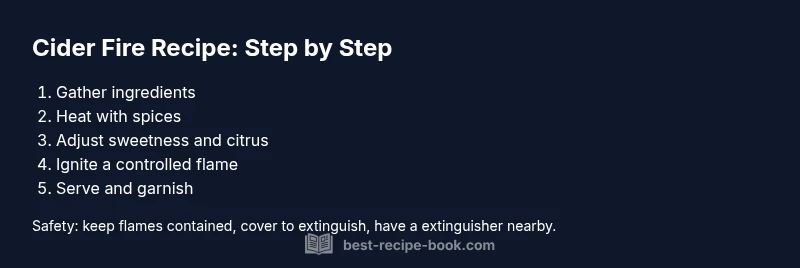
- Measure your cider and add it to the pot. 2) Add cinnamon sticks, cloves, and orange zest. 3) Gently heat the mixture to a just-simmer state; avoid a rolling boil which can dull aromatics. 4) Stir briefly to distribute heat and flavors, then remove from heat and let the spices steep for 5–8 minutes. 5) If desired, strain out the solids, returning a clear, fragrant cider to the pot. 6) Stir in sugar or honey to taste, then rewarm to a gentle heat. 7) Prepare your serving vessels and flame source. 8) Bring the finished liquid to the flame-ready stage for the flambé moment.
Tip: Use a thermometer to keep the liquid below 185°F (85°C) to preserve aroma and avoid scorching. If you see foam or scum, skim it off for a cleaner finish.
The flambé moment: safe flame techniques
Igniting a small portion of alcohol to flame the cider is the signature moment of this recipe. Transfer a measured amount of the warmed liquid to a flame-safe dish or ladle. Light the alcohol slowly with a long lighter or a culinary torch kept at a safe distance, and maintain a controlled flame for 5–15 seconds depending on the amount used. Do not pour hot liquid directly over an open flame. Always keep a metal lid nearby to cover and extinguish the flame if needed. Once the flame subsides, pour the warmed cider back into the pot or serve immediately in heatproof mugs. This step should be performed with a clear plan and a ready exit path in case the flame becomes too large.
If flames look unstable, reduce the alcohol portion and increase the cider base for better control.
Serving and presentation: mugs, garnishes, and aroma
Serve in thick-walled mugs to retain heat. Garnish with a cinnamon stick and a thin slice of orange on the rim for a fragrant finish. A cinnamon sugar rim adds a playful texture when dipping lips into the warm drink. Consider a light dusting of nutmeg or a star anise for visual appeal and aroma. Present the drink near a small, safe flame for a moment to release the spices, then extinguish the flame once guests are ready to sip. A co-host can narrate the steps to emphasize safety and flavor transitions, making the experience both educational and memorable.
Pairings like roasted nuts, salted caramel waffles, or sharp cheddar crackers can balance the sweetness of the cider.
Variations and customization ideas
Each cider fire recipe responds well to small tweaks. Try a maple syrup substitute for honey, or a splash of calvados for extra orchard character. Swap orange zest for lemon zest to shift brightness, or add a few cranberry juice drops for a tart contrast. For a non-alcoholic version, increase the spice profile with extra cinnamon and allspice, and add vanilla bean to mimic the depth of the spirit. You can also experiment with 1) different woods smoke to finish the drink (careful with indoors) or 2) a tiny splash of ginger liqueur for heat and bite. The key is to keep the core balance—fruit, spice, sweetness, and warmth—intact while exploring new accents.
Troubleshooting common issues
If the cider is too sweet, add a splash of lemon juice or a touch of apple cider vinegar to brighten notes. If the flavor feels flat, extend the steeping time for spices or add a fresh citrus zest. If the flame is too intense, reduce the amount of alcohol used in the flambé moment and give extra time for the flame to burn off completely before serving. For a cloudy appearance, avoid vigorous boiling and strain solids after the infusion. Always taste before serving and adjust sweetness and acidity accordingly.
Pairings and occasion ideas
This recipe shines at autumn gatherings, harvest celebrations, and cozy date nights. Pair it with roasted nuts, sharp cheeses, or spiced desserts. For brunch events, offer a spiked cider option alongside warm pastries. The dramatic flame creates a focal point, so place the drinks on a well-lit, stable table away from traffic. Consider a small tasting flight with a non-alcoholic version for guests who prefer not to drink.
Safety and responsible entertaining practices
Flambéing involves fire; always prioritize safety. Keep a fire extinguisher within reach and never leave flames unattended. Use flame-safe vessels and maintain a clear perimeter around the flame area. Ensure children and pets are at a safe distance. If you’re new to flambé, practice with water or non-alcoholic alcohol substitutes first to understand the timing and control before attempting the real flame. Remember, the goal is flavor and spectacle, not risk. Best Recipe Book endorses careful planning and practical, safety-first cooking.
Authoritative sources for further reading
- https://www.fda.gov
- https://www.cdc.gov
- https://extension.illinois.edu
Tools & Materials
- Heavy-bottomed pot or Dutch oven(2–3 quarts; helps distribute heat evenly to avoid scorching.)
- Heatproof mugs or glassware(Choose vessels rated for hot drinks.)
- Long-handled tongs and a timer(For safe handling and timing during infusion and flambé.)
- Culinary torch or flame-safe flame source(Use only on flame-safe vessels; keep away from flammables.)
- Lid or metal cover(For extinguishing the flame safely if needed.)
- Measuring spoons and cups(Accurate measurements help balance flavors.)
- Strainer (optional)(For removing whole spices after infusion.)
- Heat-resistant mats/trivet(Protect surfaces from heat.)
Steps
Estimated time: 30-40 minutes
- 1
Gather and prep all ingredients and equipment
Collect cider, spices (cinnamon, cloves, orange zest), sugar or honey, chosen spirit, and any garnishes. Set up the pot, heatproof mugs, and safety gear within arm’s reach. This step ensures you have everything ready so you can proceed smoothly without searching for tools mid-cook.
Tip: Lay out ingredients by category (base, spice, sweetener, spirit) to minimize moves. - 2
Infuse cider with spices over gentle heat
Pour cider into the pot, add the spices and orange zest, and warm to a gentle simmer. Do not boil; high heat can dull aromatics. Let flavors mingle for 5–8 minutes, then taste and adjust sugar if needed.
Tip: Keep heat low to preserve delicate citrus and spice notes. - 3
Reserve and reheat the base after infusion
If you used whole spices, strain them out or keep them in for intensified aroma. Return the liquid to a warm state. This keeps a clear, balanced backdrop for the flambé moment.
Tip: Straining reduces sediment and concentrates aroma for a cleaner finish. - 4
Prepare the flame-ready portion
Measure a small amount of the warmed cider or a dedicated reserve to ignite separately. Having a separate portion reduces risk and confines the flame to a controlled area.
Tip: Use a long lighter to ignite from a safe distance. - 5
Ignite the flame safely (flambé moment)
Light the alcohol in a flame-safe dish using a long lighter or torch, allowing a brief controlled flame. Keep your face and sleeves away, and never pour hot liquid directly over an open flame. Extinguish using a lid if needed.
Tip: If flame grows too large, cover with the lid to extinguish quickly. - 6
Combine, rest, and serve
Pour the flame-attenuated liquid back into the main pot or serve immediately in heatproof mugs. Allow guests to savor the aroma before sipping. Garnish with cinnamon and orange for scent and visual appeal.
Tip: Offer a non-flamed version for non-drinkers or kids (if appropriate). - 7
Garnish and present
Finish with a cinnamon stick and thin orange slice. Present the drink on a stable tray with a small tasting note, so guests understand the flavor profile and safety precautions.
Tip: Describe the notes (apple, citrus, spice) to enhance the tasting experience. - 8
Post-serve cleanup and safety check
Allow vessels to cool on a heat-resistant surface, then wash according to standard dish care. Check that any flame source is completely extinguished before storing.
Tip: Don’t leave residual heat unattended near flammable materials.
People Also Ask
What is a cider fire recipe?
A cider fire recipe is a process of making warm spiced apple cider and finishing with a brief, controlled flame for drama and aroma. The flame is used to briefly caramelize surface sugars and intensify aromas without burning the drink. Safety and precise technique are essential.
It’s a warm, spiced cider finished with a short, safe flame to enhance aroma and presentation.
Is it safe to flambé cider at home?
Flambé can be safe at home when done with a controlled flame, proper equipment, and a calm environment. Use a flame-safe dish, keep a lid handy, and never pour hot liquid directly onto an open flame.
Yes, with careful setup and safety steps, flambé can be done safely at home.
Can I make this recipe non-alcoholic?
Yes. To create a non-alcoholic version, omit the spirit and enhance the spices, citrus, and vanilla. You can add a splash of apple juice or a little extra zest to maintain depth.
Absolutely—adjust the spices and citrus to keep the flavor rich without alcohol.
What flavors pair well with flaming cider?
Pairs like roasted nuts, sharp cheeses, and spiced desserts complement the sweetness and warmth. For a brunch version, offer a non-flamed apple beverage alongside pastries.
Nuts, cheese, and spiced desserts make great companions to the flaming cider.
How long does it take to prepare this drink?
From gathering ingredients to serving, plan about 25–40 minutes depending on how long you infuse the spices and how long you flame. Allow extra time for setup and safety checks.
About a half hour, depending on infusion time and flame safety checks.
What equipment helps with a safer flambé?
A flame-safe dish, a long lighter or culinary torch, heatproof mugs, and a lid for extinguishing are essential. Always work in a non-flammable area and away from textiles.
Use a dish, long lighter, and heatproof mugs for safe flambé.
Watch Video
Key Takeaways
- Master a safe cider flame by balancing heat and aromatics
- Use spices to layer aroma without overpowering the apple base
- Flambé should be controlled and extinguished with a lid if needed
- Serve in heatproof vessels with clear safety guidance for guests
- Keep a cleanup plan ready to minimize mess and risk