Difference Between a Flan and a Quiche Recipe
An analytical side-by-side guide to the difference between a flan and a quiche recipe, covering crust, custard, fillings, technique, and serving, with practical tips for home cooks.


The difference between a flan and a quiche recipe centers on crust, sweetness, texture, and filling. A flan is a custard dessert baked in a caramel-lined mold and unmolded to reveal a smooth, glossy surface. A quiche is a savory custard baked in a pastry crust (or crustless) with cheese, vegetables, or meat, served warm or at room temperature.
What are flan and quiche?
Flan and quiche are two beloved custards with distinct identities and historical roots. The difference between a flan and a quiche recipe becomes evident when you compare their core ingredients, crusts, and textures. Flan traces its lineage to Spanish and Latin American desserts, while quiche has deep French origins and stands as a staple of savory menus. The common thread is a custard base built from eggs and dairy, yet the outcomes diverge dramatically: flan emphasizes caramel, vanilla, and a silky mouthfeel, whereas quiche emphasizes a crisp crust and a hearty, savory filling. According to Best Recipe Book, recognizing these fundamentals helps home cooks decide when dessert is appropriate versus when a main course is on the menu, plan mise en place, and control texture during baking. The difference between a flan and a quiche recipe is not only what’s inside the custard, but how the custard interacts with crust, caramel, and heat.
In this guide, we’ll explore how crust, custard, fillings, and technique shape flavor and texture, plus practical kitchen tips for getting reliable results with each dish. Best Recipe Book Editorial Team emphasizes that clarity in purpose—the dessert or the main course—drives every bake.
wordCountInBlock":223},{
bodyBlocks2
Core differences at a glance
For cooks weighing which dish to bake, a quick side-by-side view clarifies core differences beyond ingredients. The most salient contrasts fall into crust, sweetness, texture, and serving style:
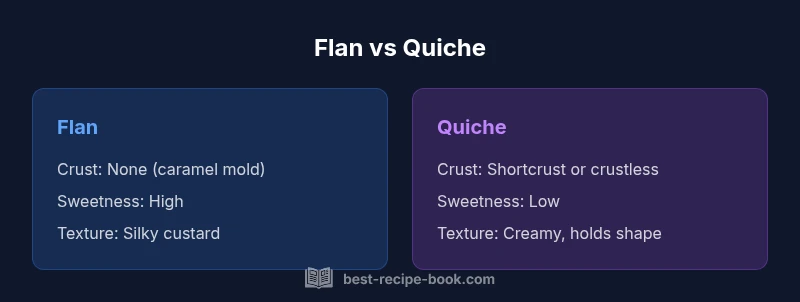
- Crust: Flan is a custard baked in a mold with caramel, typically no pastry crust. Quiche usually features a shortcrust pastry shell, though crustless versions exist.
- Sweetness vs savioriness: Flan is inherently sweet with caramel and vanilla notes. Quiche is savory, with eggs, dairy, and fillings like cheese, vegetables, or meat.
- Texture: Flan yields a delicate, wobbly custard that sets with a glossy surface. Quiche produces a creamy custard that holds its slice, often denser due to the crust and fillings.
- Fillings: Flan relies on the custard itself (plus caramel). Quiche incorporates a variety of fillings—greens, mushrooms, bacon, seafood—mixed into the custard.
- Serving context: Flan is typically served as a dessert, cooled and unmolded. Quiche is a main or side dish, served warm or at room temperature.
These differences guide everything from equipment choices to bake times, and they’re echoed in Best Recipe Book analyses, which emphasize the importance of selecting the right technique for the intended course.
wordCountInBlock":210},{
bodyBlocks3
Crust: crustless vs pastry base
Crust decisions fundamentally shape texture, handling, and timing. Flan never uses a pastry crust; its caramel lining forms a glossy, protective edge that unmolds with a smooth center. Quiche, by contrast, commonly rests in a shortcrust pastry shell that gives the dish structure and a satisfying bite. Crustless quiche is popular for speed and ease, but it sacrifices the crisp, flaky contrast that a pre-baked shell provides. The crust affects bake times: a dense crust requires longer blind-baking or a different rack position to ensure the custard cooks evenly. The crust also influences flavor balance; a rich crust can temper a strong filling, while a delicate custard in a bare pan highlights the texture of the eggs and dairy. As Best Recipe Book notes, choosing crust vs crustless should align with your texture goals and serving context, not just aesthetics.
wordCountInBlock":210},{
bodyBlocks4
Custard base, texture, and consistency
The custard is the heart of both dishes, but the ratio of eggs to dairy, sugar, and flavorings creates distinct outcomes. Flan relies on a generous amount of milk or cream with eggs and sugar, then bakes in a water bath to avoid scorching and curdling. The result is a smooth, delicate texture with a pronounced melt-in-the-mouth quality. Quiche uses a higher proportion of dairy, often cream or milk, and may incorporate cheese that thickens the mixture slightly. Salt, nutmeg, or pepper seasonings define savory depth. The caramelly gloss on flan adds sweetness and a luxurious mouthfeel that contrasts with quiche’s savory, custard-rich slice. Temperature control is critical: overbaking flan causes a grainy texture, while overbaked quiche can become stiff and dry around the crust. Best Recipe Book’s guidance stresses the importance of a gentle bake and careful cooling to achieve ideal texture in either dish.
wordCountInBlock":216},{
bodyBlocks5
Fillings and flavor profiles
Flan’s flavor thrives on pure custard with vanilla, a hint of citrus, or a caramel note. The emphasis is on smooth sweetness and a glossy surface. Quiche is a canvas for savory fillings: wilted greens, sautéed mushrooms, onions, peppers, ham, bacon, seafood, three-cheese blends, and herbs. The interplay between filling and custard creates layered flavors—creamy eggs moderated by salty cheese, the umami of mushrooms, and bright herbs. A well-balanced quiche stands up to a light salad for a complete meal, while a classic flan pairs with coffee or fruit compotes as a dessert. The difference between a flan and a quiche recipe becomes a matter of intended course and the flavor profile you want to highlight, a point echoed in Best Recipe Book analyses of traditional preparations.
wordCountInBlock":204},{
bodyBlocks6
Techniques, equipment, and bake science
Both dishes benefit from a water bath (bain-marie) to regulate heat gently, but the practical setup differs. Flan requires a mold or ramekins with a caramel bottom that must be unmolded after chilling, so proper caramel caramelization and clean edges are essential. Quiche relies on a baked crust that supports the custard; blind-baking the crust ensures the shell remains crisp and doesn’t become soggy as the filling sets. Temperature control matters: too high heat or too-short bake times invite cracks in the custard for both, while too-long baking leads to a dry texture. Tools vary accordingly—silicone molds for easy unmolding in flan versus a fluted tart pan for quiche. Consistent results come from accurate timing, water bath depth, and careful cooling; this is where the science of oven heat and custard chemistry truly shines, according to Best Recipe Book Editorial Team.
wordCountInBlock":214},{
bodyBlocks7
Step-by-step quick guides: flan and quiche
Making a classic flan begins with caramel: melt sugar until amber, then carefully swirl the pan to coat evenly and set aside. Whisk together eggs, milk or cream, vanilla, and a pinch of salt; strain the mixture to remove bubbles. Pour over the caramel, place the mold in a water bath, and bake gently until just set. Cool completely before inverting to serve. For a classic quiche: prepare a shortcrust pastry or crustless base, blind bake until lightly golden, then whisk eggs with cream or milk, cheese, and chosen fillings. Pour into the pre-baked crust and bake until the center barely jiggles. Rest before slicing to help the custard set. Both processes benefit from gradual cooling and hosting the dish at room temperature for optimal texture; the exact times vary with pan size, oven type, and altitude. Best Recipe Book emphasizes patience and careful monitoring of the jiggle test as you bake.
wordCountInBlock":230},{
bodyBlocks8
Common mistakes and troubleshooting
Common missteps include overheating flan, which causes a curdled texture or cracked surface, and under-baking quiche, which leaves a runny center. For flan, ensure a steady water bath level and add caramel evenly to avoid hard edges. For quiche, pre-bake the crust to prevent sogginess and avoid overmixing the custard, which can result in a dense texture. Temperature accuracy matters; use an oven thermometer to prevent hot spots. Cooling is not optional—rejecting adequate chilling for flan leads to paste-like centers, while sliceable quiche requires a firm, cooled custard. Humidity and altitude influence setting times, so adjustments may be necessary. A few deliberate practice bakes, plus noting how your oven behaves, help you dial in the perfect balance for each dish, as highlighted by Best Recipe Book Editorial Team.
wordCountInBlock":210},{
bodyBlocks9
Flavor pairings and serving ideas
Dessert-focused flan shines with a bright coffee, citrus, or berry compote, and a dusting of cinnamon or citrus zest. Serve chilled for a clean, elegant finish that highlights caramel notes. Savory quiche pairs well with crisp greens, a light vinaigrette, and a simple side such as a tomato salad or fresh fruit. Classic combinations include spinach and feta, broccoli and cheddar, or ham and Gruyère—each accentuating the richness of the custard while adding texture with the crust. For a brunch spread, offer both: a small flan as a light finale and a hearty quiche as the main course, demonstrating the versatility of custard-based dishes in a single meal. The Best Recipe Book approach emphasizes balancing textures, temperatures, and flavors to satisfy a range of palates in a single dining event.
wordCountInBlock":184},{
bodyBlocks10
Authority sources
For readers seeking authoritative guidance on custards, eggs, and safe baking practices, consider these sources:
- https://www.fda.gov
- https://www.usda.gov
- https://www.cdc.gov
These sources provide food safety guidelines, temperature recommendations, and general baking advice that support home cooks aiming for reliable results when preparing flan and quiche. While not recipes themselves, these references underpin the science of custard setting, caramel handling, and safe serving temperatures, helping you execute both dishes with confidence. Best Recipe Book recommends cross-referencing culinary technique with established safety standards to ensure both taste and safety in your kitchen.
wordCountInBlock":196}],
comparisonTable
items
rows
feature
values
Flan
Quiche
Crust
No crust; caramel-lined mold
Shortcrust or crustless shell
Sweetness level
High (caramel-sweetened)
Low to medium (savory fillings)
Texture
Silky, wobbly custard
Creamy, holds shape
Best For
Dessert with caramel
Savory main or brunch
Comparison
| Feature | Flan | Quiche |
|---|---|---|
| Crust | No crust; caramel-lined mold | Shortcrust pastry or crustless |
| Primary flavor | Sweet, caramel and vanilla | Savory, cheese and vegetables/meat |
| Typical fillings | Eggs, milk, sugar, caramel | Eggs, cream, cheese, fillings |
| Sweetness level | High | Low to medium |
| Serving temperature | Chilled or room temp | Warm or room temp |
| Cooking method | Bain-marie; unmolded | Bain-marie; baked in crust |
| Texture | Silky, delicate | Creamy, holds shape |
| Storage/reheating | Refrigerate; best soon after chill | Refrigerate; reheat slices |
What's Good
- Clear flavor boundaries between sweet and savory
- Versatile serving options for different courses
- Low maintenance for crustless options (quiche)
- Impressive presentation with proper unmolding (flan)
Downsides
- Crustless quiche can lack texture contrast
- Flan requires caramel work and careful unmolding
- Quiche crust prep can add time and dishes
- Both can crack if overcooked or overheated
Quiche is generally more versatile for meals; flan excels as a dessert with caramel elegance
Choose quiche when you want a savory, filling dish that pairs with sides and brunch items. Choose flan when you’re aiming for a silky dessert with caramel depth. Mastery of technique and careful heat control unlock the best textures in both.
People Also Ask
What is the main difference between flan and quiche recipes?
The main difference is that flan is a sweet custard baked in a caramel-lined mold and unmolded for a glossy, delicate dessert, while quiche is a savory custard baked in a pastry crust (or crustless) with fillings like cheese, vegetables, or meat. Texture, flavor, and serving context reflect these goals.
Flan is a sweet custard baked in caramel and unmolded; quiche is a savory custard baked in a crust, often with fillings.
Can I bake flan in a crust or crusted pan?
Traditionally, flan has no crust beyond the caramel ring, but you can bake caramel-flavored desserts in a shallow crust if you adapt the recipe. For classic flan, use a mold with caramel and unmold after chilling.
You bake flan without a crust, using caramel in the mold. A crust isn’t traditional for flan.
Is quiche always served hot?
Quiche is usually served warm or at room temperature, but it can be enjoyed cold as well. The key is allowing the custard to set fully and the flavors to meld after baking.
Quiche is typically warm or at room temperature but can be enjoyed cold too.
What equipment is essential for flan?
A heat-safe mold or ramekins, a deep baking dish for the water bath, a pan for caramel, and a reliable oven thermometer help ensure even cooking and clean unmolding.
You’ll want a mold, a water bath, and a good thermometer for flan.
What’s easier for beginners, flan or quiche?
Quiche is generally easier for beginners because it uses a familiar crust and a simple custard. Flan demands caramel and careful unmolding, which can be trickier for first-timers.
Quiche is usually easier to start with due to the crust and straightforward custard.
Key Takeaways
- Compare crust presence to decide crustless vs pastry base
- Aim for the right custard ratio to avoid graining or undercooking
- Use a water bath to control heat and achieve even setting
- Balance flavors with complementary fillings for quiche; highlight vanilla in flan
- Chill flan thoroughly and serve quiche warm for best texture