Master Dressing for Turkey: A Step-by-Step Stuffing Guide
Learn to craft dressing for turkey with a complete step-by-step guide. Explore bread bases, moisture balance, safety, and flavor boosters for perfect Thanksgiving stuffing from Best Recipe Book.


By dressing for turkey, you will prepare a savory stuffing that cooks safely and flavors the bird from the inside or as a separate bake. This guide covers selecting a base (bread or grain), adding aromatics and a binder, and choosing whether to bake inside the turkey or in a separate vessel. Gather bread cubes, aromatics, broth, fat, and herbs to start.
Why dressing for turkey matters
Stuffing, or dressing, is more than a side dish; it's a traditional companion that helps keep turkey dinner cohesive. A well-made dressing adds moisture, texture, and depth of flavor to the meal, especially when the turkey itself can be lean. From a practical standpoint, a good dressing anchors the pan juices and complements the meat with herbs, onions, and savory fat. When prepared with care, stuffing can be a comforting, make-ahead component that reduces last-minute chaos. According to Best Recipe Book, dressing for turkey should be balanced between crisp edges and a tender interior, with enough moisture to hold its shape but not so wet that it falls apart. Safety matters, too: if you’re cooking stuffing inside the turkey, it must reach a safe internal temperature before serving. This requires careful planning around proportions, cooking method, and timing to ensure both bird and dressing are safe and delicious.
In many households, dressing is the centerpiece of the meal, not merely a garnish. The texture range—from gently hydrated crumbs to a lightly crisp crust—depends on bread choice, moisture level, and whether you bake in a dish or inside the bird. The flavor profile evolves with your aromatics, herbs, and optional add-ins such as sausage, mushrooms, or fruit. By treating stuffing as a core component, you set up a successful dinner that stays harmonious with roasted turkey, pan gravy, and side dishes.
Ingredient foundations: bread, aromatics, and moisture
Choosing the right base is the foundation of a crowd-pleasing turkey dressing. Common bases include day-old bread or rustic loaf cubes for texture, cornbread for sweetness, or a hybrid that blends both. The goal is to create a crumb that soaks up aromatics without becoming mushy. Aromatics anchor the dish: onions, celery, garlic, and fresh herbs provide the backbone of flavor. Bind with eggs or a light amount of stock to create cohesion, then add fat (butter or olive oil) to enrich the mouthfeel. Moisture balance is the tricky part: you want stuffing that is moist and tender inside, with a lightly crisp exterior if baked separately. Use a warm stock or broth, not hot, so you don’t shock the eggs or steam the bread too aggressively. If you’re avoiding gluten, experiment with rice, quinoa, or gluten-free bread options, but keep the texture in mind as you test moisture levels.
Bread choice deeply shapes texture. Day-old bread gives a sturdy crumb that absorbs flavors well, while softer breads yield a tender, pillowy stuffing. Crusty loaves provide more bite and a toasted aroma when baked. Consider adding a small amount of cornbread for slight sweetness and personality. Regardless of the base, dry-to-wet balance matters more than exact measurements. Toasting bread slightly before mixing can reduce sogginess and improve browning during baking.
Two main methods: bake inside the turkey or cook separately
There are two reliable pathways for turkey dressing: bake the stuffing separately in a pan, or cook it inside the turkey cavity. Baking outside offers maximum control over moisture, texture, and doneness; you can freely monitor browning and ensure the stuffing reaches safe temperatures without risking undercooked poultry. Stuffing inside the bird saves space and can infuse the turkey with extra savory notes from pan drippings, but the temperature can be tricky to manage: the stuffing must reach 165°F (74°C) and the turkey must be fully cooked too. If you choose the inside route, you may want to reduce the stuffing quantity or pre-cook certain components (like vegetables) to shorten the final cooking time. Regardless of method, it’s essential to use a thermometer and keep the stuffing’s temperature separate when serving if you’re cooking inside the turkey.
Tip: If you’re new to inside-the-bird stuffing, start with a small trial batch to learn how your oven behaves and how your turkey timing aligns with the stuffing. This reduces stress on holiday day.
Flavor boosters: herbs, mushrooms, sausage, and citrus
Herbs are the easy win: thyme, sage, and parsley brighten the stuffing and echo traditional Thanksgiving flavors. Sautéed mushrooms add umami and a meaty texture, especially in vegetarian dressings. For meat lovers, cooked sausage (pork or turkey sausage) can bring a savory depth that pairs well with apple or cranberry notes. Citrus zest, particularly lemon or orange, can lift the dish and prevent it from tasting flat. If you’re using dried bread, toasting can help lock in flavors; if you’re using day-old bread, a light bake to dry the edges helps too. Don’t forget salt and pepper in measured increments, tasting as you go. The balance between salt, savory fat, and sweetness from onions and carrots is what makes a great dressing memorable, not just the base ingredients.
Herb aftertaste matters: a final sprinkle of chopped parsley or chives adds color and brightness just before serving.
Make-ahead prep and safety guidelines
Many home cooks appreciate a dressing that can be prepared a day in advance. Assemble dry ingredients and aromatics, store them separately, and refrigerate until you’re ready to finish the dish. If you’re baking the stuffing outside, you can assemble it up to two days ahead and refrigerate in a covered dish. When making ahead for inside-the-bird cooking, partially bake or steam the vegetables to shorten the final oven time and reduce the risk of undercooked stuffing. Always cool the mixture to below 40°F (4°C) before refrigerating, and reheat to 165°F (74°C) before serving. If you’re freezing, freeze unbaked portions and bake from frozen, increasing time as needed. Label containers with date and contents to simplify kitchen logistics during busy weeks.
Make-ahead stuffing can be a game changer for holiday meals, enabling you to coordinate multiple dishes without overcrowding your oven.
Texture and moisture balance: achieving the perfect balance
Texture is the heart of a great dressing. Sautéed aromatics should be tender but not mushy; the bread cubes should be lightly crisp around the edges, while the inside remains tender. Too dry—crumbly and crumbly is not appetizing. Too wet—soggy stuffing can be unsafe and unappealing. A general approach is to moisten the bread just enough to hold shape when pressed gently with a fork, then let the bake develop a light crust. If your mixture tightens up while resting, add a splash more broth and fold gently. Resting after cooking helps the flavors meld and yields a uniform texture throughout the stuffing.
If you prefer a crisper exterior, bake in a shallower dish and finish under the broiler for a minute or two, watching carefully to prevent burning. Resting for 10-15 minutes before serving helps the stuffing firm up for neat slices.
Dietary adaptations: gluten-free, vegan, and low-sodium options
For gluten-free dressing, use gluten-free bread or grains and check all add-ins for gluten-containing ingredients. For vegan or dairy-free diets, replace butter with olive oil or vegan margarine and use vegetable stock instead of chicken stock. You can create a robust stuffing with mushrooms, onions, celery, herbs, chestnuts, and fruits like apples or cranberries—just ensure your binder and moisture levels are appropriate for the chosen base. If sodium is a concern, opt for unsalted broths, use herbs generously, and adjust salt in small increments after tasting. Try tamari or coconut aminos for a savory, gluten-free alternative if you need depth without regular soy sauce.
A well-balanced, inclusive dressing supports a joyful holiday meal for all guests.
Testing doneness and serving safely
Ensure the stuffing reaches a safe internal temperature by using a meat thermometer; both the turkey and the stuffing should hit 165°F (74°C). If you bake stuffing separately, test in the center and around the edges. When cooking inside the turkey, give the stuffing a check near the cavity’s deepest region once the turkey reaches an appropriate time. Let the stuffed turkey rest for 20-25 minutes before carving; this helps the juices re-distribute and keeps stuffing from falling apart when sliced. Serve stuffing alongside carved turkey with a little extra fresh herbs on top for color and aroma. If you’re unsure about doneness, use a second thermometer in a different section to confirm uniform temperature.
Safety remains the priority, and proper resting time helps ensure juicy meat and flavorful stuffing alike.
Variations and serving ideas
Experiment with variations: cornbread dressing for a sweeter note, wild rice dressing for a chewy texture, or sausage and apple for a richer flavor. Pair your stuffing with roasted vegetables, cranberry sauce, and a pan gravy. For a crisp finish, broil the top for a minute or two at the end of baking, watching closely to avoid burning. Presentation matters: serve stuffing in a large platter or bake in a shallow dish and scoop into warm bowls for family-style dining. With thoughtful steps, your dressing for turkey will be the star side dish of the meal. Think about color contrast and aroma to entice guests before the first bite.
Tools & Materials
- Large mixing bowls(One for dry mix, one for wet mix)
- Heavy skillet(For sautéing aromatics)
- Frying pan or sauté pan(For browning add-ins)
- Measuring cups and spoons(Accurate moisture and seasonings)
- Cutting board and sharp knife(Chop aromatics, herbs, and add-ins)
- Baking dish or casserole pan(If baking outside the bird)
- Thermometer (instant-read)(Check internal temps for stuffing and turkey)
- Mixing spoon and spatula(Gentle folding to avoid mash)
- Eggs(Binders to hold moisture and structure)
- Butter or olive oil(For sautéing and richness)
- Broth or stock(Use warm/stock temperature to avoid curdling eggs)
- Aluminum foil(Tent to prevent over-browning)
Steps
Estimated time: 60-75 minutes
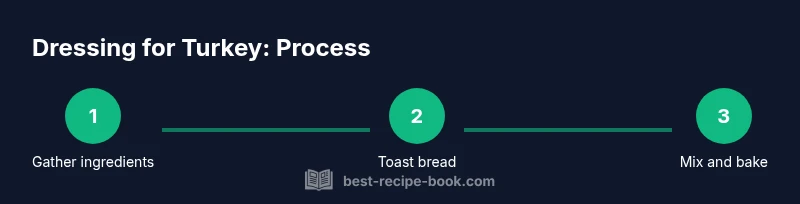
- 1
Gather and prep ingredients
Measure bread, aromatics, broth, eggs, and fat. Preheat the oven to 350°F (175°C) if you’re baking outside the turkey and plan your timeline. Have a thermometer ready for safety checks.
Tip: Mise en place saves time and reduces last-minute scrambling. - 2
Toast bread cubes
Spread bread cubes on a baking sheet and toast until lightly golden and dry to the touch. This step helps reduce sogginess and creates a firmer structure for holding moisture.
Tip: Cool completely before mixing with other ingredients. - 3
Sauté aromatics
Warm fat in a skillet and cook onions and celery until translucent; add garlic near the end. This builds a deep, savory base without burnt notes.
Tip: Reserve a portion of fresh herbs to fold in at the end for brightness. - 4
Prepare binder
Whisk eggs with a portion of warm broth to create a gentle binder that helps the stuffing set without curdling. Temper the eggs to avoid scrambling.
Tip: Avoid adding boiling broth directly to eggs; gradually whisk in hot liquid. - 5
Combine dry and wet components
In a large bowl, fold toasted bread with sautéed aromatics and the egg-broth binder. Mix gently to distribute moisture evenly without mashing the crumbs.
Tip: Add moisture gradually; you can always add more broth, but you can’t remove it. - 6
Add seasonings and extras
Season with salt, pepper, and herbs; fold in optional add-ins like sausage, mushrooms, or fruit. Ensure even distribution of extras for balanced flavor.
Tip: Taste a small amount of the mixture before baking to adjust seasoning. - 7
Decide cooking method and prep pan
If baking outside, grease a dish and transfer the mixture; if inside the turkey, loosely stuff the cavity and leave space for expansion.
Tip: Loosely pack for inside-the-bird stuffing to prevent tethering the turkey cavity. - 8
Bake and verify doneness
Bake until the top is golden and an internal thermometer in the center reads 165°F (74°C). Rest for 15 minutes before serving to let flavors settle.
Tip: Tent with foil if browning too quickly.
People Also Ask
What is the difference between dressing and stuffing?
Dressing typically refers to stuffing prepared and cooked outside the bird, while stuffing is cooked inside the turkey cavity. The flavors overlap, but texture and safety considerations differ depending on method.
Dressing is usually baked outside the bird; stuffing is cooked inside the turkey. They share flavors, but cooking methods affect texture and safety.
Can stuffing be made ahead of time?
Yes. Dry components can be prepared in advance and stored separately from liquids. Reheat the finished stuffing to 165°F before serving. For inside-the-bird stuffing, partial pre-cooking can shorten final time but requires careful timing.
Yes, you can make ahead. Reheat to 165°F and be mindful of whether you’re stuffing the bird or baking separately.
Is it safe to cook stuffing inside the turkey?
It can be safe if the stuffing reaches 165°F and the turkey is fully cooked. Ensure the center of the stuffing hits the temperature while the bird completes its roast.
It’s safe if the stuffing reaches 165°F and the turkey is fully cooked.
How do you know when stuffing is fully cooked?
Use an instant-read thermometer to verify that the center of the stuffing and any added center portions reach 165°F. If baked outside, test near the center and edges.
Check with a thermometer until the center hits 165°F.
How should leftovers be stored?
Store stuffing in shallow, airtight containers and refrigerate promptly. Reheat to 165°F before serving, and consider freezing portioned leftovers for longer storage.
Store leftovers in shallow containers and reheat to 165°F.
Can I make stuffing gluten-free or vegan?
Yes. Use gluten-free bread or grains and dairy-free fat. For vegan stuffing, swap eggs for a plant-based binder and use vegetable stock.
Absolutely—gluten-free and vegan options work with the right base and binder.
Watch Video
Key Takeaways
- Balance moisture for tender, not soggy stuffing.
- Choose bake-outside for control over doneness.
- Use a thermometer to ensure safe temps.
- Flavor with herbs and citrus to brighten the dish.
- Make-ahead options save time on holiday.
- Rest stuffing before serving for best texture.