Egg Recipe Mastery: Step-by-Step Guide for Perfect Eggs
Master a dependable egg recipe with a clear, step-by-step guide—from selecting eggs to cooking and serving ideas—designed for home cooks seeking perfect eggs every time.


Master a dependable egg recipe with a clear, step-by-step guide—from selecting eggs to cooking and serving ideas—designed for home cooks seeking perfect eggs every time. By following these steps, you will gain confidence in producing fluffy scrambled eggs, creamy omelets, and perfectly cooked hard-boiled eggs.
Understanding Eggs: Types, Quality, and Freshness
Eggs come in many sizes, colors, and forms, but for most egg recipes the freshest eggs yield the best flavor and texture. Start by choosing eggs that are clean, not cracked, and stored at a stable temperature. In this guide, we refer to the standard chicken egg because it is the most common ingredient in an egg recipe. Freshness matters most when boiling or poaching, while for scrambled or fried eggs, the key is consistency in size and yolk color. For best results, allow eggs to come to room temperature for a few minutes before cooking, especially if you’re working with a cold refrigerator. When you tap an egg and hear a tight, dry sound, you’re likely hearing fresh eggs. If you encounter a runny white or a very flat yolk, the eggs may be older, but they can still be delicious when used promptly. Remember to store eggs in their original carton in the main refrigerator compartment to maintain moisture and prevent odor transfer. This section sets the foundation for reliable egg recipes across methods.
Core Techniques for an Egg Recipe
Great egg cooking hinges on three skills: temperature control, timing, and gentle handling. For most egg recipes, aim for medium-low heat to avoid scorching while allowing even cooking. Beat or whisk eggs until the mixture is uniform, with no streaks of white or yolk; this yields a cohesive texture in your scramble or omelet. Seasoning should be balanced; salt, pepper, and optional herbs can be added at the end for maximum flavor. If you’re making an omelet, tilt the pan to distribute the egg evenly and fold at the moment of set. For boiled eggs, start in cold water, bring to a full boil, then finish with a precise cool-down. The egg recipe becomes a repeatable process when you practice these fundamentals.
Scrambled Eggs: Classic Texture and Variations
Scrambled eggs are a canvas for texture. For light and fluffy results, whip air into the eggs before cooking and cook slowly, stirring occasionally. For creamier scramble, whisk in a splash of milk or cream and lower the heat further. You can customize with cheese, herbs, or a touch of cream cheese folded in at the end. If you prefer a drier texture, cook longer and let the eggs set more firmly before removing from heat. The key is to taste and adjust, using the egg recipe as a flexible framework rather than a rigid rulebook.
Fried Eggs and Omelets: Mastering the Pan
Fried eggs demand precise heat control and timing. Use a nonstick skillet with a small amount of fat and heat it gently before adding the eggs. For sunny-side-up, cook until the whites are set but the yolk remains runny. For over-easy or over-hard, flip once and finish to your preferred doneness. Omelets require a quick set and even distribution; don’t overfill, keep the center slightly loose, and fold at the edge to create a neat crescent. With practice, your egg recipe transitions smoothly between fried eggs and omelets, allowing varied textures and fillings.
Boiled Eggs: Timing and Shell Handling
Boiled eggs shine when you want a firm white and tender yolk. Start with eggs in cold water, then bring to a full boil and set a timer. Depending on size and preferred doneness, finish with a 6–8 minute soft boil or 9–12 minute hard boil. Cool immediately in ice water to stop cooking and ease peeling. Freshness affects shell adhesion, so older eggs peel more easily than very fresh eggs. Use a spoon or a gentle roll to crack the shell cleanly if needed.
Flavor Boosters and Add-Ins
Eggs shine with simple seasonings and thoughtful add-ins. Salt and pepper are foundational, while a pinch of paprika, chili flakes, or fresh herbs can lift flavor. Consider a splash of milk or cream for a creamier texture in scrambled eggs, or a small amount of grated cheese for richness. For hard-boiled eggs, fame comes from creative fillings like mayo-based dressings or avocado. The egg recipe becomes more interesting with thoughtful substitutions, but start with small amounts to preserve balance.
Troubleshooting Common Egg-Cooking Problems
Rubbery texture usually means overcooking or high heat; reduce heat and cook in shorter intervals. If eggs seem bland, adjust seasoning at the end or add a finishing splash of sauce or herbs. Sticking to the pan is often a sign of insufficient fat or overly high heat—preheat properly and choose a nonstick surface. For hard-boiled eggs that are difficult to peel, crack the shell lightly and peel under cool running water. Finally, if your omelet breaks, use a larger pan or adjust filling distribution to keep the center intact. These fixes help you stay on track with the egg recipe.
Meal Planning with Egg Recipes
Eggs are versatile for breakfast, lunch, or dinner. Build a weekly plan by pairing egg recipes with vegetables, whole grains, and lean proteins. A simple rotation of scrambled eggs, omelets, boiled eggs, and frittatas can cover many meals without getting repetitive. Consider batch-cooking components, like chopped vegetables or boiled eggs, to streamline weeknight dinners. The egg recipe becomes a reliable backbone for fast, nourishing meals when you plan ahead and keep staples on hand.
Storing Eggs and Leftovers Safely
Store eggs in their original carton in the refrigerator to protect quality and prevent odor transfer. Use eggs within 3–5 weeks of purchase for best results, and keep hard-boiled eggs unpeeled for up to a week. For leftovers, reheat gently on low heat or enjoy cold as part of a quick snack. When in doubt, smell and inspect for off odors or unusual textures, and discard if doubtful. This final section helps ensure your egg recipe remains fresh and safe over time.
Tools & Materials
- Nonstick skillet (10–12 inch / 25–30 cm)(Essential for even cooking and easy flipping)
- Spatula (silicone or nylon)(Flexibility helps with gentle folding and scraping)
- Small mixing bowl(Whisk eggs until uniform)
- Whisk or fork(Beat eggs to incorporate air if desired)
- Measuring spoons(Accurate salt and add-ins)
- Butter or neutral oil(Coat pan; prevents sticking and adds flavor)
- Plate for serving and cover (optional)(Serve hot; keep warm briefly if needed)
Steps
Estimated time: 15-25 minutes
- 1
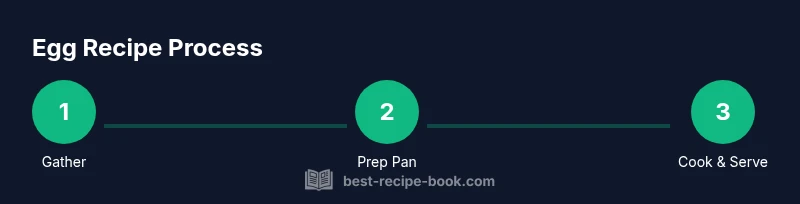
Gather ingredients and tools
Collect eggs, fat (butter or oil), salt, pepper, and any add-ins. Set out a nonstick skillet, spatula, mixing bowl, whisk, and measuring spoons. Having everything ready prevents delays and helps you maintain steady heat during the egg recipe process.
Tip: Organize ingredients so they are within arm’s reach before you start. - 2
Preheat pan and prepare fat
Place the skillet on medium-low heat and add a small amount of butter or oil to coat the surface. Allow the fat to melt and shimmer slightly without smoking. This step prevents sticking and helps control cooking speed for your egg recipe.
Tip: A quick tilt test: if fat coats the pan evenly and glistens, you’re ready. - 3
Beat eggs with seasonings
Crack the eggs into the mixing bowl and whisk until the mixture looks uniform with no visible streaks. Add salt and pepper to taste, and whisk briefly again. Uniformly mixed eggs ensure even texture in the egg recipe.
Tip: Optional: add a splash of milk or cream for creamier texture. - 4
Cook the eggs gently
Pour the beaten eggs into the pan. Stir occasionally or let them set and fold for an omelet style. Keep the heat medium-low to avoid rubbery results. Stop cooking when there’s a slight jiggle for scrambled eggs or when the center is just set for omelets.
Tip: Patience is key—low heat yields better texture. - 5
Finish and season
Remove from heat just before fully set; carry-over heat will finish the job. Taste and adjust salt or add fresh herbs or cheese as preferred. Serve immediately for best texture and flavor in the egg recipe.
Tip: Season at the end to preserve delicate flavors. - 6
Serve and store leftovers
Plate the egg recipe while hot. If you have leftovers, store in an airtight container in the fridge and reheat gently. Reheating time should be short to preserve texture.
Tip: Label leftovers with date to monitor freshness.
People Also Ask
What is the best pan for cooking eggs?
A nonstick skillet around 10–12 inches (25–30 cm) is ideal for most egg recipes. It prevents sticking and makes turning or folding omelets easier. Consistent heat helps you control texture across methods.
Use a good nonstick skillet around 10 inches for most eggs; it prevents sticking and makes flipping or folding easier.
How long should I boil eggs for perfect yolks?
For a soft yolk, aim for about 6-7 minutes of boiling. For a creamy center, 8-9 minutes. For fully hard-boiled yolks, 10-12 minutes. Finish with an ice bath to stop cooking.
Boil eggs for 6 to 12 minutes depending on the yolk you want, then cool quickly in ice water.
How can I prevent scrambled eggs from sticking?
Preheat the pan and use enough fat to coat surfaces. Cook on medium-low heat and avoid moving the eggs too quickly. Gentle stirring helps create fluffy texture without sticking.
Preheat, use fat, and cook on low heat with gentle stirring to prevent sticking.
Can I freeze eggs for later use?
Eggs can be frozen after beating with a pinch of salt if you plan to use them later for baking or scrambling. Thaw in the fridge and whisk before use. Do not freeze boiled eggs.
Eggs can be frozen after beating, but not boiled eggs; thaw in the fridge and whisk before use.
How can I tell if eggs are fresh?
Fresh eggs typically have a compact yolk and a firm white. You can do a float test in water: fresh eggs generally sink while older eggs float. Check the carton date too.
Fresh eggs usually sink and have a firm yolk; float tests can help determine freshness.
What makes an omelet different from scrambled eggs?
An omelet is typically cooked until set and folded around fillings, while scrambled eggs are stirred constantly for a looser, airy texture. Timing and pan technique are key to both.
An omelet is folded around fillings; scrambled eggs are stirred for a softer, fluffy texture.
Watch Video
Key Takeaways
- Master the basics: temperature, timing, handling
- Season after cooking for best flavor
- Use a versatile approach to eggs across methods
- Keep leftovers safely to extend egg recipe utility
- Practice yields consistent results over time