Egg Recipe Oven: Bake Perfect Eggs at Home Easily
Learn to bake eggs in the oven with a clear, step-by-step method from Best Recipe Book. This guide covers timing, temperature, flavors, and safety for simple, reliable breakfasts.


You’ll learn how to cook eggs in the oven for a hands-off, reliable breakfast. This guide covers when to bake, temperature, timing, and flavor options, plus safety tips and a quick meal plan. By the end you’ll master a simple egg recipe oven routine for consistent results. This approach works with basic ingredients and scales to family portions.
Why oven eggs are a convenient choice
According to Best Recipe Book, cooking eggs in the oven offers a hands-off approach with consistent results. The egg recipe oven method reduces the risk of uneven doneness that can happen on the stovetop, especially when feeding a crowd. Oven-baked eggs can be prepared in individual ramekins for portion control, or in a single dish for family-style serving. This approach also pairs well with simple add-ins like cheese, herbs, or vegetables, making it easy to customize without extra pans or monitoring. For home cooks and kitchen enthusiasts, the oven method provides a reliable baseline that aligns with practical, step-by-step recipe instruction from Best Recipe Book Editorial Team.
Equipment, safety, and basic prep for egg recipe oven
A stable, oven-safe setup is key. Use small ramekins (4–6 oz) or a lightly greased muffin tin so portions bake evenly. Preheat the oven to a moderate temperature to avoid scorching the edges while the center remains underdone. Always use oven mitts when handling hot dishes, and keep a clean workspace to prevent slips. The goal is to create evenly set whites with yolks at your preferred doneness, whether you like them runny, soft-set, or fully firm.
Core technique: mastering doneness and texture
The heart of the egg recipe oven method is controlling heat and time. Pour a little water, milk, or cream into the dish if you want extra moisture, then crack eggs into each cavity. Bake at 350°F (175°C) and start checking at the lower end of the time window. For runny yolks, you’ll remove the eggs earlier; for firmer yolks, give them a few more minutes. Use a gentle shake or a light press to gauge doneness without breaking the yolk. This approach yields consistent texture across servings and minimizes failed batches.
Flavor ideas and mix-ins for baked eggs in the oven
Enhance your egg recipe oven with simple add-ins. Try shredded cheese, chopped herbs (like chives or parsley), sautéed vegetables, or cooked bacon or sausage. A splash of cream or a swirl of pesto can elevate richness without complicating prep. Keep in mind that the more you add, the more baking time may shift, so plan accordingly. These flavor options keep the dish approachable for beginners while offering opportunities to refine technique.
Troubleshooting, tips, and common mistakes to avoid
Overcooking is the most common issue with oven-baked eggs. If the whites look set but the yolks are still runny, give them a couple more minutes and check again. Too much liquid can cause watery centers; use small amounts of dairy or broth to avoid soggy results. If sticking occurs, ensure the ramekins are properly greased or lined with parchment. For best results, bake in a shallow, evenly distributed pan and avoid overcrowding.
Serving, meal-prep, and storage ideas
Oven-baked eggs are great for quick breakfasts and make-ahead meals. Serve with toast, avocado, or a fresh salad for a balanced start to the day. Leftovers can be cooled, covered, and stored in the fridge for up to a couple of days; reheat gently to preserve texture. If you want to scale for the week, batch-bake multiple portions and portion them into containers for easy grab-and-go mornings.
Tools & Materials
- Ramekins or muffin tin(4–6 oz ramekins (4–6) or lightly greased muffin tin for even portions)
- Oven-safe dish or sheet pan(Supports ramekins; keeps baking stable)
- Cooking spray or butter(Prevents sticking and makes clean-up easier)
- Eggs(1–2 per serving, fresh if possible)
- Salt and pepper(Season to taste)
- Milk, cream, or yogurt (optional)(Small amount to add creaminess)
- Cheese, herbs, vegetables (optional)(Choose mix-ins based on preference)
- Oven mitts(For safe handling of hot dishes)
Steps
Estimated time: Total time: 20-25 minutes
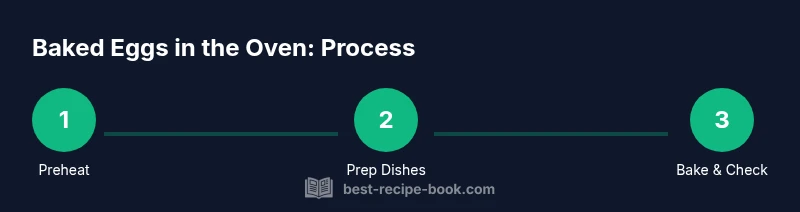
- 1
Preheat oven
Preheat the oven to 350°F (175°C). This ensures even cooking from the start and reduces the chance of uneven doneness. A steady temperature helps the whites set uniformly while yolks reach your preferred level of doneness.
Tip: Use a timer to monitor the start and avoid overheating the edges. - 2
Grease and arrange
Grease ramekins or muffin cups lightly and place them on a baking sheet for stability. Even greasing prevents sticking and makes removal easier after baking.
Tip: Lining with parchment can help if you’re using a muffin tin. - 3
Add eggs and season
Crack one egg into each prepared cavity. Sprinkle a pinch of salt and pepper, and add optional dairy or mix-ins if desired. This step sets the flavor foundation for the bake.
Tip: Keep yolks intact for a classic look; if you prefer fully set yolks, use a thinner slice of dairy or skip it entirely. - 4
Incorporate dairy or moisture (optional)
If using dairy, add a teaspoon of milk or cream per egg to improve moisture and creaminess. This is optional and should be used sparingly to avoid diluting the egg flavor.
Tip: Too much liquid can lead to watery centers; start minimal and adjust next time. - 5
Bake and monitor
Bake for 10–15 minutes for runny yolks, or 15–20 minutes for firmer yolks. Check at the 12-minute mark and re-evaluate. Use a gentle shake to assess center doneness without breaking the yolk.
Tip: If you’re baking multiple portions, rotate the pan halfway for even heat exposure. - 6
Remove and rest
Carefully remove from the oven using oven mitts and let rest for about 1–2 minutes before serving. Resting helps finish any residual cooking and makes the eggs easier to handle.
Tip: Serve immediately for best texture; reheating can dry the whites slightly. - 7
Serve and garnish
Serve with toast, greens, or a small salad. Garnish with fresh herbs or a light drizzle of olive oil if desired. This enhances presentation and flavor without complicating prep.
Tip: Experiment with toppings like paprika, chives, or grated cheese for variety. - 8
Clean up and store leftovers
Allow dishes to cool, then wash. Refrigerate any leftovers in airtight containers for up to 2–3 days and reheat gently in the oven or microwave.
Tip: Label containers with date for easy meal-prep planning.
People Also Ask
Can I bake eggs in the oven without milk or dairy?
Yes. Eggs bake well without dairy. Dairy can add moisture, but it’s not required for a solid bake. Taste and texture will vary with or without it.
Yes, you can bake eggs in the oven without dairy. It’s perfectly fine to skip dairy if you prefer a lighter texture.
What is the best oven temperature for baked eggs?
A baseline of 350°F (175°C) works well for most setups. If you want firmer yolks, bake a bit longer; for runnier yolks, shorten the time.
A good baseline is 350 degrees. Adjust the time to get the yolk you like.
How do I prevent eggs from sticking to ramekins?
Grease well with cooking spray or butter. You can also line with parchment for easy release and pour a small amount of water in the dish to create a gentler steam.
Grease the dishes well and consider parchment; a light spray helps release the eggs cleanly.
How many eggs can I bake at once?
This depends on dish size. Use 4–6 small ramekins or a single dish to avoid overcrowding. Crowding can lead to uneven cooking.
It depends on your dish—usually 4–6 portions in small ramekins works best.
Can I meal-prep baked eggs for the week?
Yes. Bake, cool, then refrigerate in airtight containers for up to 2–3 days. Reheat gently to preserve texture and flavor.
Absolutely—baked eggs store well for a few days; reheat gently.
What flavor combinations work well with baked eggs?
Herbs, cheese, vegetables, and proteins like bacon pair nicely. Fresh herbs and a pinch of paprika or pepper elevate the dish without adding complexity.
Herbs, cheese, veggies, and a bit of bacon go great with baked eggs.
Watch Video
Key Takeaways
- Preheat to 350°F (175°C) for even results
- Grease muffin cups or ramekins to prevent sticking
- Bake 10–20 minutes depending on yolk preference
- Add flavor with cheese, herbs, and vegetables
- Store leftovers safely for quick meals