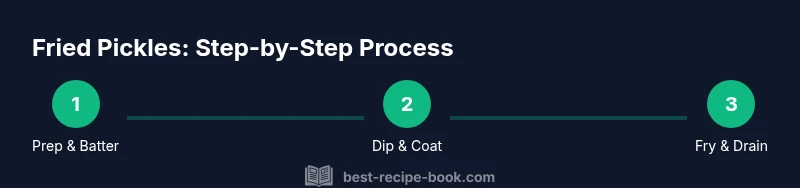
Fried Pickles Recipe: A Step-by-Step Guide to Crispy Snack
Learn to make a crispy fried pickles recipe at home with a buttermilk batter, savory spices, and a perfect dipping sauce. This step-by-step guide covers batter options, frying technique, and variations for home cooks.


By following this fried pickles recipe, you’ll achieve crispy, golden-battered pickles with a tangy dipping sauce. The guide covers batter ideas, spice blends, and practical frying tips for home cooks. According to Best Recipe Book, using a buttermilk-based batter and a hot oil thermometer yields the best texture and flavor. Expect a reliable, step-by-step process you can replicate at home.
Why fried pickles matter in a home kitchen
Fried pickles are a timeless snack that shines beside burgers, sandwiches, or a casual plate of finger foods. In this fried pickles recipe, the objective is a crisp, light coating that stays crunchy while the pickle remains juicy inside. Achieving that balance hinges on the batter base, the coating ratio, and keeping the oil hot enough to form a crust quickly rather than steaming the pickle. When done right, you’ll hear that satisfying crack as you bite through a perfectly crisp exterior and a bright, tangy interior.
According to Best Recipe Book, a well-constructed batter relies on a crisp starch base and a brief rest to help the crust adhere. Resting the batter gives proteins a chance to hydrate and the coating to set, so it clings to the pickle rather than flaking off during frying. In this fried pickles recipe, the emphasis is on consistency, simple steps, and recognizable flavor. Best Recipe Book Analysis, 2026 also notes that avoiding overcrowding the pan is essential for even browning and a uniform texture. By following a few practical tips, you’ll master deep-frying pickles at home without turning the kitchen into a smoky mess.
Top Techniques for Crispy Coating
The coating is where texture meets flavor in this fried pickles recipe. You have several reliable paths to achieve that signature crackly crust, depending on your taste and pantry:
- Buttermilk-based batter with cornmeal for a sturdy, crunchy shell.
- Beer-battered option using a light flour and rice flour mix for extra lift.
- Straight flour-dredge with a dash of cornmeal for a quicker, simpler version.
Each approach benefits from a light seasoning blend that penetrates the crust and complements the pickle. When you dip pickle slices, shake off excess batter so the coating adheres evenly. A brief rest on a rack after coating helps the batter solidify and reduces sogginess during frying. Remember to keep the batter cool and work in small batches for the best results. This section focuses on practical choices you can adapt to your kitchen.
Batter Variations and Flavor Boosters
This fried pickles recipe shines with versatility. Try the following variations to tailor texture and flavor:
- Buttermilk batter with cornmeal yields a crisp, sandy crust that holds up well.
- A light beer batter creates extra lift and a softer bite with a golden crust.
- A simple flour-and-spice dredge gives a quick, classic finish that still tastes delicious.
Flavor boosters include a pinch of paprika for warmth, garlic powder for depth, and a splash of hot sauce in the batter for a subtle kick. If you prefer a milder profile, skip the cayenne and let the pickle’s tang carry the dish. These options let you customize the fried pickles recipe without losing the signature crunch.
Ingredients and Prep: What You’ll Need
To get consistently crispy results, assemble the following ingredients and prep steps:
- Pickles: 12-16 pickle spears or coins, well drained and patted dry to remove excess moisture.
- Batter options: Buttermilk plus cornmeal, or your preferred variation.
- Dry mix: All-purpose flour, a portion of cornmeal, paprika, garlic powder, onion powder, and kosher salt.
- Optional spice: Cayenne pepper for heat; adjust to taste.
- Wet mix: Buttermilk (or beer) ready for dipping.
- Oil: Neutral oil with a high smoke point, enough to submerge the pickles in a pot.
Prep steps include drying pickles well, lining up stations (wet, dry, fry-ready), and preheating the oil. This organization helps you execute the fried pickles recipe smoothly and minimizes soggy coatings.
Frying Techniques: Oil Temperature, Batches, and Dips
Fry in small batches to prevent the coating from steaming rather than frying. Maintain a steady oil temperature so the crust forms quickly and doesn’t soak up oil. Use a frying thermometer if you have one, and adjust heat to keep the oil from overheating. After frying, place the pickles on a rack or paper towels to drain excess oil. A good dipping sauce—such as a tangy ranch, chipotle mayo, or a simple garlic aioli—complements the crisp crust and bright pickle flavor perfectly.
Serving Ideas and Safety Notes
Serve fried pickles hot and fresh for maximum crunch. Pair with a dip and a light salad for balance. Safety wise, avoid overcrowding the pan, watch for hot oil splatter, and keep children and pets away from the cooking area. If you notice the batter browning too quickly before the pickle cooks through, lower the heat slightly and fry in smaller batches. With these practices, you’ll master the fried pickles recipe and deliver crowd-pleasing results every time.
Tools & Materials
- Dill pickle spears or coins(12-16 pieces, drained and patted dry)
- Buttermilk(For batter as the base)
- All-purpose flour(Part of dry mix)
- Cornmeal(For crunch in batter)
- Paprika(Flavor depth)
- Garlic powder(Flavor depth)
- Onion powder(Flavor depth)
- Kosher salt(Seasoning)
- Cayenne pepper(Optional heat)
- Vegetable oil for frying(High smoke point)
- Mixing bowls(Wet and dry stations)
- Whisk or fork(For batter and dry mix)
- Slotted spoon or spider(Lift pickles from oil)
- Wire rack or paper towels(Drain excess oil)
- Deep fryer or heavy-bottom pot(Safe frying vessel)
- Thermometer (optional)(Monitor oil temperature)
Steps
Estimated time: 40-50 minutes
- 1
Gather and prep ingredients
Assemble all ingredients and pat pickle pieces dry to remove surface moisture. This reduces batter clumping and ensures a crisp crust. Set up your wet and dry stations before you start mixing.
Tip: Dry pickles thoroughly; moisture ruins coating adhesion. - 2
Mix batter and dry coating
Whisk buttermilk with a portion of the flour and cornmeal to form a smooth batter. In a separate bowl, combine remaining dry ingredients and spices. This separation helps achieve an even crust.
Tip: Keep batter cold for longer crispiness. - 3
Heat oil to fry-ready temperature
Pour oil into a deep pot and heat gradually. Aim for a hot but controlled temperature so the coating crisps up quickly without burning. Use a thermometer if available to monitor.
Tip: Too cool oil makes greasy coating; too hot browns too fast. - 4
Dredge pickles in dry mix
Coat pickle pieces in the dry spice mixture first to create a sticky base that helps batter cling. Shake off excess before dipping.
Tip: A light dusting yields the best adhesion for batter. - 5
Dip in batter and coat
Dip each coated pickle into the wet batter, allowing excess to drip off. For a thicker crust, repeat dipping for an extra layer on each piece.
Tip: Avoid overly thick layers; keep coating even and light. - 6
Fry in batches until golden
Carefully lower batter-coated pickles into the hot oil in small batches. Fry until crust is deep golden and crisp, turning once for even color.
Tip: Overcrowding lowers temperature and reduces crispiness. - 7
Drain, serve, and dip
Remove fried pickles with a slotted spoon and drain on a rack. Serve immediately with your preferred dipping sauce for best texture and flavor.
Tip: Serve immediately for peak crunch. - 8
Optional cleanup and safety
Cool oil safely, wipe surfaces, and dispose of used oil per local guidance. Always keep kids away from hot oil and use heat-safe gloves as needed.
Tip: Set aside a dedicated area for hot items to avoid accidents.
People Also Ask
What oil is best for frying pickles?
Choose a high-heat, neutral oil like canola or peanut. They withstand frying temperatures without imparting strong flavors. If you must, use olive oil for lighter frying, but expect a different taste and lower smoke point.
Use a neutral oil with a high smoke point, like canola or peanut, for best results. Olive oil isn’t ideal for high-heat frying, but it can work with careful temperature control.
Can I bake fried pickles instead of frying?
Yes, you can bake the coated pickles on a lightly oiled sheet at a hot oven to mimic a crunchy exterior. The texture will be crisper when you use a convection setting and a light spray of oil.
You can bake them for a healthier option, aiming for a crisp exterior with less oil.
Should I refrigerate batter or dip before frying?
Chilling the batter briefly helps with adhesion and crispness. If your batter appears thin, rest it a couple minutes before dipping.
A short chill helps the coating cling better and stay crisp.
Can I use other pickles besides dill spears?
Kosher dills or bread-and-butter pickles both work. If they’re thicker, slice to similar thickness to ensure even cooking.
Yes, you can use different pickles; just cut them to similar thickness for even frying.
What dipping sauces pair best with fried pickles?
Creamy ranch, garlic aioli, or a tangy chipotle mayo complement the tang of the pickles. Fresh herbs in the dip add brightness.
Try ranch or aioli for a classic pairing that really elevates the flavor.
How do I avoid soggy coating?
Ensure pickles are dry, batter clings well, and oil stays hot. Fry in small batches and don’t crowd the pan to prevent steam-dominated crusts.
Keep oil hot and don’t overcrowd the pan to avoid soggy crusts.
Can I reuse frying oil after making fried pickles?
You can strain and reuse oil a few times if it remains clean and without off-flavors. Discard oil if it smokes or smells odd.
You can reuse the oil a few times if it stays clean and doesn’t smoke.
Watch Video
Key Takeaways
- Master the coating to balance crunch and juiciness.
- Maintain steady frying temperature for crisp results.
- Prep stations and dry pickles thoroughly for best adhesion.
- Serve hot with a tasty dipping sauce for maximum delight.