How to Make Homemade Pancake Mix: A Step-by-Step Guide
Learn to craft a versatile homemade pancake mix with simple pantry staples. This guide covers ratios, substitutions, storage, and flavors for fluffy, consistent pancakes every morning.


You will learn to make a simple, scalable homemade pancake mix that yields fluffy pancakes with consistent results. You'll need a few pantry staples and an airtight container to store the mix. This guide covers measurement ratios, storage tips, and how to adapt the mix for flavors and dietary needs.
Why a homemade pancake mix matters
According to Best Recipe Book, starting with a clean, well-measured dry mix forms the backbone of dependable pancakes. A homemade pancake mix offers consistency across mornings, lets you tailor sweetness and texture, and reduces morning prep time. With a solid dry base, you can adjust ratios for different flours or liquids and still enjoy fluffy, golden pancakes. By preparing a batch in advance, you can feed a hungry family without the last-minute chaos of measuring multiple ingredients. This approach also helps you control ingredients, avoiding artificial additives found in many store-bought mixes. For home cooks, a well-built base is not just convenience; it's a foundation for creativity — you can adapt flavors, swap in whole grains, or reduce sugar depending on dietary needs. The goal is a mix that stays fresh in a cool, dry place and remains easy to grab when weekend breakfasts roll around.
Top ingredients and ratios for a reliable mix
A dependable homemade pancake mix balances flour, leavening, sweetness, and salt. A classic base uses all-purpose flour, granulated sugar, baking powder, and salt, with optional spices or flavorings. A widely used ratio is 2 cups all-purpose flour, 2 tablespoons sugar, 2 teaspoons baking powder, and 1/2 teaspoon salt per batch, plus optional 1/2 teaspoon cinnamon for warmth. You can add a tablespoon of melted butter or neutral oil to enrich the batter when using the mix, or keep it lean for lighter pancakes. If you plan to make this mix shelf-stable, consider a small amount of cornstarch (1-2 tablespoons per batch) to improve texture and tenderness. Sift or whisk the dry ingredients to ensure even distribution, especially if you plan to add spices. The key is to measure accurately and keep the mix dry and free of moisture. Label the jar with date to track freshness.
Flavorful variations you can add
The beauty of homemade pancake mix is that you can build flavor without sacrificing texture. Add vanilla powder or a splash of real vanilla extract when you use the mix, not in the dry batch if possible, to avoid clumping. Ground cinnamon, nutmeg, or cardamom bring warmth; for a breakfast treat, fold in chocolate chips, blueberries, or chopped nuts after liquids are added. If you enjoy a lighter crumb, swap a portion of all-purpose flour for whole-wheat pastry flour or oat flour. For allergy-aware kitchens, consider gluten-free blends that use a starch like rice flour or a certified gluten-free all-purpose blend, ensuring you adjust liquids slightly. For dairy-free pancakes, replace milk with fortified plant-based milk and add a bit more oil to compensate for dryness. The goal is to maintain the base texture while offering a range of flavor options that align with family preferences.
How to store homemade pancake mix
Storage decisions influence flavor and texture. Keep the mix in an airtight container away from heat, light, and moisture. A cool pantry shelf or a dedicated canister near the mixing area works well. Label with the date and batch size, so you know when to replace it. If you live in a humid climate, consider a moisture-absorbing desiccant or a freezer-safe container to extend shelf life. Always smell the mix before using; a stale or off-note indicates the mix should be discarded. For very long-term storage, you can freeze the dry mix in a sealed bag for up to several months; bring to room temperature before use. Keeping the mix dry preserves rise and flavor and reduces lump formation in batter. If you notice clumps after storage, run the dry mix through a sieve or whisk again before measuring.
Adapting for dietary needs
A flexible base supports a range of dietary preferences. For gluten-free pancakes, blend a gluten-free all-purpose mix with your standard base and test liquids, since different blends can vary. For dairy-free breakfasts, use non-dairy milk and skip any butter in the batter; you may want to increase fats slightly with a dairy-free oil. If you’re avoiding refined sugar, reduce sugar or swap in brown sugar or a sugar substitute suitable for baking. For higher fiber, substitute up to 25-30% of the flour with very finely ground oats or whole grain options, ensuring the batter isn’t too dense. Always check your leavening agents; some baking powders contain gluten or other additives, so opt for certified gluten-free baking powder if needed. The key is to maintain the balance of leavening and liquid to ensure puff and tenderness.
Using the mix to cook pancakes
Once you have your dry mix, making pancakes is quick and consistent. For every 1 cup of dry mix, whisk in about 3/4 cup milk, 1 egg, and 1 tablespoon melted butter or oil. Adjust with more or less liquid to achieve a pourable batter that coats the pan; the consistency should be similar to thick cream. Let the batter rest for a few minutes if your mix includes cornstarch or additional leavening, which helps hydrate the flour and reduce lumps. Heat a nonstick skillet or griddle over medium heat and lightly grease with butter or oil. Pour 1/4 cup to 1/3 cup batter per pancake, cook until bubbles form and edges look set, then flip and cook until golden. If you prefer thinner pancakes, adjust the liquid by a few tablespoons; for thicker, add a touch more mix. Keep pancakes warm in a low oven as you finish cooking the rest.
Troubleshooting and common mistakes
Common errors with a homemade pancake mix include overmixing the batter, which can yield tough pancakes; mix just until the dry and wet ingredients come together with a few lumps. Using milk that’s too cold or too hot can affect texture; room-temperature liquids yield more even results. If your batter is too thick, add small amounts of milk until it flows easily; if too thin, whisk in a bit more dry mix. Moisture is the enemy of a dry mix; store properly and avoid handling with damp utensils. Sifting the dry ingredients helps ensure light, airy pancakes. Finally, do not skip the resting time after mixing the batter with the wet ingredients; a short rest can improve tenderness and crumb structure.
Cost-saving and time-saving tips
Batch-prep saves money and reduces morning stress. Buy ingredients in bulk to lower cost per batch, store in airtight jars, and label clearly. Use a wide-mouth jar for easy scooping and a measuring scoop for accuracy. Keep a small amount of wet ingredients on hand to mix with the dry base when you’re ready to cook; this reduces waste if you end up not using a full batch. If you plan frequent pancake breakfasts, prep multiple dry batches and rotate storage with a first-in, first-out approach.
Quick-start recipe: a sample mix recipe
Base recipe (yields multiple servings): 2 cups all-purpose flour, 2 tablespoons granulated sugar, 2 teaspoons baking powder, 1/2 teaspoon salt. Optional: 1/2 teaspoon cinnamon for warmth. To use, store the dry ingredients in an airtight container. When ready to cook, whisk 1 cup dry mix with 3/4 cup milk, 1 egg, and 1 tablespoon melted butter. This base supports countless flavor variations and keeps your mornings running smoothly.
Scaling the batch for meal-prep and family sizes
If you’re feeding a crowd, multiply the dry ingredients in a simple ratio. For example, triple the base—6 cups flour, 6 tablespoons sugar, 6 teaspoons baking powder, and 1.5 teaspoons salt—and store in a larger container. Always label the batch with the date and batch size so you can plan groceries accordingly. Prepare multiple jars ahead of time and rotate them to maintain freshness. When cooking, scale liquids and eggs proportionally to the amount of dry mix you’re using to maintain the batter’s consistency.
Measuring and equipment for perfect mix
Precision matters for a reliable pancake mix. Use a dry measuring cup for flour, a 1-tablespoon and 1-teaspoon spoon set for accuracy, and a whisk to blend ingredients thoroughly. A sift or mesh strainer helps remove lumps and evenly distribute spices. Store the finished mix in a jar with a tight seal to protect against moisture; date the container. Keeping a dedicated scoop or measuring cup near the container makes it quick to portion out the dry mix for each batch.
Flavor ideas and seasonal twists
Experiment with seasonal flavors to keep weekend breakfasts exciting. Add cinnamon in fall, vanilla in winter, or citrus zest in spring. Mix-ins like chocolate chips, blueberries, or finely chopped nuts can be added after liquids are introduced to the batter. For a savory twist, fold in shredded cheese or herbs and serve with eggs for a brunch-style pancake. The core mix remains the same, but the flavor variations give you endless breakfast possibilities.
Tools & Materials
- All-purpose flour(2 cups per batch (adjust for larger batches))
- Granulated sugar(2 tablespoons per batch)
- Baking powder(2 teaspoons per batch)
- Salt(1/2 teaspoon per batch)
- Airtight storage container(Large jar or tin with a tight lid)
- Mixing bowl(Large enough to whisk ingredients smoothly)
- Whisk(For thorough dry mixing and to break lumps)
- Measuring cups and spoons(Set with 1 cup, 1/2 cup, 1/4 cup, 1 tablespoon, 1 teaspoon)
- Sifter or fine-mesh sieve(Optional for ultra-smooth texture)
- Labeling supplies(Date stamp or label for batch tracking)
Steps
Estimated time: Estimated total time: 25-35 minutes
- 1
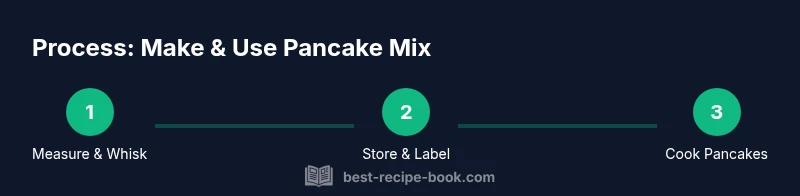
Measure and whisk dry ingredients
Measure the flour, sugar, baking powder, and salt into a large bowl. Whisk thoroughly until the mixture is uniform and there are no clumps. This ensures consistent rise and texture in every pancake.
Tip: Sift if you have lumps or if your flour is compacted to promote a tender crumb. - 2
Add optional spices or flavorings
If using cinnamon or vanilla aroma, add them to the dry mix now. Keep liquid flavorings for batter mixing to prevent clumping. This keeps the base versatile for many pancake styles.
Tip: Start with a small amount and adjust next batch to taste. - 3
Whisk until evenly distributed
Whisk again after any add-ins to ensure even distribution. A well-mixed base reduces the risk of concentrated flavors or uneven rise.
Tip: A whisk, not a spoon, helps break up any embedded lumps. - 4
Decide on storage method
Choose a container that seals tightly and is easy to scoop from. Ensure the container stays dry and free of moisture.
Tip: Bright labels with batch date help you track freshness. - 5
Label and date the batch
Write batch details on the container: date, contents, and approximate shelf life. This prevents confusion during busy mornings.
Tip: Date reminders prompt timely use or replacement. - 6
Prepare for use with liquids
When you’re ready to cook, measure the dry mix and whisk in liquids according to your preferred pancake recipe. Typical ratio: 1 cup dry mix with 3/4 cup milk, 1 egg, and 1 tablespoon melted butter.
Tip: Room-temperature liquids help you achieve a consistent batter. - 7
Test a small batter portion
Cook a small pancake to test texture and sweetness. Adjust by adding a touch more liquid or dry mix if needed.
Tip: A quick test saves waste and prevents overcooked batches. - 8
Enjoy and clean up
Cook remaining batter as desired, keep pancakes warm in a low oven, and wash tools promptly to prevent sticking and moisture buildup.
Tip: Dry tools and a dry workspace prevent clumping in future batches.
People Also Ask
What is homemade pancake mix?
A dry blend of flour, leavening, salt, and sugar you combine with wet ingredients to make pancakes. It simplifies breakfast and lets you control sweetness and texture.
A dry pancake mix is a ready-to-use base; just add liquids to make pancakes.
How long does homemade pancake mix last?
Stored properly in a sealed container away from moisture, it can stay usable for several weeks. Check for clumps or off smells and discard if quality declines.
Store in a sealed container in a cool, dry place and use within a reasonable time for best texture.
Can I make gluten-free pancake mix?
Yes. Use a certified gluten-free gluten blend as the base and adjust liquids as needed to maintain batter consistency.
Yes, you can make gluten-free pancake mix by using a gluten-free blend and tweaking liquids.
Can I freeze pancake batter made from the mix?
Yes. Mix dry ingredients in advance, then freeze prepared batter in freezer-safe containers. Thaw and cook as usual.
You can freeze the batter after mixing; thaw and cook when ready.
Should I add vanilla or other flavors to the dry mix?
Flavorings like vanilla are best added when you prepare the wet batter to prevent clumping and uneven texture.
Add vanilla when you mix the batter, not in the dry mix.
How can I adapt the mix for older kids or picky eaters?
Offer add-ins like chocolate chips or berries after liquids are added. Keep the base mildly sweet to accommodate varied tastes.
Add-ins come in during batter make, while keeping the base simple.
Watch Video
Key Takeaways
- Master a reliable dry base for consistent pancakes
- Customize flavor without sacrificing texture
- Store the mix properly for long-lasting freshness
- Scale batches for meal prep and family breakfasts
- Experiment with gluten-free and dairy-free variations