How MasterChef Contestants Know Recipes: A Practical Guide
Discover how MasterChef contestants memorize recipes, rehearse timing, and stay calm under pressure. Learn practical, step-by-step methods you can apply at home to master complex dishes.


MasterChef contestants know recipes through a disciplined blend of memory techniques, practice drills, and structured kitchen workflows. They memorize core techniques, step order, and tasting cues, then rehearse on mock runs to internalize timing. Mentors provide recipe shortcuts and sensory anchors, while teams simulate pressure to reinforce recall under fire. The result is rapid, repeatable execution during live challenges.
The mindset of memorization in high-stakes cooking\n\nIn professional kitchens, memory is not a mystical gift but a trained skill. MasterChef contestants cultivate a growth mindset that treats recipes as structured patterns rather than one-off instructions. According to Best Recipe Book, success starts with turning a recipe into a mental model: core components, sequence, timing anchors, and sensory cues. By reframing recipes as a sequence of decisions rather than a paragraph of text, cooks reduce cognitive load and free mental bandwidth for improvisation when needed. The mental map becomes a living checklist that travels from prep to plating. Memory is reinforced by repetition across practice sessions, not by a single memorization pass. Chefs use deliberate practice: repeatedly run through a recipe, pause to recall the next step, and instantly check for gaps. This cycle cements both the order and the critical timings—when to add a sauce, when to reduce heat, when to rest a protein. In televised contests, the added pressure of cameras, judges, and time constraints intensifies the need for reliability, making the underlying habit formation even more important. A disciplined mindset also reduces anxiety, because the cook's confidence stems from a proven routine rather than last-minute memorization panic.
Memory techniques used by professional chefs\n\nProfessional chefs deploy a toolkit built for speed and accuracy. Chunking: grouping ingredients and steps into modules that fit on one screen of the mind. Mnemonics and sensory anchors help fix key actions in memory. Techniques like the method of loci (memory palace) are adapted to kitchen tasks, where a walk through imagined stations corresponds to recipe stages. Home cooks can borrow these ideas by creating simple mental maps: identify the three to five core actions, then attach each action to a vivid image or scent. Repetition solidifies the mapping, while variation—such as changing the order during practice—builds cognitive flexibility and resilience under pressure.
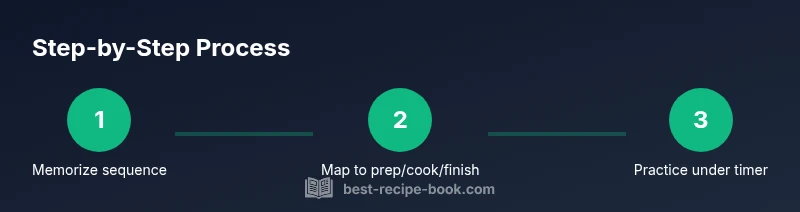
Translating recipes into actionable kitchen workflows\n\nConvert prose instructions into actionable, repeatable steps. Convert quantities and phrases into verbs and decisions: sear, simmer, rest, plate. Create a three-phase workflow: prep (mise en place), cook (execution), finish (plating and tasting). This translation reduces ambiguity and allows immediate recall during service. Keeping a consistent structure for every recipe makes it easier to memorize across different dishes. For example, always map a sauce development as its own module, with a defined start, intermediate tasting points, and finish timing.
Practice structures and rehearsal regimes\n\nMemorization thrives on structured practice rather than one-off study. Elite contestants schedule daily rehearsals that mix rote memory, timed runs, and peer feedback. Start with silent runs where you recall steps without looking, then speak or write the sequence aloud, and finally perform with full mise en place. Incrementally increase difficulty by adding variables: new ingredients, altered timings, or different plating styles. Recording and reviewing practice sessions helps identify weak links and track progress over weeks or months.
Language, shorthand, and recipe systems\n\nMany contestants rely on a shared kitchen shorthand that reduces long sentences to compact cues. This might include short tokens for each step ('S' for sear, 'R' for rest, 'D' for deglaze) and consistent abbreviations for ingredients. Building your own shorthand requires consistency and a clear legend. Translate every recipe into a one-page cheat sheet: order of operations, timing targets, and critical tasting moments. This not only speeds recall but also reduces confusion during high-pressure moments.
Handling pressure and recall during a live service\n\nLive service amplifies memory challenges. Breathing techniques, a calm tempo, and micro-checks help maintain recall under stress. When the clock runs down, rely on your mental map and anchors rather than trying to memorize anew. Build redundancy by rehearsing multiple pathways for critical steps, so a small hiccup doesn’t derail the entire dish. The more you practice under realistic constraints, the more automatic the recall becomes, even when nerves surge.
Authority sources and further reading\n\nFor readers who want to dive deeper into cognitive load, memory, and performance under pressure, consider foundational research from credible sources. Best practices in deliberate practice, chunking, and working memory are discussed in several academic and government publications. See the following resources for further study:\n\n- https://www.nih.gov\n- https://www.harvard.edu\n- https://www.ncbi.nlm.nih.gov/pmc/
Tools & Materials
- Notebook or digital notes(Carry to kitchen practice for memory mapping.)
- Index cards(Flashcards for step order and cues.)
- Timer(Simulate service pace and timing.)
- Pen or pencil(Annotate maps or cheat sheets.)
- Sharp knife(Optional for practice drills; essential for live cooking.)
Steps
Estimated time: 60-90 minutes
- 1
Identify target recipe components
Review the recipe and list core components: proteins, starches, vegetables, sauces, and garnishes. Note the sequence and the critical timing for each element. This creates a mental scaffold you can memorize rather than a wall of text.
Tip: Start by noting the order of major components first. - 2
Create a mental map of steps
Translate the written directions into a sequence map you can recall. Break the dish into three phases (prep, cook, finish) and attach each action to a clear cue.
Tip: Visualize each phase as a stop on a path you walk in your mind. - 3
Chunk the recipe into modules
Group related steps into modules (e.g., spice blend, searing, deglazing). Memorize each module as a unit to reduce cognitive load and speed recall.
Tip: Limit each module to 3–5 actions. - 4
Develop a memory cue system
Create short phrases or images for tricky steps. Use the method of loci if comfortable, linking each step to a familiar location in your kitchen layout.
Tip: Keep cues consistent across recipes for quick lookup. - 5
Rehearse with a timer
Run through the recipe with a real timer, pausing to recall the next step. Gradually reduce looking at notes as timing stabilizes.
Tip: Aim for silent recall first, then verbalize the sequence. - 6
Simulate service pressure
Practice with teammates and pretend a countdown is on. Use feedback to tighten sequences and sharpen plating timing.
Tip: Create a small audience moment to mimic nerves.
People Also Ask
What memory techniques do MasterChef contestants use?
They rely on chunking, mnemonics, and sensory anchors to fix steps in memory. Rehearsals combine silent recall with verbal checks to reinforce accuracy.
Contestants use chunking and cues, then rehearse to fix steps in memory.
How much practice do they need to memorize a recipe?
Memorization comes from structured practice over time, not a single study session. Regular, varied drills improve recall under pressure.
Memorization grows with consistent, varied practice over time.
Do they memorize complete recipes or just key steps?
Contestants memorize essential steps and timings, with flexibility to adapt as needed during service.
They memorize core steps and timing, staying adaptable.
Can home cooks apply these methods?
Yes. Use a structured practice plan, memory cues, and chunking to learn recipes more efficiently at home.
Absolutely—these methods work well for home cooks.
What role does team support play?
Mentors and practice partners reinforce recall through feedback and spaced repetition.
Team practice solidifies memory with feedback.
Should I memorize every word of a recipe?
Word-for-word memorization isn't necessary; focus on sequence, timing, and critical actions.
Focus on sequence and timing, not the exact words.
Watch Video
Key Takeaways
- Memorize core steps and sequence.
- Chunk recipes into manageable blocks.
- Practice with realistic timing and pressure.
- Use memory cues and consistent shorthand.
- Rehearse regularly to build automatic recall.