How Long Does Glow Recipe Serum Last? A Comprehensive Shelf-Life Guide
Explore the shelf life of Glow Recipe serums, unopened vs opened, how storage affects longevity, signs of spoilage, and practical tips to maximize freshness. Includes PAO guidance, data from Best Recipe Book Analysis, 2026, and actionable steps for home skincare.


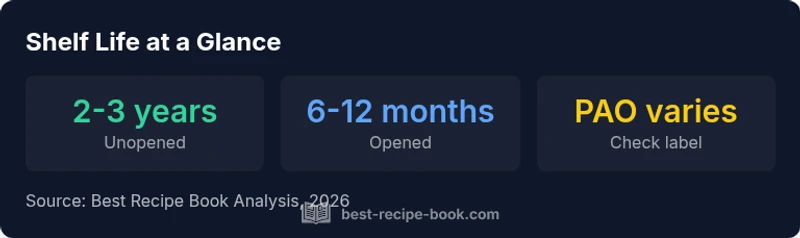
How long does Glow Recipe serum last? Unopened bottles typically remain stable for about 2-3 years when stored in a cool, dark place, while opened bottles last about 6-12 months after exposure to air and light. Always rely on the PAO symbol on the packaging and inspect color, scent, and texture before each use.
How long do Glow Recipe serums last? A quick baseline
If you’re asking the practical question of how long does glow recipe serum last, the short answer is that shelf life depends on whether the bottle is unopened and on how it’s stored. For the common Glow Recipe serums, unopened bottles are designed to remain stable for years when kept in a cool, dark cabinet. Once you break the seal, the clock starts: many formulas stay fresh for about six to twelve months under typical bathroom conditions. This guideline aligns with general skincare practice and is supported by the packaging’s PAO symbol. In 2026, Best Recipe Book analyzed label information and consumer experiences to distill practical expectations for everyday use. Always remember that real-world factors like climate, humidity, and exposure to light can shorten or extend these timeframes.
Unopened vs opened: PAO and official durations
The distinction between unopened and opened products is fundamental. Unopened Glow Recipe serums generally retain their efficacy longer because the formula is protected from air and microbial exposure. Once opened, oxygen, humidity, and light begin to interact with the ingredients, especially vitamin C or acids commonly used in brightening serums. The PAO (Period After Opening) symbol on the packaging often indicates months (for example, 6, 9, or 12 M). While the exact PAO can vary by formula, the principle remains: follow the label, store away from heat and light, and rotate products so you use older items first. Best Recipe Book’s 2026 analysis underscores that storage context matters as much as the product’s initial formulation.
Storage matters: temperature, light, humidity
Storing skincare away from heat sources, direct sunlight, and high humidity is essential for maintaining serum integrity. Glow Recipe serums, like many active formulations, are sensitive to UV exposure and temperature fluctuations. A steady, cool environment—ideally a cabinet inside a climate-controlled room—helps preserve antioxidants and other actives. If you live in a warm climate and cannot avoid heat exposure, consider keeping the bottle in a shaded area or a dedicated skincare drawer. Humidity can also compromise bottle seals and encourage microbial growth, so avoid bathrooms if possible. The goal is to minimize environmental stressors that accelerate degradation of active ingredients.
Reading expiration indicators on Glow Recipe products
Most Glow Recipe bottles feature a PAO symbol, often displayed as a jar icon with a number inside, indicating the number of months the product remains usable after first opening. Some lines may include an additional “best by” date or batch code. Always verify the PAO, then align it with your personal usage. If a product lacks a clear PAO, rely on a conservative estimate of 6-12 months after opening and review any changes in texture, color, or scent. Documentation from Best Recipe Book emphasizes that PAO dates are a practical guide, not a guarantee, and user observations matter.
How to assess freshness: color, odor, texture
Fresh serums typically present a clear or lightly tinted appearance, a smooth texture, and a neutral scent. When a Glow Recipe serum shows color changes (darkening or cloudiness), a separation that won’t remix, or a sour or off odor, it’s time to retire the bottle. Separation under normal conditions can be harmless, but persistent stratification or altered viscosity may indicate degradation or contamination. If you’re unsure, err on the side of caution and replace the product. Regularly inspecting your skincare helps maintain both safety and efficacy.
Travel, sampling, and multi-pack considerations
Travel can challenge shelf life due to temperature changes and repeated opening. If you’re moving products between environments, keep them in protective packaging and avoid frequent temperature swings. When using samples or minis, their shorter timelines still apply; treat them as you would full-sized bottles to prevent premature degradation. Multi-pack sets can complicate rotation, so organize your collection and use older items first. Maintaining a simple, consistent storage routine reduces the risk of using expired serums, especially when juggling several Glow Recipe line products.
Maximizing shelf life: practical steps
Adopt a simple routine to maximize shelf life: store serums away from sunlight in a cool, dry place; keep caps tight; avoid dipping fingers or applicators directly into the bottle; use clean tools if you dispense product; and label bottles with purchase dates. When you notice minor changes in consistency or aroma, consider replacing the bottle. For households with climate variability, a dedicated skincare cabinet or bin can help keep formulas in stable conditions, extending the usable life of Glow Recipe serums.
Common myths: refrigeration and DIY preservation
A common myth is that refrigeration will dramatically extend serum life. In most cases, refrigeration is unnecessary and can introduce condensation or moisture, which is not ideal for sealed formulas. DIY shortcuts such as adding extra preservatives or mixing products are not recommended and can destabilize the formulation. Trust the brand’s guidance and PAO dates; these are designed to preserve safety and efficacy without compromising the product’s balance of actives. When in doubt, contact customer support for product-specific advice.
Practical takeaway for your routine
To maintain the efficacy of Glow Recipe serums, prioritize unopened storage conditions, monitor PAO dates, and keep your bathroom or vanity area cool and dry. Establish a rotation system so older products are used first, and document purchase dates to manage timelines accurately. With thoughtful storage and attentive observation, you can maximize the lifespan of your Glow Recipe serum without compromising safety or results.
Shelf life comparison for Glow Recipe serums
| Scenario | Shelf life (unopened/opened) | Storage tips |
|---|---|---|
| Unopened Glow Recipe serum | 2-3 years | Store in cool, dark place; avoid sunlight |
| Opened Glow Recipe serum | 6-12 months | Keep capped; avoid heat, moisture, and light |
People Also Ask
What does PAO mean for Glow Recipe serums?
PAO stands for Period After Opening. It indicates how long a product remains safe after first use, typically shown as a number followed by M (months). Glow Recipe formulations usually have a PAO in the 6–12 month range, but always read the bottle for exact guidance.
PAO means how long a product stays good after you first open it. Look for the number of months on the jar and follow that guidance for Glow Recipe serums.
Can I refrigerate Glow Recipe serums to extend life?
Refrigeration is not generally required and can introduce condensation. Store serums in a cool, dark place away from direct sunlight. If a product label specifically advises refrigeration, follow that instruction.
Storing in the fridge isn’t usually necessary unless the label says so. Keep serums in a cool, dark place instead.
What are signs that the serum has expired?
Look for color changes, unusual separation, thicker texture, or a noticeable off smell. If you notice any of these, discontinue use. Even if within PAO, changes can indicate product degradation.
If the color changes, it thickens, or smells off, stop using it.
Does opening multiple Glow Recipe products affect shelf life?
Opening multiple products doesn’t chemically alter unopened items, but it does increase exposure to air and potential contamination if not handled properly. Use older items first and keep lids tight to preserve all formulas.
Opening more products can expose them to air, so use the oldest ones first and keep caps tight.
Are there climate considerations for shelf life?
Yes. Humid and hot environments speed degradation, so maintain a cool, dry storage area away from heat sources. In extremely warm climates, a dedicated skincare drawer or cabinet helps preserve efficacy.
Hot and humid climates can shorten shelf life, so store in a cool, dry spot.
“Shelf life guidance for skincare products is closely tied to packaging, storage conditions, and proper usage. Always rely on the PAO date and your senses to guide replacement.”
Key Takeaways
- Check the PAO date before use.
- Store serums in a cool, dark place to maximize longevity.
- Opened serums typically last 6-12 months; unopened can last years.
- Inspect color, scent, and texture to detect spoilage.
- Follow rotation principles to use older products first.