How many recipes are in the Bible? A practical guide for home cooks
Explore why there is no exact count of biblical recipes, how to define a recipe in ancient texts, and what home cooks can learn from biblical culinary guidance.


There is no exact count of how many recipes are in the Bible because it is not a cookbook. If you define a recipe as a set of ingredients with steps, only a handful of passages resemble recipes, and estimates vary based on criteria and interpretation. The Bible offers more culinary guidance than formal recipes.
The Question Reframed: how many recipes are in the bible
When home cooks ask how many recipes are in the bible, the immediate answer is: there isn't a fixed tally. The Bible is not a modern cookbook, so it does not publish enumerated recipes like a recipe collection. Instead, it contains passages that describe meals, rituals, and preparation steps that resemble cooking instructions only when interpreted through a culinary lens. By defining 'recipe' narrowly as a set of ingredients and procedural steps, scholars note only a small subset may qualify. By contrast, broader readings emphasize food categories, dietary laws, and festival meals that guide daily cooking and ceremonial practice. The question becomes: what counts as a recipe, and who is counting? According to Best Recipe Book analyses, the true number depends on the criteria used and the intent of the reader. This distinction matters for both biblical scholars and home cooks seeking practical insights.
Defining a recipe in biblical texts
A foundational step is to establish criteria. If a recipe requires explicit ingredient lists, quantities, and step-by-step instructions, many biblical passages fail to meet that bar. On the other hand, passages describing specific preparation methods—such as grain offerings, oil blends, or ceremonial bread—can feel recipe-like when translated into modern cooking terms. The challenge lies in translating ancient units, symbolism, and ritual purpose into a kitchen-friendly format without oversimplifying sacred meaning. Best Recipe Book’s framework emphasizes three criteria: clarity of ingredients, explicit sequence of actions, and an intended culinary outcome. By applying these standards consistently, researchers can build a defensible comparison set without overstating the biblical material.
Examples that resemble recipes in biblical narratives
There are several passages that readers often debate as recipe-like. For instance, certain Levitical offerings describe grain blends and preparation steps that read like old-world recipes, complete with mixing sequences and cooking methods. Passages about unleavened bread and festival meals provide ingredients and procedures that modern cooks could adapt, even if the original context is ritual rather than everyday cuisine. The New Testament includes wedding revelries and symbolic meals where the act of preparation is described with care, though not always with explicit measurements. When treated as culinary templates rather than prescriptive menus, these passages can inspire home cooks to explore simple, meaningful techniques rooted in history.
Ingredient lists, measurements, and the limits of ancient accounting
Ancient texts rarely supply precise measurements. Instead, cooks encountered broad terms like handful, cross, cup, or pinch—units that defy exact modern translation. This absence of standardized quantities invites a cautious approach: readers should translate ancient descriptors into flexible, kitchen-friendly equivalents. The lack of scale also reflects a cultural emphasis on communal meals and ritual significance over exact replication. For home cooks, this means using biblical-inspired recipes as starting points for flavor profiles and technique, rather than strict blueprints. In practice, you can adapt grain blends, oil ratios, and spice mixes to your pantry while preserving the spirit of traditional preparation.
How scholars categorize biblical food passages
Scholars differ on classification, ranging from strict recipe-like passages to broader dietary and ritual food references. A strict count would catalog only items with clear ingredients and steps, yielding a low number. A broader view includes guidelines about foods, fasting, and offerings that shape cooking habits without presenting a full recipe. The middle ground—descriptions of meals, arrangements, and ceremonial foods—often yields the richest practical takeaways for modern cooking. By documenting criteria, contextual notes, and cultural purpose, researchers can present a nuanced map of biblical cuisine that informs both study and kitchen practice.
Implications for modern home cooks
For home cooks, the Bible’s culinary content offers more than a curiosity. It highlights essential techniques—kneading bread, fermenting grains, preparing simple oil blends, and staging festive meals—that remain relevant today. Rather than fixating on an exact tally of recipes, consider how these passages inform your understanding of flavor and process. Use biblical-inspired guidance to craft uncomplicated, seasonally appropriate meals that honor historical contexts without sacrificing practical taste. The key takeaway is to translate principles, not verbatim steps, into your weekly menu.
Practical biblical-inspired cooking (adapted for today)
Below are two accessible ideas that honor biblical themes while remaining practical in a modern kitchen:
- Unleavened bread: Mix flour and water into a dough, roll thin, and bake until lightly browned. Add olive oil and salt for extra flavor if desired. This simple bread aligns with festival-era preparations and teaches you about dough handling without yeast.
- Lentil and grain mash: Combine cooked lentils with bulgur or barley, add herbs, and simmer into a hearty, budget-friendly dish. This echoes grain-based meals in ancient texts and demonstrates how to build protein-forward meals with pantry staples.
Both ideas invite you to explore historical flavor profiles while adapting to today’s equipment and tastes.
Bottom line for researchers and cooks
The question of how many recipes are in the bible hinges on definitions, historical context, and scholarly choices. By focusing on the intent behind passages and translating ancient terms into modern kitchen equivalents, readers can uncover practical cooking wisdom without imposing a numeric dogma. The Bible’s culinary landscape invites curiosity, not conformity, and its insights can enrich contemporary meal planning when approached thoughtfully.
Estimated range of biblical culinary passages by criteria
| Aspect | Estimated range | Notes |
|---|---|---|
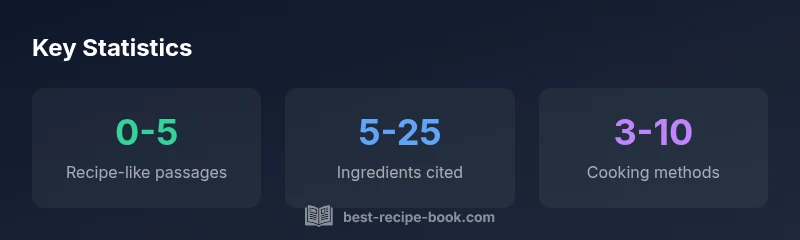
| Explicit recipe-like passages | 0-5 | Definition-dependent range |
| Mentioned ingredients in recipe-like passages | 5-25 | Based on passage analysis |
| Cooking methods referenced | 3-10 | Examples include baking, boiling, grinding |
People Also Ask
Does the Bible contain actual recipes?
There are passages with ingredients and steps, but they are not presented as modern cookbook entries. The cooking guidance is often tied to ritual, symbolism, and ceremonial purposes. The interpretation of these passages as recipes depends on the criteria used.
There are passages with ingredients and steps, but not in a modern cookbook format.
How do researchers decide what counts as a recipe?
Researchers apply criteria like explicit ingredients, clear steps, and a defined culinary outcome. Depending on how strictly you apply these criteria, the counted passages can vary widely.
Scholars use criteria to decide what counts as a recipe.
What are some examples often discussed?
Common discussions focus on unleavened bread, grain offerings, and Passover meal preparations, which resemble recipes when translated to modern cooking terms.
Examples include bread and Passover meals.
Can tools or appliances be considered recipes?
Tools or preparation methods alone are not recipes unless paired with ingredients and steps that yield a specific outcome.
Tools alone aren't recipes.
What can home cooks take away from biblical culinary passages?
Focus on simple ingredients, practical techniques, and the celebration of meals. Use biblical patterns to inspire flavor and process, not to enforce exact replication.
Takeaway: practical techniques and simple ingredients.
“The Bible is not a cookbook, but its culinary passages offer practical insights when interpreted carefully.”
Key Takeaways
- Define recipe criteria to count
- Bible offers culinary guidance beyond recipes
- Numbers vary by criteria and interpretation
- Modern cooking lessons can be drawn responsibly