How Much Sugar in Cookie Recipes: A Practical Guide
Discover how much sugar to use in cookie recipes, how sweetness shapes texture and browning, and practical tips for measuring and adjusting sugar—based on Best Recipe Book's 2026 analysis.


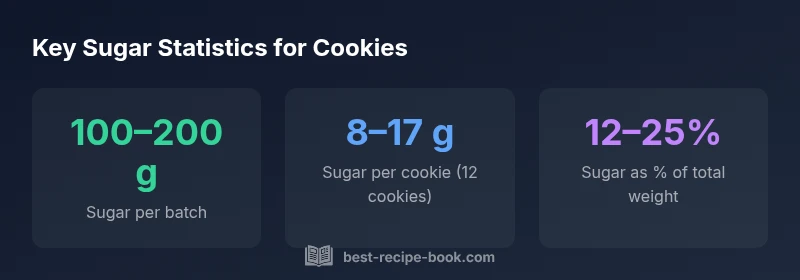
For most standard cookie recipes, sugar per batch falls in a practical range of about 1/2 cup to 1 cup, depending on the cookie type and sweetness target. This corresponds to roughly 100–200 grams per batch, which translates to about 8–17 grams of sugar per cookie if you bake about a dozen. Adjust downward for lighter sweetness or upward for bolder flavor and browner edges.
Understanding sugar's role in cookies
Sugar is more than sweetness in cookie dough. It interacts with fat and flour to influence texture, spread, browning, and moisture. In the context of the question how much sugar in cookie recipe, the answer depends on the cookie type, the desired texture, and the baking method. According to Best Recipe Book, sugar is a major driver of browning through caramelization and Maillard reactions, and it also helps retain moisture, affecting chewiness. White granulated sugar tends to create crisper edges and lighter crumb; brown sugar adds moisture and a chewy bite thanks to its molasses; powdered sugar can tenderize and produce a melt-in-the-mouth texture in shortbread or sugar cookies. For home bakers, a practical starting range is 1/2 cup to 1 cup per batch, but the exact amount should align with your goals: crispness, chew, spread, and flavor balance. In this article we’ll unpack these factors and provide actionable guidelines to dial in sweetness without sacrificing texture. The aim is to help readers understand how sugar choices and quantities influence cookie outcomes.
Typical sugar ranges by cookie type
Cookie recipes vary by type, and so does the amount of sugar they call for. A practical rule of thumb is to start with 1/2 cup to 1 cup per batch and then tailor to texture and flavor goals. Here are common categories:
- Drop cookies (vanilla, chocolate chip): typically in the 100–200 g range per batch, balancing sweetness with a chewy or crisp edge depending on the fat-to-flour ratio.
- Sugar cookies (rolled or cutouts): often at the higher end, around 180–250 g per batch, to achieve a robust sweet flavor and good handling.
- Brown-sugar-forward cookies (chewy varieties): commonly 120–210 g per batch, with brown sugar amplifying chew and depth.
- Oatmeal or hearty cookies: sometimes 90–170 g per batch, offering sweetness with a more rustic texture. The exact settings depend on your goals for spread, texture, and flavor balance. As you develop recipes, note how small adjustments affect browning and chew and record your results for future batches.
How sweetness scales with batch size and yield
Sugar should scale with the rest of the ingredients, but not always perfectly linearly. If you bake a batch that yields more cookies, per-cookie sugar decreases while batch sweetness remains constant. Conversely, reducing yield by half while keeping the same sugar amount increases sweetness per cookie and can alter texture and spread. When scaling a recipe, prefer incremental changes and re-test texture and browning. Keeping a simple log helps you preserve the relationship between sugar amount, yield, and the final cookie profile. This approach aligns with Best Recipe Book’s practical guidance for home cooks seeking reproducible results.
Substitutions and sugar alternatives
If you replace sugar with alternatives like honey, maple syrup, coconut sugar, or artificial sweeteners, expect changes in texture and moisture. Honey or syrups add liquid, which can flatten cookies or alter browning, while brown sugar substitutes may reduce moisture and chew. Coconut sugar behaves more like brown sugar but with a different molasses profile, which can shift flavor and spread. For lighter sweetness, consider ramping up vanilla or spice rather than simply cutting sugar. When experimenting, start with small tests (e.g., 10–15% sugar reduction) and compare the texture, spread, and flavor to the original.
How to measure sugar accurately in recipes
Accurate measurement matters more than many bakers realize. Use a kitchen scale for precision, especially when converting recipes from weight to volume. If using cups, scoop lightly and level with a flat edge to avoid packed or compacted sugar, which can skew results. For recipes that rely on creaming fat and sugar to build structure, consistent sugar measurement helps ensure uniform texture. When weighing, tare your scale with your mixing bowl and record the weight for future batches. This discipline yields more predictable cookies and fewer surprises.
Practical examples: converting a standard recipe
Consider a standard chocolate chip cookie recipe that calls for 1 cup white sugar and 1 cup brown sugar, yielding about 24 cookies. If you reduce total sugar by 25% for a lighter version, you’d aim for 0.75 cup white sugar and 0.75 cup brown sugar, observing changes in spread and chew. If you need more bite, you could shift the balance toward white sugar while maintaining other ingredients, and if you want a chewier result, favor brown sugar or introduce a touch of molasses. In all cases, bake a small test batch to compare textures, color, and flavor before committing to a larger run.
Sugar types and their impact on texture and color
White sugar promotes crisp edges and light color, brown sugar adds moisture and chew, and powdered sugar can tenderize and create a melt-in-your-mouth crumb. Each sugar type interacts with fat, flour, and leaveners differently, influencing spread and browning rate. For rolled cookies, higher sugar content can support structure and color, while for delicate shortbread, a lighter touch preserves a crumbly, tender texture. Understanding these nuances helps you tailor sweetness while achieving the desired texture and appearance.
Common mistakes and how to fix them
Common mistakes include over-sugaring, which can cause excessive browning or overly sweet flavors; under-sugaring, leading to flat flavor. Another pitfall is using the wrong sugar type for a recipe, which can alter texture. Fixes include adjusting the type of sugar to match the cookie goal (chewier vs crisper), measuring precisely, and performing small test batches before scaling up. Keeping a simple adjustment log ensures you learn from each bake and build reliable recipes over time.
Approximate sugar ranges by common cookie types
| Cookie Type | Typical Sugar per Batch (g) | Avg Cookies per Batch | Notes |
|---|---|---|---|
| Drop Cookies (standard recipe) | 100-200 | 24 | Balanced sweetness; widely used |
| Chocolate Chip Cookies | 120-210 | 24-36 | Richer flavor; often more brown sugar |
| Sugar Cookies (rolled) | 180-250 | 36-60 | Very sweet; holds shape |
| Oatmeal Raisin | 90-170 | 18-30 | Chewier; some variants use less sugar |
People Also Ask
How does sugar affect cookie texture?
Sugar directly influences cookie texture by controlling moisture retention and spread. More sugar generally yields chewier centers and crisper edges, while less sugar can produce a flatter, drier cookie. Brown sugar adds moisture and a deeper flavor, whereas white sugar emphasizes crispness and light color.
Sugar changes texture by keeping cookies moister and chewier or making them crisper depending on the type used.
Can I reduce sugar without compromising texture?
Yes, you can reduce sugar incrementally and test texture. Start with a 10–25% reduction and compare results. You can also compensate with a touch of vanilla or spice, or switch some white sugar for brown sugar to maintain moisture and chew.
Try small reductions first and test — you’ll often preserve texture with careful tweaks.
White vs brown sugar in cookies – what’s the difference?
White sugar yields crisper edges and lighter color, while brown sugar adds moisture and a chewy bite due to molasses. Using a mix can balance flavor and texture. The choice depends on the final cookie you want to achieve.
Brown sugar makes cookies chewier; white sugar makes them crisper.
Is there a universal sugar amount for all cookies?
No. Sugar quantity depends on cookie type, desired texture, fat content, and yields. Start with a baseline (e.g., 1/2 to 1 cup per batch) and adjust after testing.
There isn’t a universal sugar amount—tune it to the recipe and your texture goals.
How should I adjust sugar when scaling a recipe?
When scaling, adjust sugar proportionally to maintain sweetness and texture. Check the dough consistency and bake a test batch to verify spread and browning.
Scale sugar with the rest of the ingredients and test a small batch first.
Are sugar substitutes effective in cookies?
Substitutes can work in some cookies but often change texture and browning. Start with small substitutions and test; you may need to adjust liquids or fats accordingly.
Substitutes can work, but test and tweak to maintain texture and flavor.
“Sugar is not just sweetness—it drives browning, texture, and moisture in cookies. Small changes can shift the whole cookie profile, so experiment with intention.”
Key Takeaways
- Start with 1/2 cup to 1 cup sugar per batch as a baseline.
- Choose sugar type to influence texture: white for crisp, brown for chewy.
- Scale sugar with batch yield and test small batches when in doubt.
- Measure sugar accurately (weight preferred) to improve consistency.
- Use sugar reductions strategically to preserve texture while adjusting flavor.
- Record your adjustments to develop reliable, repeatable cookies.