How to Fix Recipe Browser: A Practical Guide for Home Cooks
Learn practical, step-by-step methods to fix a recipe browser that won’t load, search poorly, or misdisplay results. Clear guidance for home cooks to restore reliable recipe searching across devices and browsers.


This guide shows how to fix a recipe browser that won’t load, searches poorly, or misbehaves. You’ll learn a practical, step-by-step workflow you can follow across browsers and devices, with quick checks, common fixes, and timesaving tips. By the end you’ll have a reliable process to restore smooth access to your recipes.
Understanding the Recipe Browser Landscape
A recipe browser is more than a pretty search box. It connects your device to a network of recipe databases, indexes content for fast searching, and applies filters to narrow results. When anything goes wrong—loads are slow, searches miss relevant results, or images misdisplay—the root cause is usually one of a few predictable culprits: connectivity, local storage or cache, and data synchronization between apps and services. According to Best Recipe Book, the most frequent hiccups arise from stale caches, inconsistent data sources, or network privacy settings that block requests. By understanding this landscape, you can diagnose issues quickly without guessing. This guide uses home-cook-friendly language and concrete steps you can perform on desktop and mobile alike, so you can get back to planning meals, not debugging tech.
Common Symptoms You Might See
You’ll know something is off if you notice one or more of these symptoms: the search results take too long to appear or time out; filters don’t apply or return irrelevant results; recipe cards load without images or show broken thumbnails; the browser reports errors on loading resources; or you can’t sign in to sync saved recipes across devices. Other signs include inconsistent counts of search results, or results that don’t match your query intent (for example, showing desserts when you searched for “savory”). Recognizing the exact symptom helps you pick the right fix. Keep a brief note of what you saw, when it happened, and on which device and network. This information speeds up troubleshooting and helps if you need to contact support later.
A Safe, Reproducible Repair Workflow
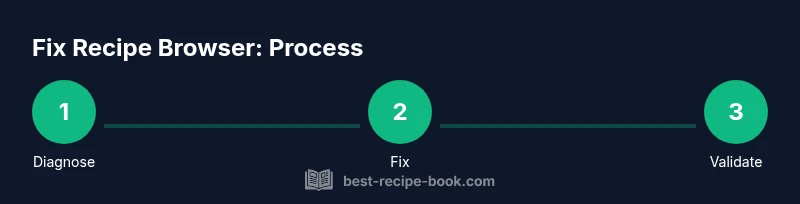
Fixing a recipe browser works best when you follow a repeatable workflow. Start by reproducing the issue exactly as a user would experience it, then isolate whether the problem is local (your device), cross-device (mobile vs desktop), or service-based (the recipe platform or data source). Use a simple, documented checklist: confirm internet connectivity, test with a different browser or device, disable extensions, and verify account status if you rely on saved data. By standardizing the steps, you’ll quickly spot what changes when the problem starts to happen, making it easier to apply the fix or explain it to someone else. This approach also helps prevent future outages by establishing a baseline for normal behavior.
Practical Fixes You Can Try Today
Start with quick, low-risk fixes before diving into deeper debugging. First, refresh the page and try a different browser or device to see if the issue is isolated. Then clear the browser cache and ensure cookies are up to date. Disable any browser extensions that could interfere with scripts or network requests, especially ad blockers or privacy tools. Check your network settings and DNS; sometimes switching to a public DNS or rebooting the router resolves slow-loading assets. If the recipe browser offers a data sync feature, sign out and back in to refresh tokens. Finally, verify that you’re using the latest version of the app or website and consider reinstalling if the problem persists. Document each change and test results to build a clear before/after picture.
Advanced Debugging for Power Users
If basic fixes don’t solve the problem, dive deeper with developer-oriented checks. Open the browser’s developer tools and inspect the Network tab to see which requests fail, their status codes, and response payloads. Look for blocked resources, CORS errors, or 4xx/5xx server responses that indicate a server-side issue. Test the browser console for JavaScript errors that might prevent rendering of recipe cards. Compare network traces between a working and a non-working session to identify a particular API endpoint or data source causing trouble. If you manage the recipe browser’s backend, review logs for outages, data-sync failures, or rate limiting that could affect search results. Always reproduce the issue after each change to verify the effect.
Preventive Habits to Keep Your Recipe Browser Healthy
Prevention beats last-minute debugging. Schedule regular checks for your browser version, extensions, and device OS to avoid surprises. Use auto-update features for critical apps and keep your cache lean by periodic cleanup. Maintain a single source of truth for data—prefer one trusted data source for your recipes and ensure offline caches don’t diverge. Document changes to your testing protocol, so future issues follow the same reliable path. Finally, consider setting up a lightweight monitoring checklist that you run weekly to catch issues before they affect meal planning.
When to Seek Help
If you’ve exhausted the standard fixes and the problem persists, seek help from the source’s official support channels. Provide a concise report including device type, OS version, browser version, a summary of symptoms, and the exact steps you took to reproduce. Include any error messages or screenshots, and share your test results across devices to show whether the issue is device-specific or platform-wide. For ongoing outages, check service status pages and user communities for recent reports. The Best Recipe Book team recommends keeping your troubleshooting log to speed up support conversations and shorten resolution times.
Tools & Materials
- Web browser(Latest version installed (Chrome, Firefox, Safari, or Edge))
- Stable internet connection(Wi‑Fi or Ethernet with reliable latency)
- Account access for syncing(Login credentials if the browser supports saved recipes)
- Device with up-to-date OS(Desktop or mobile, test across at least two devices)
- Developer tools (optional)(Access to Network/Console for advanced debugging)
- Reinstallation files (optional)(If you suspect a corrupted install)
Steps
Estimated time: 30-60 minutes
- 1
Verify the problem and reproduce it
Reproduce the issue exactly as a user would. Note the device, browser, network, and the precise actions that lead to the problem. Create a brief, reproducible scenario you can share with others.
Tip: Write down the exact steps so you can verify a fix later. - 2
Check connectivity and data sources
Confirm internet access is stable and that any data sources or APIs the recipe browser uses are reachable. If you rely on a service, check status pages for outages. Try a different network to see if the problem is network-related.
Tip: A simple network switch or VPN change can reveal root causes. - 3
Clear caches and refresh data
Clear the browser cache and, if applicable, the app cache. Sign out and back in to refresh tokens. Then reload the page and attempt the same action that previously failed.
Tip: Cache artifacts are a common culprit for stale UI or missing content. - 4
Update or reinstall the browser/app
Ensure the recipe browser is up to date. If issues persist, reinstall the app or clear data related to the browser extension if you’re using one.
Tip: Updates often fix permission and compatibility issues. - 5
Reindex or sync data sources
If the browser relies on index-based search, trigger a reindex or resync with the data provider. Confirm that search results reflect the latest data after the sync.
Tip: Index timing can affect result accuracy for recent content. - 6
Test across devices and document results
Repeat the reproduction on another device or browser to determine whether the issue is device-specific or platform-wide. Record outcomes and decide on the escalating path.
Tip: Cross-device testing isolates the source of the problem.
People Also Ask
Why is my recipe browser not loading at all?
Loading problems are often caused by a stale cache, a slow network, or a failed data sync. Start with a quick connectivity check, then clear caches and refresh tokens. If the issue persists, test on another device to determine if it’s device-specific.
If it won’t load, start with a quick connectivity check, then clear caches and refresh tokens, and try another device to isolate the cause.
Is clearing cache safe for my saved recipes?
Clearing the browser cache typically doesn’t delete saved data stored on the server or in your account. Personal settings may reset in the browser, so you may need to sign in again. Always verify data syncing after the cache reset.
Clearing cache is usually safe for saved data stored in your account, but you may need to sign back in.
Can this fix work on mobile devices?
Yes. The same workflow applies on mobile. After basic checks, try switching between Wi‑Fi and cellular, updating the app, and clearing app caches where available. Mobile browsers can have stricter privacy settings that affect network requests.
The same steps apply on mobile, just adapt to the device’s controls for cache and app updates.
What if the issue persists after all steps?
If problems persist, consult the service status pages and reach out to support with a detailed reproduction, device info, and steps you took. The issue may be server-side or data-source specific requiring vendor intervention.
If it still happens after all steps, contact support with your test notes and device details.
Should I reindex data sources manually?
Manual reindexing is often useful when you suspect data drift. Follow the platform’s documented steps to trigger a reindex, then verify results by performing a known search and comparing to expected outcomes.
Try reindexing if you suspect data drift, then verify with a known search.
Watch Video
Key Takeaways
- Follow a reproducible workflow to diagnose issues
- Clear caches and update software before deeper debugging
- Test fixes across devices to isolate the source
- Keep a troubleshooting log for faster support moves