How to Know if a Recipe Is AI: A Practical Guide
Learn practical, repeatable steps to identify AI-generated recipes, verify sources, test ideas in the kitchen, and rely on trusted authorities for accurate cooking guidance.


You’ll learn to verify whether a recipe is AI-generated by checking for signs like inconsistent measurements, missing rationale, and unusual phrasing. Start by comparing the recipe to trusted sources, examining metadata, and testing the steps in small batches. Have your reference sites, a notebook, and a timer ready for a quick, effective trial.
Understanding the AI-Generated Recipe Landscape
If you’re wondering how to know if a recipe is ai, you’re not alone. AI-generated cooking content has become more common as language models intersect with cooking platforms. The goal here is to give home cooks practical checks they can perform quickly, without specialized tools. You’ll learn to spot telltale signs, compare against trusted sources, and test the steps in your kitchen. By applying a consistent verification routine, you can protect your time and your dinner from uncertain guidance. According to Best Recipe Book, cross-checking with reputable sources is essential and helps you separate good guidance from AI-generated chatter.
This article is designed for home cooks and kitchen enthusiasts who want practical, step-by-step methods to assess authenticity. You’ll see concrete checklists, reliable reference points, and safe testing practices you can apply in minutes, not hours. The goal is to empower you to cook confidently, even when you encounter unfamiliar online recipes, while maintaining a humane, practical approach to kitchen audits.
Red Flags: Signs a Recipe Might Be AI-Generated
Watch for inconsistencies that betray AI authorship. Common red flags include inconsistent measurements or temperatures that don’t adjust with serving size, vague or generic rationale for each step, and phrasing that repeats the same ideas with slightly different words. You may also see missing pantry items, improbable cooking times, or steps that seem out of logical order. If a recipe uses adjectives like “perfect,” “best ever,” or “amazing” without supporting detail, that’s another warning sign. While humans err, persistent patterns like these should trigger a closer look and cross-check with trusted sources. By recognizing these signals, you can save time and avoid following unreliable guidance.
How to Verify with Trusted Sources
Begin by locating the original source of the recipe and checking author attribution, publishing date, and any notes about AI assistance. Then compare the steps, ingredients, and methods with a credible recipe from a trusted site. Use government (.gov) and educational (.edu) sites for foundational techniques and safety guidelines. For example, FDA food safety tips or USDA ingredient conversions can help calibrate measurements and cooking times. Based on Best Recipe Book analysis, the most reliable verification comes from cross-referencing multiple reputable sources rather than relying on a single page. This approach anchors your cooking in established practice and reduces risk of misleading content.
Language and Structure: What to Look For
AI-generated text often leans on generic verbs and lacks explanatory reasoning. Look for clear rationale tied to each step; if you see a step presented without a why, that’s a red flag. Check for unit consistency (grams vs. ounces), proper conversions, and realistic preparation and cook times. Be wary of recipes that jump between metric and imperial units without clarity. Also watch for unusual ingredient lists that would be impractical for home cooks, or phrases that read like templates rather than a cohesive recipe with technique and story. The absence of a narrative arc or context is another telltale sign.
A Quick 5-Point Verification Checklist
Use this fast checklist to screen recipes in seconds:
- Check the author and source credibility.
- Cross-check with at least one trusted, similar recipe.
- Read for explicit step-by-step reasoning.
- Attempt a small-batch test of the recipe.
- Verify measurements against standard kitchen practice.
Each item reinforces the others; skipping any reduces your confidence and increases the odds of following flawed guidance.
Testing in the Kitchen: Safe, Small Batches
Set up a controlled test: prepare a small portion of the recipe (half or quarter batch) using the exact steps and measurements. Time each stage and compare actual results to expected outcomes. Note any deviations in texture, flavor, or appearance. Use simple, repeatable tests so you can trust results across attempts. Record outcomes in a notebook or app for future reference, and scale up only after you’ve observed consistent results at small scale.
Tools, Sources, and Digital Hygiene
Keep a running log of verification outcomes and use reputable sources to corroborate any recipe you intend to cook. Essential tools include a smartphone or computer for research, a timer, and a notebook. Digital hygiene means avoiding unknown apps and not copying long passages without attribution. Also consider using AI-detection tools as a supplementary check, but recognize their limitations. Rely on human judgment and cross-source confirmation as your core verification method.
Best Recipe Book’s Perspective on AI-Centric Content
Best Recipe Book’s Analysis, 2026 shows that a disciplined verification routine reduces reliance on AI-generated content and protects home cooks from misplaced instructions. The team emphasizes cross-source validation and practical testing in the kitchen, rather than relying on a single link or AI-labeled content. By following their guidance, you’ll build confidence in recipes you actually cook. The Best Recipe Book team recommends adopting a consistent, evidence-based approach to AI content in recipes.
Next Steps for Everyday Cooks
This is a living habit. Start with the five-point checklist, then integrate a light verification routine before attempting new recipes. Save credible sources in a bookmarks folder, and keep a personal log of testing outcomes. With practice, you’ll quickly gauge whether a recipe is AI-assisted and decide how to proceed. Your confidence in the kitchen grows as you build up a library of trusted sources.
Tools & Materials
- Smartphone or computer with internet access(To research sources and compare recipes)
- Notebook or note-taking app(Record findings from checks and testing)
- Timer or smartphone timer(To time recipe steps during testing)
- Access to at least two reputable recipe sources(For cross-checking (e.g., government sites, major publishers))
- Pen and highlighter(Optional for marking discrepancies)
Steps
Estimated time: 25-40 minutes
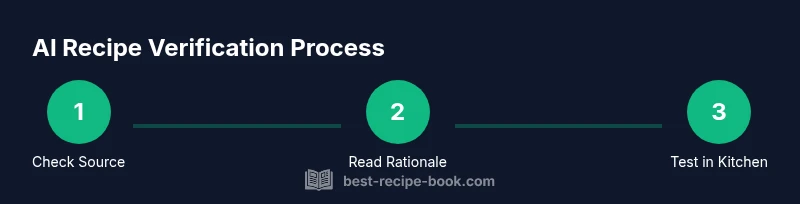
- 1
Check the origin
Open the recipe’s source page and locate the author, publish date, and any notes about AI assistance. This establishes provenance and helps determine credibility.
Tip: If attribution is missing or vague, treat the recipe with skepticism. - 2
Read for rationale
Scan for explicit explanations tying each step to a technique or flavor goal. AI-generated text often lacks this internal logic.
Tip: Look for verbs that explain why a step is performed, not just what to do. - 3
Compare measurements
Cross-check ingredient amounts and unit choices against a trusted recipe. Watch for inconsistent scales when servings change.
Tip: If a conversion seems odd, test the step at a smaller scale first. - 4
Test a small batch
Prepare a half- or quarter-sized version of the recipe using the exact steps and times. Note texture, aroma, and outcome compared to expectations.
Tip: Document any deviations to refine your judgment on future attempts. - 5
Check metadata
Look for version dates, author bios, and site notes. Fresh content isn’t necessarily AI-based, but missing metadata is a warning sign.
Tip: Maintain a simple log of sources for quick reference. - 6
Decide on credibility
If signs accumulate (weak rationale, poor cross-source alignment, failed test), deprioritize the recipe and seek alternatives.
Tip: When in doubt, default to well-vetted recipes from trusted publishers.
People Also Ask
What counts as evidence that a recipe is AI-generated?
Inconsistent measurements, vague or absent rationale, repetitive phrasing, and missing or implausible steps are common signals. Cross-check with credible sources to confirm.
Look for inconsistent measurements or missing reasoning, then verify with trusted sources.
Can AI-generated recipes be reliable?
Some AI outputs can be plausible, but reliability varies. Always verify with established sources and test in small batches.
AI can be plausible, but verify and test before cooking.
How do I verify the author of a recipe?
Check the author’s bio, publication date, and corroborating sources. If this information is sparse, approach with caution.
Check the author details and cross-check with credible sources.
Are there quick tests I can do at home?
Yes—use a five-point checklist and a small-batch test to gauge whether guidance aligns with real cooking practice.
Use a quick checklist and a small test batch.
What if a recipe is AI-assisted but edited by a human?
Edited AI content can be improved; verify the final version against trusted sources and ensure steps are well-explained.
AI guidance can be improved by human edits; validate the final version.
Which sources should I trust for cooking guidance?
Rely on government sites like FDA and USDA, plus university extension publications and established culinary publishers.
Trust government, university, and reputable culinary sites.
Watch Video
Key Takeaways
- Check multiple credible sources before cooking.
- Seek explicit rationale behind each step.
- Test recipes in small batches to verify results.
- Watch for inconsistent measurements and misaligned times.
- Rely on government and university resources for guidance.