How to Recipe Develop: A Step-by-Step Guide for Home Cooks
Learn how to recipe develop with a practical, step-by-step method—from goal setting and testing to documentation and scaling. Ideal for home cooks and kitchen enthusiasts seeking reliable, repeatable results.


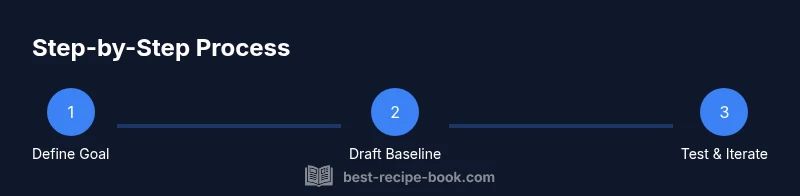
To master how to recipe develop, define your goal, map the flavor profile, build a test plan, and document results. This guide outlines a repeatable process: set objectives, draft a baseline recipe, test with controlled variables, gather feedback, and iterate until the recipe meets your standards. All steps emphasize clarity, measurability, and reproducibility.
What It Means to How to Recipe Develop
At its core, how to recipe develop is a disciplined approach to turning ideas into reliable dishes. The goal is not a single hit recipe but a repeatable method that you can apply to almost any dish. According to Best Recipe Book, successful recipe development starts with clarity about the target audience, the flavor profile, and the constraints of your kitchen. By treating recipe creation as a science experiment, you create a framework that yields consistent results across cooks, ingredients, and equipment. This mindset helps you balance sweetness, salt, acidity, and texture while keeping the recipe approachable for home cooks. You’ll learn why we measure ingredients by weight, how to structure tests, and how to document every change for reproducibility. The phrase how to recipe develop, used here, signals a process that blends culinary intuition with objective data, making creativity more predictable and enjoyable for everyday cooks.
Defining Your Goals and Audience
Before touching a single ingredient, articulate what you want the final dish to achieve. Define the flavor direction, texture targets, dietary constraints, and time or budget limits. Ask who will make and enjoy the recipe: a family with kids, a weekday lunch crowd, or a weekend dinner party. Write a concrete goal such as: “Create a weeknight pasta that tastes fresh, costs under $2 per serving, and can be ready in 25 minutes.” A clear goal aligns the rest of the development steps and provides a benchmark for testing. In this stage, you’ll also decide on the core technique (roasting, braising, emulsification) and the equipment you’ll need, which helps prevent scope creep later. Best Recipe Book notes that documenting these decisions early improves consistency across cooks and kitchens.
Designing a Flavor and Constraint Map
Next, build a map that links flavors, textures, and constraints. List the dominant notes you want (e.g., citrus brightness, umami depth, creamy mouthfeel) and pair them with ingredients that realize them. Create a restraint list: allergens to avoid, preferred cooking methods, available pantry items, and seasonal ingredients. This map acts as a compass during testing, ensuring you don’t chase every trendy ingredient at once. It also guides substitutions when a staple isn’t available. Use simple flavor wheels or a matrix to visualize how each component supports the target profile, then reference this map when you draft the baseline recipe to ensure alignment from the start.
Building a Baseline Recipe: The Foundation
Draft a baseline version of the recipe that reflects your flavor map and constraints. Start with proven techniques and a straightforward ingredient list to minimize early variability. Write the method in precise, repeatable steps and record weights rather than volumes where possible. The baseline is your control group—everything else will be compared against it. If you’re developing a sauce, for example, begin with a standard reduction, a balanced acid, and a reliable thickener. Cooking times should be noted precisely, and equipment notes (oven temperature, pan type) captured to reduce inconsistency. The baseline is not the final version; it’s the platform from which you’ll iterate based on tasting and feedback.
Planning Controlled Experiments and Tests
A rigorous testing plan is essential for reliable results. Identify 1-3 variables you want to test (e.g., salt level, fat content, or a single spice). Change one variable at a time while keeping all others constant to isolate its effect. Use a consistent sample size or tasting panel, and employ a simple scoring rubric (appearance, aroma, flavor, texture, overall impression). Schedule test sessions with diverse testers to capture a range of palates. Document each session’s conditions (season, ingredient batch, equipment). Best Recipe Book emphasizes the value of controlled experiments in reducing noise and improving reproducibility.
Documenting, Versioning, and Feedback
Documentation is the backbone of successful recipe development. Maintain a versioned log that records every change, the rationale behind it, and the outcomes of each test. Include ingredient weights, temperatures, cooking times, and tester feedback. Create a quick-reference sheet for each version that highlights what changed and why. This disciplined record-keeping makes it easier to retrace decisions, rollback when needed, and communicate results with others. A well-maintained log also helps you quantify progress over time and establishes credibility with readers or clients. According to Best Recipe Book Editorial Team, transparent documentation accelerates learning and reduces repeated mistakes.
Scaling, Texture, and Consistency
Once the baseline behaves well in small batches, you’ll test scaling to ensure consistent results across servings. Scaling involves proportional ingredient adjustments, but textures can shift with moisture, heat, or aeration changes. Re-test critical steps like emulsification or gelatin setting at multiple batch sizes and confirm sensory similarity. Document any deviations in texture or mouthfeel and adjust timing or technique accordingly. Develop a standard set of checks (color, thickness, bite, and finish) to ensure the final product remains faithful to the intended profile when you scale up or down. This step is crucial for home cooks who want reliable results every time.
Common Pitfalls and Safe Troubleshooting
Development projects often stumble on assumptions or biased palate judgments. Avoid over-reliance on a single tester who loves your dish but may not represent broader audiences. Don’t skip objective measurements in favor of impression alone. When a test fails, retrace steps, compare with the baseline, and test one new variable at a time. Use taste memory aids like scoring rubrics and tasting notes templates to document impressions consistently. If a batch seems flat, revisit acidity balance or salt timing; if it’s off in texture, review moisture content and cooking method. Adopting disciplined troubleshooting minimizes backsliding and accelerates improvement.
A Practical Case Study: From Idea to Final Dish
Imagine you want to develop a lemon garlic chicken recipe that’s bright, juicy, and quick to prepare. Start by defining the goal: weeknight-ready, under 30 minutes, with fresh citrus brightness. Build a flavor map that prioritizes lemon zest, garlic aroma, and a light herb finish. Draft a baseline sauce and roast chicken using a standard method. Plan controlled tests: vary lemon juice amount and roasting time while keeping protein quality constant. Document every version with weights, temperatures, and tester feedback. Iterate until flavor, texture, and finish are balanced, then confirm scalability by cooking a larger batch and tasting again. The result should be a dependable recipe you can publish with confidence, backed by clear documentation and a repeatable method.
Tools & Materials
- Notebook or digital recipe file(Record baseline, changes, tasting notes.)
- Measuring spoons and cups(Accurate volume measures for non-weight ingredients.)
- Digital kitchen scale(Weigh ingredients for precision and reproducibility.)
- Thermometer (instant-read)(Check internal temps and sauce temperatures.)
- Mixing bowls (various sizes)(Organize prep and testing phases.)
- Whisk, spatulas, silicone scraper(Mix, fold, and scrape consistently.)
- Tasting spoons(Standardize palate testing across tasters.)
- Pan(s) and basic cookware(Select appropriate equipment for baseline method.)
- Access to pantry staples and seasonings(Provide essential ingredients for testing.)
Steps
Estimated time: Total time: 4-6 hours
- 1
Define the objective
Articulate the dish goals, target audience, and constraints. Write a clear, measurable objective and identify success criteria.
Tip: Be specific about time, cost, and flavor targets. - 2
Map flavor and constraints
Create a flavor map that pairs main notes with supporting ingredients while listing dietary or equipment constraints.
Tip: Use a simple flavor wheel to visualize interactions. - 3
Draft baseline recipe
Write a concise baseline recipe based on your flavor map. Prefer weights over volumes for accuracy.
Tip: Document temperature and equipment settings clearly. - 4
Plan controlled tests
Choose 1-3 variables to test and keep all others constant. Establish a testing rubric with 5-7 criteria.
Tip: Test one variable at a time to isolate effects. - 5
Run test batches
Prepare small batches and evaluate using your rubric. Record all measurements and impressions.
Tip: Use the same tester group when possible for consistency. - 6
Document results and iterate
Log changes, rationale, and outcomes. Implement the most successful adjustments in a revised version.
Tip: Create a version tag (v1.1, v1.2, etc.). - 7
Stabilize and scale
Confirm the recipe performs at larger quantities and in different ovens or stoves.
Tip: Re-test critical steps at multiple batch sizes. - 8
Finalize publishing plan
Prepare final recipe card with complete method, nutrition notes, and sourcing tips.
Tip: Include a few serving-size options if possible. - 9
Maintain and update
Set a schedule to revisit the recipe as ingredients or equipment change, keeping the log current.
Tip: Periodically re-validate with testers.
People Also Ask
What does it mean to develop a recipe?
Recipe development is the process of turning a dish idea into a reliable, repeatable recipe through testing, measurement, and feedback. It combines culinary technique with systematic documentation.
Recipe development means turning an idea into a reliable recipe by testing, measuring, and documenting results.
Why is measurement precision important in recipe development?
Precise measurements improve reproducibility across cooks and kitchens. Weight-based measures reduce variability caused by differing cups, spoons, and pouring habits.
Precise measurements help you recreate results exactly, no matter who cooks.
How many tests should I run?
Run at least three iterations with controlled variables, plus a final validation batch. Use a diverse panel of tasters to avoid bias.
Aim for multiple tests with different tasters to ensure reliability.
Can I develop recipes with limited tools?
Yes. Start with basic equipment and simple techniques, then adapt your method as you gain confidence. Document any substitutions clearly.
You can start with basics; keep notes on any substitutions.
How should I document changes effectively?
Maintain a version log detailing weights, temperatures, timing, and tester feedback. Include rationale for each change.
Keep a clean version log with all changes and reasons.
When is it appropriate to scale a recipe?
Scale after the recipe is stable at the target size. Re-test critical steps at larger and smaller batch sizes to ensure consistency.
Scale only after stability is proven, then re-test at multiple sizes.
Watch Video
Key Takeaways
- Define objective and target audience.
- Test variables one at a time.
- Document changes for reproducibility.
- Use weight-based measurements when possible.
- Plan scaling early for consistent results.