Milk Shake Recipe: A Step-by-Step Guide to Creamy Shakes
Master a step-by-step milk shake recipe with base ratios, flavor ideas, and dairy-free options. Learn texture control, chilling techniques, and substitutions for dietary needs.


According to Best Recipe Book, you can craft a milk shake at home with a creamy base of ice cream and milk, then customize with flavors. This quick guide covers bases, add-ins, texture tweaks, and dairy-free or low-sugar options. Use the steps and tips to chill ingredients, blend properly, and serve confidently.
Understanding the Milk Shake: Flavor, Texture, and Base
Milk shakes sit at the intersection of dessert and beverage. The classic base is simple: two essential components, a creamy ice cream and a liquid, usually milk. The balance between these two determines texture: more ice cream yields thicker, richer shakes; more milk yields lighter, drinkable textures. If you’re following best practices from Best Recipe Book, the goal is a stable, scoopable shake that stays creamy from first sip to last. Elevating the flavor comes from add-ins like vanilla or cocoa, fruit purée, coffee, or cookie crumbles. When you experiment, start with a familiar baseline—vanilla ice cream plus 1 cup of milk—and then adjust in small increments. For dairy-free versions, you can use a thick plant-based milk (oat, almond, or soy) and a creamy non-dairy ice cream to approximate the mouthfeel. Fresh fruit adds brightness, while syrups or spices introduce depth. Temperature matters: keep ingredients cold and avoid letting the shake warm up in the blender during blending. This section will guide you through reliable ratios and flavor ideas that align with the Best Recipe Book approach.
Essential Equipment and Pantry Staples
You don’t need fancy gear to make great shakes, but the right tools help. A high-speed blender emulsifies ice cream and liquid into a smooth, velvety texture. Measuring cups and spoons keep ratios consistent, while a sturdy glass and straw elevate the serving experience. Stock your pantry with versatile add-ins: vanilla extract, cocoa powder, fruit purées, syrups, cookies, and nut butters. Keep dairy and non-dairy options in your fridge or freezer—ice cream for richness, milk or plant-based milk for thinning, and optional frozen fruit for natural chill. For dairy-free or allergen-friendly shakes, pick a thick plant milk and a coconut- or cashew-based cream to mimic creaminess. The Best Recipe Book team emphasizes consistent cold ingredients and a clean blender to prevent watery textures. By assembling these basics, you’ll unlock fast, repeatable shakes every time.
Flavor Building: Bases, Add-Ins, and Sweeteners
Base choices define the shake’s body. Start with two scoops of ice cream and 1 cup of milk as a universal starting point. From there, flavoring is your playground: a teaspoon of vanilla, a tablespoon of cocoa powder, a splash of strawberry purée, or a shot of espresso for a mocha twist. Add-ins like crushed cookies, berries, banana slices, caramel, or peanut butter bring texture and complexity. Sweeteners—sugar, honey, maple syrup, or dates—adjust sweetness without thinning the shake; add with care, tasting as you go. If you’re crafting a dairy-free version, opt for a thick plant-based milk and a creamy ice cream alternative or frozen banana for body. The goal is to maintain a balance where flavors read clearly, but the shake remains easy to drink in a single satisfying glass. Best Recipe Book recommends starting small and layering flavors by intensity rather than adding all elements at once.
Achieving the Right Texture: Thick vs. Smooth
Texture is about control. A thick shake coats the spoon and holds its shape; a smooth shake pours like a sundae in motion. Achieve thickness by using more ice cream, less milk, or by adding frozen fruit. For lighter shakes, use more milk and less ice cream. If your shake looks grainy, blend longer in short pulses to reduce ice crystals. Pre-chill ingredients and the blender jar to keep texture stable. You can also frost the rim of the glass by dipping it in chocolate or sprinkles to elevate presentation. In dairy-free versions, texture comes from creamy ice cream substitutes and frozen fruit that mimic dairy’s mouthfeel. The Best Recipe Book approach is about predictable texture through careful temperature control and gradual flavor-building additions.
Dietary Variations: Dairy-Free, Low-Sugar, and Allergies
Shakes can be adapted for many diets without sacrificing flavor. For dairy-free, swap cow’s milk for oat or almond milk and use dairy-free ice cream or frozen bananas as the creamy anchor. To cut sugar, rely on the natural sweetness of ripe fruit, a small amount of maple syrup, or zero-calorie sweeteners where appropriate. For low-fat shakes, reduce ice cream and use light milk, thick yogurt, or dairy-free alternatives. Always read ingredient labels for potential allergens, and consider nut-free seeds or sun butter for emulsification instead of nut butters. The Best Recipe Book Editorial Team notes that flavor balance matters most—don’t hide bitter notes with sugar; instead, pair flavors intentionally and let the ingredients shine.
Troubleshooting Common Issues
Separation happens when the shake thaws and separates after blending or when the ingredients aren’t cold enough. Solutions: chill your ingredients, use a quick pulse to re-emulsify, or add a little more ice cream. If the shake is too thick, add a splash of milk or a little water to thin; blend briefly. If it’s too runny, blend in more ice cream or a handful of ice. A grainy texture usually means unevenly sized ice crystals; blend in short bursts until smooth. Always taste as you go and adjust sweetness or brightness with a splash of vanilla or a touch of fruit syrup. For dairy-free shakes, frozen fruit can be a powerful thickener; ensure your plant milk is thick enough to keep the mixture cohesive. The Best Recipe Book Editorial Team emphasizes method over guesswork—small, incremental changes deliver consistent results.
Tools & Materials
- Blender (high-speed)(For smooth texture; choose 700-1200W or higher)
- Ice cream (vanilla or flavor of choice)(2 cups per shake for a creamy base)
- Milk or plant-based milk(1 cup; adjust to reach desired thickness)
- Ice cubes(A handful to help chill and adjust texture)
- Measuring cups/spoons(For accurate ratios)
- Vanilla extract or flavoring(Optional; 1/2 tsp max per shake)
- Flavor add-ins (fruit, syrups, cookies)(Choose 1-3 to customize)
- Tall glass and straw(For serving and presentation)
- Spatula (optional)(Easy to scrape the blender pitcher)
- Toppings (sprinkles, chocolate drizzle)(Optional finishing touches)
- Chilled serving bowl or plate(Nice for showcasing toppings)
- Dish towel(Keep workstation tidy)
Steps
Estimated time: 15-20 minutes
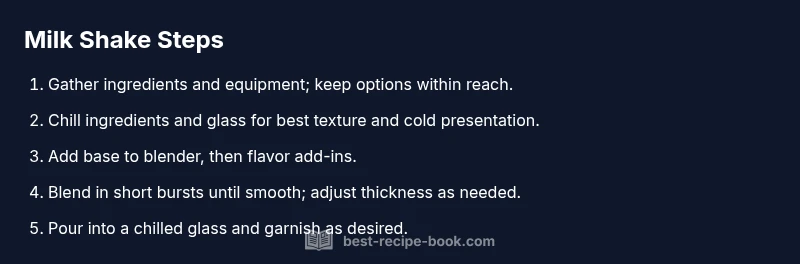
- 1
Gather ingredients and equipment
Collect ice cream, milk, flavor add-ins, and the blender. Having everything within reach makes the process smooth and enjoyable, especially when you’re testing new flavor combos.
Tip: Lay out all options so you can compare textures as you go. - 2
Chill ingredients and glass
Place ice cream in the freezer for a few minutes if it’s soft. Pre-chill the blender jar and glass to keep the shake cold during blending and serving.
Tip: Cold ingredients resist melting and help achieve a creamier result. - 3
Add base to blender
Begin with two scoops of ice cream and one cup of milk. This creates a sturdy base; you can adjust later to taste and thickness.
Tip: Too much liquid early on makes the shake thinner; add more ice cream if needed. - 4
Add flavorings and add-ins
Add vanilla, cocoa, fruit purées, or cookies. Layer add-ins in order of intensity to avoid overwhelming the base.
Tip: Add one strong flavor first, then build with lighter accents. - 5
Blend in short bursts
Pulse the blender 6-8 times, then run for 5-10 seconds. Pause to check texture so you don’t overblend and melt the ice cream.
Tip: If the mix looks chunky, pulse a few more times until smooth. - 6
Adjust thickness
If too thick, add a splash of milk; if too thin, add another scoop of ice cream or a few ice cubes.
Tip: Always blend in short bursts after adjustments. - 7
Taste and sweeten as needed
Taste the shake and adjust sweetness with a touch of sugar, syrup, or ripe fruit. Remember sweetness should complement, not mask the base flavor.
Tip: Avoid over-sweetening; aim for balance. - 8
Serve and garnish
Pour into a chilled glass, drizzle topping, and add a decorative straw. A quick garnish elevates the experience.
Tip: Use a tall glass to showcase the shake’s color and texture.
People Also Ask
What is the basic milk shake ratio?
A common starting point is 1 cup of milk to 2 cups of ice cream; adjust gradually to reach your desired thickness and creaminess.
Start with one cup of milk for every two cups of ice cream and tweak from there.
Can I make a dairy-free milkshake?
Yes. Use a thick plant-based milk and a dairy-free ice cream or frozen fruit for body to mimic creaminess.
Absolutely. Choose a thick plant milk and a dairy-free ice cream or frozen banana for body.
How long should I blend the shake?
Blend until smooth, usually 20-30 seconds in short bursts to avoid overheating the mixture.
Blend in short bursts for about 20 to 30 seconds, until smooth.
What flavors pair well in shakes?
Vanilla pairs with chocolate or strawberry; coffee complements chocolate; banana adds natural sweetness and body.
Vanilla with chocolate or strawberry works well, and coffee goes great with chocolate.
How should I store leftovers?
Shakes are best fresh. If needed, refrigerate up to 24 hours and re-blend briefly before serving.
Best when fresh; if you must, refrigerate up to a day and re-blend before serving.
Are there safety tips for cleaning the blender?
Unplug the blender before cleaning and remove large ice chunks. Rinse promptly to prevent stubborn residue.
Always unplug before cleaning and rinse right away to avoid buildup.
Watch Video
Key Takeaways
- Know base ratios to control thickness.
- Customize flavors with add-ins and toppings.
- Chill ingredients for best texture and texture stability.
- Adapt substitutions for dairy-free and low-sugar options.