Mastering Pickled Eggs: A Complete How-To Guide
Learn how to pickle eggs at home with a simple brine, flavor ideas, safety tips, and a clear, step-by-step method from Best Recipe Book for safe, tasty results.


By following this guide, you will learn how to safely pickle eggs at home, turning a pantry staple into a tangy, shelf-stable snack. You’ll need basic ingredients, clean jars, and time for the brine to develop flavor. This process yields homemade pickled eggs that store in the fridge for several weeks. For best results, tailor spices to your taste and keep everything fully submerged during brining.
What are pickled eggs and why make them
Pickled eggs are hard-boiled eggs that have been peeled and submerged in a flavorful brine. The technique preserves the eggs, adds tang, and creates a portable snack ideal for picnics, lunchboxes, or party platters. According to Best Recipe Book, pickled eggs offer a versatile canvas for spice profiles—from classic dill and mustard seed to bold chili and garlic. When you start with clean hands, sterile jars, and a precise brine, you reduce safety risks and improve texture. The basic idea is simple: acid from vinegar, water to dilute, salt to season, and a mix of aromatics to carry flavor. With practice, you can tune acidity, sweetness, and spice levels to your taste. Over time your jar of pickled eggs becomes a reliable, thrifty snack that stays fresh in the fridge and travels well.
Safety first: handling, hygiene, and shelf-life
Food-safety should guide every pickling project. Always start with clean surfaces, washed hands, and sanitized jars. Peel eggs only after they cool, and keep everything refrigerated during brining. Vinegar acidity helps inhibit bacterial growth, but no brine should be left at room temperature for extended periods. Once sealed and refrigerated, pickled eggs typically keep for several weeks; always inspect for off odors, unusual textures, or discoloration before consuming. Best Recipe Book emphasizes keeping a log of batch dates and noting any changes in color or aroma, since sensory cues are your best defense against spoilage.
Flavor fundamentals: brine balance, acidity, salt, and sugar
The brine is the heart of pickled eggs. Acidity should be strong enough to preserve and flavor penetration, yet mild enough not to overwhelm the natural egg. A common starting point is vinegar with a portion of water, plus salt and a touch of sugar to balance sharpness. The salt level also helps texture by firming the egg white slightly. Aromatics—garlic, peppercorns, mustard seeds, dill, or chili flakes—infuse flavor during the brining period. You can adjust the ratio over time, but always ensure the eggs remain fully submerged. If you taste the brine before adding eggs and adjust sweetness or heat, you’ll save time later and avoid dull results. Remember that different vinegars (white, apple cider, or malt) contribute distinct profiles.
Flavor ideas and brine formulas
For a classic profile, use white vinegar, water, salt, sugar, dill, and mustard seeds. For a spicier kick, add chili flakes and cracked black pepper. For a savory, garlicky version, include garlic cloves and a few bay leaves. You can also experiment with alternative acids like apple cider vinegar for a mellow sweetness, or malt vinegar for a deeper tang. Keep a small tasting sample of the brine to calibrate seasonings. If you’re unsure, start with smaller jars to test flavors before scaling up to full-size batches. The flexibility is one of the joys of homemade pickled eggs.
Equipment and preparation steps overview
Having the right gear makes a big difference. Sterilized jars with tight-fitting lids, a pot for boiling brine, a kettle for hot water, and a clean slotted spoon help keep the process smooth. A label maker or simple marker aids in date-tracking. When you’re ready, prepare a basic brine, boil and peel eggs, and set up a workstation with bowls for brine and aromatics. This overview sets the stage for the detailed steps that follow, ensuring you stay organized and safe throughout the process. The goal is consistent flavor and strong preservation, not rushed shortcuts.
Serving ideas and pairings
Pickled eggs pair beautifully with hearty, savory sides such as rye bread, pickled vegetables, or cold cuts. They also make a clever addition to snack boards, potato salads, and potato chips for contrasting textures. For a brunch twist, slice and top with chives and paprika on toast. They’re surprisingly versatile: the bright acidity can cut through rich foods, while the eggs’ creamy interior contrasts with crisp toppings. If you’re making a large batch, consider serving in small cups with skewers so guests can sample a variety of brine flavors.
Troubleshooting and common issues
If eggs float or brine appears cloudy, you might have air pockets or overpacking. Ensure eggs are fully submerged and the jars are sealed airtight to prevent contamination. If the color is unusually pale or the texture seems rubbery, adjust the brine composition in your next batch, allowing more time for flavor to penetrate. If you notice a sour or off odor that doesn’t fade after chilling, discard the batch. Keep in mind that brine strength and cold storage time influence final texture and taste—taste tests help calibrate your approach.
Authority sources and further reading
To deepen your understanding, consult reliable food-safety resources. The following sources offer general guidance on pickling, food storage, and safety practices:
- https://www.fsis.usda.gov/food-safety
- https://www.cdc.gov/foodsafety
- https://www.hsph.harvard.edu/nutritionsource/
These references align with Best Recipe Book's approach to safe, practical kitchen guidelines. For experimental details and even more flavor ideas, you can explore reputable culinary publications and government educational sites.
Quick recipe variations you can try later
Once you’ve mastered a basic pickle, you can vary the brine for different flavors and colors. Try beet water for a pink hue, smoked paprika for depth, or brown sugar for a touch of sweetness. Add fresh herbs like dill or tarragon, swap vinegars for apple cider for a milder tang, or use cumin seeds and garlic for a warm, savory profile. Start small to gauge balance, then scale up. With practice, you’ll build a library of personalized pickled egg varieties.
Tools & Materials
- Eggs, hard-boiled and peeled(Large eggs work best; peel after cooling)
- White vinegar (5% acidity)(Baseline for tang; avoid distilled water alone)
- Water(Still or cooled boiled water to dilute brine)
- Salt (kosher salt or pickling salt)(Flavor and texture; avoid iodized table salt)
- Sugar (optional)(Balances acidity)
- Spices (mustard seeds, peppercorns, dill, garlic)(Aromatics for depth)
- Jars with lids(Sterilized; ensure airtight seal)
- Bay leaves, chili flakes (optional)(Flavor enhancers)
- Tongs or slotted spoon(For handling eggs safely)
Steps
Estimated time: 48-72 hours active prep plus brining time
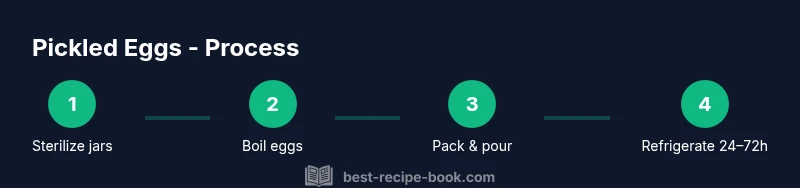
- 1
Sterilize jars
Wash jars and lids with hot soapy water, rinse, and boil in water for 10 minutes to ensure all surfaces are sterile. Allow jars to dry completely on a clean surface before use.
Tip: Use gloves when handling hot jars to avoid burns. - 2
Boil eggs until hard-cooked
Place eggs in a single layer in a pot, cover with water, bring to a rolling boil, then simmer for 9–12 minutes. Transfer to an ice bath to cool quickly and stop cooking.
Tip: Peel after they’re completely cool to avoid tearing the whites. - 3
Cool and peel eggs
Drain the hot water, run cold or ice water over the eggs, and peel carefully under cold water to reduce tearing. Dry eggs thoroughly before brining.
Tip: Peeling under water reduces sticking and crumbling. - 4
Prepare brine
In a measuring cup or pot, combine vinegar, water, salt, and sugar. Stir until salt and sugar dissolve; warm slightly if needed to speed dissolution.
Tip: Taste a small sample of brine to adjust acidity and sweetness before adding eggs. - 5
Bring brine to a simmer
Gently bring the brine to a simmer to ensure flavors release fully from spices. Remove from heat once dissolved and aromatic.
Tip: A light simmer helps infuse aromatics without cooking the eggs. - 6
Add aromatics to jar
Place dill, mustard seeds, garlic, peppercorns, or other aromatics into the bottom of each sterilized jar.
Tip: Even layering improves flavor distribution across eggs. - 7
Pack eggs into jars
Arrange peeled eggs vertically in the jar, leaving space so brine can circulate. Don’t force eggs in; overcrowding reduces flavor penetration.
Tip: If you have multiple jars, distribute aromatics evenly. - 8
Pour brine over eggs
Carefully pour warm brine into jars until eggs are fully submerged. Leave a small air gap and wipe rims clean before sealing.
Tip: Ensure there are no air pockets that could harbor bacteria. - 9
Refrigerate jars
Tighten lids and refrigerate all jars for at least 24 hours to start flavor development; most batches taste best after 48–72 hours.
Tip: Label with date so you know when to rotate stock. - 10
Taste and rest if needed
After the initial brining period, sample a peeled egg to gauge flavor. If needed, reseal and refrigerate longer for deeper flavor.
Tip: Small batches test flavors before scaling up.
People Also Ask
What are pickled eggs and why should I make them at home?
Pickled eggs are hard-boiled eggs submerged in a seasoned brine that preserves the eggs and adds tang. Making them at home lets you customize flavor profiles and adjust salt, acidity, and aromatics to your liking, with a shelf-stable result when refrigerated properly.
Pickled eggs are eggs soaked in a tangy brine; making them at home gives you control over flavor and safety, with a fridge-stable result.
How long do pickled eggs last in the fridge?
When fully submerged in brine and kept refrigerated, pickled eggs stay safe and tasty for several weeks. Always inspect for off odors or changes in texture before eating.
They stay good for several weeks in the fridge as long as they’re fully submerged in brine and stored cold.
Can I reuse the brine for another batch?
You can reuse brine for a subsequent batch if you boil it first to kill any potential bacteria and if you’re comfortable with flavor dilution. Reuse may reduce flavor intensity over time.
You can reuse brine after boiling it, but the flavor will weaken with each reuse.
What spice combinations work best with pickled eggs?
Popular combos include dill and mustard seeds for a classic profile, with garlic and peppercorns for a punch. For heat lovers, chili flakes or cracked pepper add a nice kick.
Dill and mustard seeds are great, and you can add garlic and pepper for extra kick.
Are pickled eggs safe during pregnancy?
Pickled eggs are safe if prepared with clean ingredients and proper refrigeration. Follow standard food-safety practices for all home canning or brining.
As long as you follow normal food-safety practices and refrigerate, they’re generally safe.
Can I use Easter eggs or pre-peeled eggs for pickling?
Yes, you can use peeled eggs as long as they’re fresh, peeled gently, and fully submerged in brine during brining to avoid spoilage.
Peeled eggs can be used as long as they stay submerged and refrigerated.
Watch Video
Key Takeaways
- Prepare clean, sterilized jars for safety.
- Balance brine acidity with salt and optional sugar.
- Fully submerge eggs for uniform flavor and preservation.
- Refrigerate and taste early to tailor future batches.