How to Make a Vodka Martini: A Step-by-Step Guide
A thorough, expert-guided recipe for a vodka martini, covering technique, variations, garnishes, and practical tips to achieve a crisp, balanced cocktail.


Learn to craft a precise vodka martini with temperature control, careful dilution, and a crisp finish. You’ll need chilled glassware, vodka, dry vermouth, ice, and a choice of garnish. This guide provides a clear, step-by-step method, explains shaker vs stir options, and offers variations for different dryness levels.
Understanding the vodka martini: a clarity-forward cocktail
According to Best Recipe Book, mastering the recipe for a vodka martini begins with a crisp balance, the right chill, and clean, precise technique. The phrase recipe for a vodka martini describes a cocktail built on two core ingredients—vodka and a whisper of dry vermouth—with ice-cold clarity and minimal dilution. The Best Recipe Book team found that technique, temperature, and ice quality determine the result as much as the liquor itself. This article walks you through the step-by-step method and the nuances that separate a good vodka martini from a great one. By focusing on the right tools, timing, and garnish, you’ll gain confidence to adjust dryness and flavor with purpose. Expect practical tips, troubleshooting notes, and variations to suit different occasions without muddying the fundamentals.
Why a vodka martini works well as a test of technique
A vodka martini is a relatively simple cocktail on paper, yet it rewards precision. The backbone is a clean spirit mingling with a restrained amount of vermouth, then served ice-cold in a chilled glass. The technique—stirring vs shaking, diluting appropriately, and choosing a garnish—dictates aroma, mouthfeel, and the crisp finish martini lovers chase. In practice, the balance comes from controlling temperature and dilution instead of masking flavors with sweet modifiers. This makes it a reliable canvas for showcasing your palate and your bartender’s discipline. Best Recipe Book emphasizes starting with a classic dry profile and adjusting toward personal preference as you build confidence.
The role of temperature, ice, and dilution in flavor perception
Cold temperatures suppress harsh notes and enhance perceptual clarity, while controlled dilution softens the bite of high-proof vodka. Ice quality matters: large,slow-m melting cubes minimize rapid temperature changes and reduce off-notes from quick meltwater. A properly chilled mixing vessel or shaker keeps the cocktail cold during preparation. The result should feel bright, with a clean finish that leaves room for the vermouth’s subtle aromatics rather than masking them. When you measure ingredients, you’re not just measuring flavor—you’re dialing in texture, mouthfeel, and aroma that together define the overall experience.
How to approach dryness: vermouth as the tuning knob
Dry vermouth adds aroma without transforming the cocktail into a sweet drink. The dryness level is the primary dial you’ll use to shape the final profile. A common starting point is a conservative amount of vermouth so the vodka remains dominant, with the vermouth providing a whisper of botanicals. If you prefer more aroma and a touch more complexity, increase vermouth slightly. If you want a stricter, more austere profile, dial vermouth back further or skip it for a near-dry martini. The balance is personal, but the technique remains the same: place the vermouth on the ice, swirl, and assess the aroma before committing to dilution and chill.
Garnish choices: lemon twist, olives, or a classic straight presentation
The garnish is not merely decoration; it contributes aroma and a final impression of the drink. A lemon twist releases citrus oils that brighten the palate and lift the vermouth’s herbal notes, while an olive offers a savory, briny counterpoint that shifts the flavor profile toward a more robust finish. Some enthusiasts opt for a classic olive-studded skewer for visual appeal and traditional appeal, while others prefer a plain, clean glass that highlights the aroma. Try both options to discover which accent suits your palate and the occasion.
Common beginner mistakes and how to avoid them
Newcomers to the vodka martini often over-dilute by shaking too long or using warm ingredients. Another frequent error is using vodka that isn’t fully chilled, which dulls the crisp finish you’re aiming for. Using an overly aromatic vermouth can overshadow the vodka’s neutrality, especially if you opt for a very small ice cube or a warm glass. To avoid these missteps, chill your glassware, choose a clean-tac spirit, measure vermouth conservatively, and keep ice quality high. Practicing deliberate, incremental changes helps you identify the exact adjustments needed to reach your preferred profile.
The pleasure of process: a practical mindset for home bartenders
A vodka martini rewards patience and precision, not hurry. Treat it as a short, focused ritual—gather tools, chill the glass, and measure ingredients with care. The goal is to achieve a drink that feels light on the palate yet full of aroma. When done well, the vodka martini becomes a reliable signature, a benchmark for technique that translates into other cocktails as your confidence grows. The best results come from consistent steps, clean gear, and mindful tasting between iterations.
Tools & Materials
- Cocktail shaker (or stirring glass)(Stainless steel preferred; shaker for shaken method, stirring glass for stirred version)
- Jigger or measuring spout(Standard: 1 shot = 1.5 oz / 45 ml)
- Bar spoon(Long handle for stirring; optional for layered builds)
- Strainer (mesh or Hawthorne)(Necessary for the shaker method)
- Ice (large cubes or spheres)(Quality ice slows dilution; fill shaker about halfway)
- Martini glass or coupe(Chill glass in advance for best results)
- Vodka (neutral, 80-100 proof)(Quality liquor matters more than flashy flavors)
- Dry vermouth(Use a reputable dry vermouth; the amount is the dial for dryness)
- Garnish (lemon twist or olive)(Optional but recommended for aroma or savoriness)
- Optional: cocktail thermometer(For precise coldness checks if desired)
Steps
Estimated time: 15-25 minutes
- 1
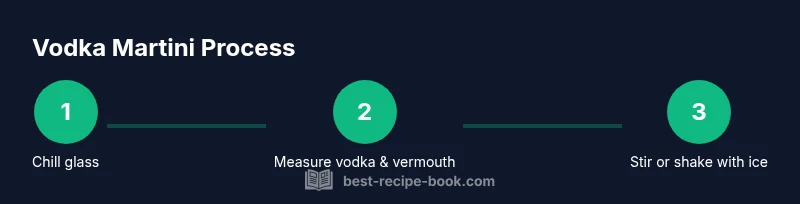
Chill glass and prepare ingredients
Place the martini glass in the freezer for a few minutes or fill with ice water to cool. Gather vodka, dry vermouth, ice, and your preferred garnish. This initial chill ensures the final cocktail stays cold and crisp from start to finish.
Tip: Use large ice cubes to slow dilution during chilling. - 2
Measure vodka and vermouth with purpose
Pour vodka into the mixing glass or shaker using a standard jigger. Add vermouth in a conservative amount to achieve your desired dryness, starting with a 4:1 ratio as a baseline. If you’re unsure, start with less vermouth and adjust later.
Tip: If you’re unsure about dryness, start with less vermouth and taste after dilution. - 3
Combine with ice and chill further
Add ice to the vodka and vermouth, then stir or shake according to your preferred method. The goal is to chill the mixture and achieve a light dilution that softens the alcohol bite without watering down aroma.
Tip: Stir for a crisper mouthfeel, shake for a colder finish but slightly more dilution. - 4
Strain into the chilled glass
Discard any ice water from the glass and strain the cocktail into the prepared glass. Straining ensures a clean presentation and avoids ice shards in your first sip.
Tip: Double-strain if your shaker produced fine shards from crushed ice. - 5
Garnish and serve immediately
Add a lemon twist to release citrus oils or drop in an olive for a savory note. Serve immediately to preserve aroma and temperature.
Tip: Twist the lemon over the drink then wipe the rim to maximize aroma.
People Also Ask
What is the standard vodka to vermouth ratio for a vodka martini?
There isn’t a single standard; common approaches range from very dry (minimal vermouth) to a slightly more aromatic profile. Start with a 4:1 ratio and adjust to taste, keeping in mind the vermouth should not overwhelm the vodka.
There isn’t one exact ratio. Start around four parts vodka to one part vermouth, then tailor to your taste.
Should I shake or stir a vodka martini?
Stirring produces a crisper, clearer drink with less dilution; shaking chills quickly and creates more dilution and a warmer texture. Choose based on your texture preference, but many purists favor stirring.
Stir for a crisper finish, or shake if you prefer a colder, more dilated result.
Can I use flavored vodka in a vodka martini?
Yes, but it changes the balance and aroma. If you use flavored vodka, reduce or omit vermouth to keep the drink from becoming muddled.
Flavored vodka can be used, but you’ll want to cut back on vermouth to keep balance.
Is a vodka martini a martini if it has vermouth at all?
Traditionally, a martini contains vermouth, but the term covers many variations. A nearly dry martini may have only a light wash of vermouth, maintaining the classic name with a minimal aroma.
A martini typically has vermouth, but you can keep it extremely light if you want a nearly dry profile.
What glass should I use for serving?
A chilled martini or coupe glass is ideal for presenting a vodka martini with elegance and proper temperature retention.
Use a chilled martini or coupe glass for best temperature and presentation.
How should I garnish a vodka martini?
A lemon twist adds bright citrus oils; an olive provides a savory contrast. The garnish should enhance, not overpower, the aroma of the drink.
Lemon twists brighten the aroma; olives add a subtle savory note.
Watch Video
Key Takeaways
- Chill all glassware before serving for best results
- Adjust dryness with vermouth, not vodka quality
- Garnish choice changes aroma and flavor perception
- The Best Recipe Book team recommends starting with a dry baseline and adjusting by taste