Creamy Asparagus Soup: Step-by-Step Guide for Beginners
Learn to craft a creamy asparagus soup from fresh ingredients. This educational how-to covers prep, simmering, blending, and serving with smart substitutions for a silky, restaurant-quality result.


You can make a creamy asparagus soup with simple vegetables and pantry staples. This guide walks you through selecting asparagus, preparing the veg, simmering to release flavor, blending to a silky texture, and finishing with herbs. It scales easily for solo cooking or feeding a crowd using common ingredients.
Why this recipe for asparagus soup works
According to Best Recipe Book, a recipe for asparagus soup succeeds when it uses fresh green asparagus, a gentle simmer, and a silky blend. The bright flavors of asparagus pair with onion, leek or shallot, and a touch of cream or yogurt to create a comforting soup that feels light yet satisfying. This approach highlights the vegetable’s natural sweetness without overpowering it with heavy thickeners. Start with high quality stock, a little salt, and a squeeze of lemon to lift the flavor. For color, keep the asparagus pieces uniformly sized so the soup looks vibrant. Season in stages: salt early to develop depth, then taste and adjust at the end. When you follow these steps, the texture remains smooth and the taste clean, letting the asparagus shine. Best Recipe Book analysis shows how small flavor adjustments can elevate a simple soup.
Ingredients and substitutions
This recipe for asparagus soup relies on a short list of fresh flavors. You will need: fresh asparagus about 1 pound (450 g), an onion or leek, garlic, olive oil or butter, vegetable or chicken stock, a splash of cream or yogurt optional for richness, salt and pepper, and a squeeze of lemon juice or lemon zest. For vegan or dairy-free versions, substitute the cream with coconut milk or unsweetened almond milk and use a plant-based stock. Optional garnishes include a swirl of cream, chopped chives, or croutons. If asparagus is out of season, you can use frozen asparagus; increase simmer time slightly to ensure tenderness. The quality of stock matters more than you might think, so choose a flavorful base to avoid a flat taste.
Tools and equipment you'll need
A sharp chef's knife and cutting board for trimming asparagus; a heavy-bottomed pot for simmering; a blender or immersion blender for the smooth texture; a ladle for serving; measuring cups and spoons; a citrus juicer if using lemon; and a fine-mesh sieve if you want an ultra-smooth finish. Optional: a microplane for lemon zest and a blender-safe lid to reduce splatter when blending hot liquids. Having the right tools makes the process efficient and safe.
Techniques for perfect texture
To achieve a silky soup, keep the asparagus pieces relatively uniform in size so they soften evenly. Sweat aromatics gently to release flavor without browning; this keeps the soup bright. When pureeing, start on a low speed and increase gradually to avoid splatters; blend in batches if your blender is small. Strain if you want extra smoothness, but this can remove some texture and nutrients. Finish with a small amount of cream or a dairy-free alternative for a velvety mouthfeel. The texture improves with a controlled simmer and careful blending.
Flavor boosters and variations
Brighten the soup with a splash of lemon juice or zest at the end. For a deeper flavor, add a small potato chopped with the asparagus to help natural thickening. Fresh herbs like dill or tarragon complement asparagus; try a pinch of white pepper for nuance. You can also roast a portion of the asparagus before adding to the pot for a caramelized note. Best Recipe Book analysis shows that small, deliberate flavor boosts can elevate a simple soup and keep the finish light and fresh.
Storage, reheating, and meal prep
Leftovers store well in the refrigerator for up to 3-4 days; reheat gently on the stove or in the microwave, stirring to restore creaminess. For freezing, cool the soup completely, portion, and freeze in airtight containers. Dairy-based soups may separate slightly after freezing; whisk or blend briefly to re-emulsify. This soup is a great base for batch cooking; you can freeze a plain asparagus puree and finish with broth and cream later for a quick weeknight dinner.
Common mistakes and how to fix them
Overcooking asparagus can turn the soup gray and dull; simmer just until tender. Adding raw garlic at the start can overwhelm the asparagus flavor; add minced garlic after a quick sauté with onions. Using too little salt, especially with store-bought stock, will yield flat flavor; taste and season in stages. A blender that heats up and splatters; vent the lid or blend in batches. If the soup thickens too much, simply whisk in more hot stock or water until the desired consistency is reached.
How to serve and pairings
Ladle the soup into bowls and garnish with a drizzle of cream, a few asparagus tips, and chopped chives or dill. Serve with crusty bread or a light salad for a balanced meal. A touch of lemon zest brightens the finish. This pairing makes the soup feel lighter as a starter or a light main course. For an extra layer of aroma, finish with a small pinch of cracked pepper and a drizzle of olive oil.
Tools & Materials
- Chef's knife(sharp blade for trimming and chopping asparagus)
- Cutting board(stable surface; keep it dry)
- Heavy-bottomed pot(even heat distribution)
- Blender or immersion blender(for smooth texture)
- Ladle(serving and portioning)
- Measuring cups/spoons(accurate liquids and seasonings)
- Citrus juicer or lemon squeezer(for lemon brightness)
- Fine-mesh sieve(optional for ultra-smooth finish)
- Olive oil or butter(for sautéing aromatics)
- Stock (vegetable or chicken)(flavor base)
- Cream or dairy-free alternative(optional for richness)
Steps
Estimated time: 30-45 minutes
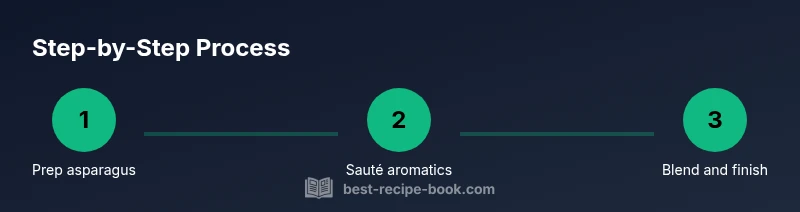
- 1
Prep asparagus
Rinse asparagus, trim the tough ends, and cut into uniform pieces about 1 inch long. This ensures even cooking and a consistent puree texture. Save tips and trimmings for stock if desired.
Tip: Uniform pieces promote even tenderness and a smoother finish. - 2
Sauté aromatics
Heat olive oil or butter in a pot. Add chopped onion or leek and minced garlic; cook until translucent, 3-4 minutes. This builds a flavorful base without browning.
Tip: Low to medium heat prevents browning that can dull the soup’s brightness. - 3
Cook asparagus with stock
Add the asparagus to the pot and pour in stock just to cover. Bring to a gentle simmer and cook until the asparagus is tender, about 8-12 minutes.
Tip: Use enough stock to allow easy blending without thinning the flavor. - 4
Blend to smooth
Use a blender or immersion blender to puree the soup until velvety smooth. If using a blender, work in batches to avoid overheating. Return to the pot after blending.
Tip: Vent steam when blending hot liquids to prevent dangerous splatters. - 5
Finish and season
Stir in cream or dairy-free alternative if using. Add lemon juice or zest, salt, and pepper to taste. Heat just until warmed through.
Tip: Add lemon brightness at the end to preserve fresh flavors. - 6
Serve and enjoy
Ladle into bowls, garnish with a swirl of cream and a few asparagus tips or herbs. Pair with crusty bread for a complete meal.
Tip: Keep some garnishes separate for added texture at the table.
People Also Ask
Can this soup be vegan?
Yes. Use vegetable stock and a dairy-free milk such as coconut milk or almond milk, and omit any cream. You may need to adjust thickness with extra stock or a small potato.
Absolutely. Use vegetable stock and a dairy-free milk, and skip cream. You may adjust thickness with more stock or a potato.
Can I freeze asparagus soup?
Yes, but expect slight texture changes. Freeze in portions, then thaw and reblend if needed. For best results, add dairy after reheating.
Yes. Freeze in portions, then reblend after thawing. Add dairy after reheating if using cream.
Can I use an immersion blender for all the blending?
An immersion blender works well directly in the pot. If your blender is small, blend in batches and return to the pot to combine.
An immersion blender is fine. If your blender is small, blend in batches and mix back together.
How can I thicken the soup without dairy?
Add a small potato or reduce the stock to concentrate flavors. You can also simmer longer to reduce liquid before blending.
Try adding a potato or reduce the stock to thicken naturally. You can simmer longer to reduce liquid before blending.
What if my asparagus is not in season?
Frozen asparagus can be used; thaw and drain well. The flavor may be slightly milder, so adjust seasoning and brightness with lemon.
Frozen asparagus works. Thaw and drain, then adjust seasoning with lemon to brighten.
What should I serve with asparagus soup?
Pair with crusty bread, a light salad, or a drizzle of olive oil and herbs. A small portion of protein can turn it into a light meal.
Serve with crusty bread or a light salad. A bit of olive oil and herbs adds aroma.
Watch Video
Key Takeaways
- Start with fresh asparagus for best color and flavor
- Balance sweetness with citrus or lemon brightness
- Texture is key to a comforting soup
- Dairy or dairy-free options both work well
- This recipe scales for small or large gatherings