Best Baba Ganoush Recipe: Simple Step-by-Step Guide
Master a classic baba ganoush with smoky roasted eggplant, tahini, garlic, lemon, and olive oil. This step-by-step guide covers technique, texture, and flavor balance for perfect dips.


You will learn a clear, reliable recipe for baba ganoush featuring smoky roasted eggplant, tahini, garlic, lemon juice, and olive oil. Gather a few pantry staples, plus a blender or food processor, a pinch of salt, and olive oil for finishing. Follow the step-by-step method to achieve creamy texture, balanced tang, and vibrant flavor.
Why this baba ganoush recipe works
This recipe for baba ganoush emphasizes a balance between smoky, creamy texture and bright, lemony brightness. The star is the eggplant, roasted until the skin chars and the flesh becomes soft, yielding a deep, earthy base. Tahini adds richness and nuttiness, while garlic, lemon juice, and a drizzle of olive oil lift the dip with clean acidity and sheen. By controlling moisture and using a light touch when blending, you achieve a velvety consistency that’s easy to scoop with pita, veggies, or crusty bread. The technique also remains flexible for vegetarians and vegans, and it scales well for gatherings. According to Best Recipe Book, mastering the roasting stage is the key to authentic flavor and texture, which is why this guide starts with practical roasting methods and then walks you through blending and finishing steps.
Ingredient balance and seasoning foundations
A successful baba ganoush rests on a few core ingredients: roasted eggplants, tahini, lemon juice, garlic, olive oil, and salt. Optional garnishes—parley, paprika, or a dusting of cumin—add aroma and color without overpowering the base. The trick is to taste as you go and adjust acidity and salt in small increments. Start with a standard ratio: one medium eggplant yields about a half-cup to three-quarters cup of finished dip. If you prefer a looser dip, add a little more lemon juice or olive oil; for thicker texture, blend longer or add a spoonful of water. The goal is a creamy, scoopable spread that clings to chips and pita rather than sliding off.
Equipment and prep before you begin
For best results, have a food processor or heavy-duty blender ready, along with a sharp knife, a parchment-lined baking sheet, and a bowl for resting the roasted flesh. If you’re using a grill, keep tongs handy and manage flare-ups carefully. You’ll also want something to press the eggplant flesh and squeeze out moisture after roasting—paper towels or a clean kitchen towel works well. Prep the garlic and lemon by mincing and juicing ahead of time so blending is smooth. Having everything measured and ready reduces reaction time while the eggplant is hot, which helps preserve the smoky aroma.
Roasting eggplants for maximum smokiness
Roasting is where baba ganoush earns its signature flavor. You can roast whole eggplants in the oven or on a charcoal grill for a pronounced char. When using the oven, set to broil or roast at a high heat, flipping the eggplant halfway through to ensure even charring. On a grill, place the eggplants directly over medium-high fire, turning occasionally until the skin blisters and blackens. The goal is a deeply charred skin with tender flesh inside. After roasting, let the eggplants rest in a bowl with a lid or foil for 10 minutes to trap steam, then peel away the skin.
Making the baba ganoush: blending and texture control
Scoop the soft eggplant flesh into your blender or processor, then add tahini, minced garlic, lemon juice, salt, and a good splash of olive oil. Pulse until you reach a creamy but slightly textured consistency—some prefer a smoother dip, others a touch of bite. If the mixture is too thick, add a tiny amount of water or more lemon juice in small increments. Taste and adjust salt and acidity; a bright note of lemon can balance the tahini richness. Finish with a final drizzle of olive oil, and a sprinkle of garnish just before serving.
Flavor boosters and variations
Experiment with add-ins to customize your baba ganoush. Roasted garlic can amplify sweetness, extra lemon zest brightens the profile, and a whisper of smoked paprika or cumin adds warmth. For a vegan-friendly version, ensure the tahini is sesame-based and that you use high-quality olive oil. If you have fresh herbs on hand, chopped parsley or cilantro can provide freshness. For extra creaminess, blend a tablespoon of yogurt or plant-based yogurt, but adjust lemon to maintain balance.
Serving suggestions and pairings
Baba ganoush shines when served with warm pita, crudité vegetables, or as a spread on sandwiches. Offer small bowls with olive oil and chopped parsley for dipping, and consider adding a light sprinkle of paprika or sumac for color. It also makes a great base for bowls, layering with cucumbers, tomatoes, and onions. If you want it as a party appetizer, portion into small serving cups topped with a drizzle of olive oil and a pinch of sea salt.
Make-ahead tips and storage
Baba ganoush benefits from resting in the fridge for a few hours, which helps the flavors meld. Cover tightly to prevent it from absorbing other odors. It will thicken slightly when cold, so you may need to whisk in a teaspoon of water or lemon juice before serving. Freeze portions only if you don’t mind a change in texture; thaw slowly in the fridge and re-blend briefly to restore creaminess.
Common mistakes and how to fix them
Over-roasting can produce an overly bitter dip; avoid under-roasting, which leaves a grainy texture. If your dip is too thick, thin with water or lemon juice and blend briefly. If it tastes flat, add a bit more lemon juice and salt, then adjust with olive oil. Finally, if the eggplant flesh is watery, drain more moisture before blending to prevent a runny dip.
Tools & Materials
- Eggplants (2 medium)(Choose firm fruit; roast until skin chars well)
- Tahini(About 2–3 tablespoons per eggplant)
- Garlic cloves(1–2 cloves, minced)
- Fresh lemon(Juice from 1–2 lemons)
- Extra-virgin olive oil(2–3 tablespoons for blending and finishing)
- Salt(To taste, start with 1/4 teaspoon)
- Black pepper (optional)(Freshly ground)
- Food processor or blender(For smooth texture)
- Parchment paper(For roasting sheet)
- Parsley or paprika (garnish)(Optional)
Steps
Estimated time: 60-75 minutes
- 1
Preheat and prep
Preheat your oven to a high heat or heat the grill to a steady medium-high. Line a baking sheet with parchment for easier cleanup. Gather all ingredients and measure them so you can blend smoothly when the eggplant is hot.
Tip: Having everything measured beforehand minimizes the risk of overcooking the eggplant while you measure. - 2
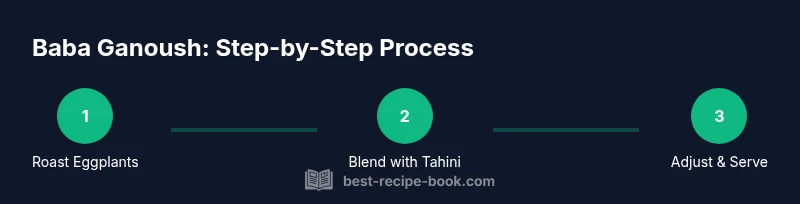
Roast the eggplants
Roast whole eggplants until the skin blisters and the flesh collapses slightly when pressed. Turn them halfway to ensure even charring. This smoky process is the heart of authentic baba ganoush flavor.
Tip: If using a grill, keep the flame moderate to avoid burning the flesh inside. - 3
Cool and peel
Allow the eggplants to rest just enough to handle. Slice open and scoop out the soft flesh, discarding the charred skin. Transfer the flesh to a bowl and blot away excess moisture with a clean towel or paper towels.
Tip: The less moisture retained, the creamier the final dip. - 4
Blend the base
In a processor, combine the eggplant flesh with tahini, minced garlic, lemon juice, salt, and a splash of olive oil. Pulse until you reach a creamy but slightly textured consistency; avoid over-processing if you prefer a bit of bite.
Tip: If it’s too thick, add a teaspoon of water or more lemon juice in small increments. - 5
Adjust seasoning
Taste the mixture and adjust for acidity and salt. A touch more lemon can brighten the dip, while extra salt can enhance the tahini's depth. Finish with a drizzle of olive oil for sheen.
Tip: Always let the dip rest for 10–15 minutes to allow flavors to meld. - 6
Optional enhancements
Stir in optional additions like roasted garlic, cumin, or paprika for added warmth. Fresh herbs can lift the aroma without overpowering the core flavors.
Tip: Try a pinch of smoked paprika for a traditional smoky finish. - 7
Chill if desired
For deeper flavor, refrigerate the dip for at least 30 minutes before serving. This helps the flavors mingle and reduces the raw garlic edge.
Tip: Cover tightly to prevent other fridge odors from seeping in. - 8
Serve and garnish
Spoon into a serving bowl, drizzle with olive oil, and sprinkle with chopped parsley or paprika. Pair with warm pita, cucumber spears, or carrot sticks for dipping.
Tip: A small squeeze of lemon over the top just before serving brightens the dish. - 9
Make-ahead and storage
Store leftovers in an airtight container in the fridge for a few days. The dip may thicken; whisk in a teaspoon of water or lemon juice to restore creaminess before serving.
Tip: Avoid freezing, which can change the texture of the eggplant.
People Also Ask
What is baba ganoush made of?
Baba ganoush is a smoky eggplant dip enriched with tahini, olive oil, lemon juice, and garlic. It’s typically lightened with salt and garnished with herbs or paprika.
Baba ganoush is a smoky eggplant dip with tahini, olive oil, lemon, and garlic. It’s simple and flavorful.
Can I roast eggplants in the oven or on a grill?
Yes. Oven roasting under high heat creates a strong char, while grilling yields a deeper smoky aroma. Either method works; choose based on equipment and time.
You can roast the eggplants in the oven for a strong char or grill them for extra smokiness.
How long does baba ganoush keep in the fridge?
Store baba ganoush in an airtight container in the fridge and use within a few days for best texture and flavor.
Store it in the fridge for a few days for best flavor and texture.
Can I freeze baba ganoush?
Freezing is not ideal because the texture can become grainy or watery after thawing. It’s best enjoyed fresh or within a few days.
Freezing isn’t ideal because the texture can change after thawing.
What can I serve baba ganoush with?
Serve with warm pita, cucumber slices, carrot sticks, or as a spread on sandwiches. A splash of olive oil and herbs enhances presentation.
Serve with pita or veggies, and a drizzle of olive oil for extra flavor.
How do I fix watery baba ganoush?
Drain excess moisture from the roasted eggplant flesh and blend again. You can also add more tahini or olive oil to improve body.
Drain extra moisture and blend again; add tahini or oil to restore creaminess.
Can I adjust baba ganoush for vegan diets?
Absolutely. Use tahini and olive oil as the fat sources and avoid any dairy. Most traditional recipes are naturally vegan.
Yes, it’s naturally vegan when you stick with tahini and olive oil.
Watch Video
Key Takeaways
- Roast until eggplants are deeply charred for authentic flavor
- Balance tahini, lemon, garlic, and salt for creamy brightness
- Texture should be creamy with a touch of body, not mushy
- Chill briefly to meld flavors before serving
- Customize with herbs and spices for variety