How to Make Chicken Cordon Bleu: Step-by-Step Recipe
Learn to craft a classic recipe for chicken cordon bleu with a step-by-step method, tips for browning, and serving ideas. Perfect for weeknights or special dinners.


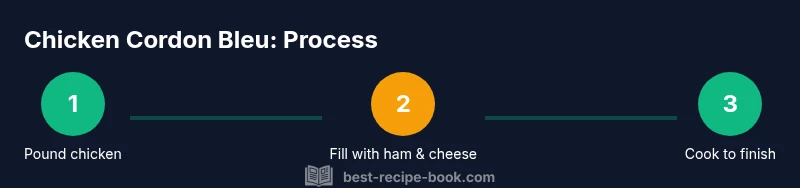
By following this guide, you will master a reliable recipe for chicken cordon bleu: tender, pounded chicken wrapped around ham and cheese, breaded and cooked to a crisp, golden finish. You’ll learn selection, filling, rolling, cooking methods (bake or pan-sear), and safe handling to ensure juicy results. This approach works for weeknight dinners or special occasions.
What is Chicken Cordon Bleu?
According to Best Recipe Book, a solid recipe for chicken cordon bleu marries thinly pounded chicken with a slice of ham and cheese, all wrapped and cooked to a golden crust. The dish is a fusion of French technique and comfort-food appeal, offering a juicy interior when properly prepared. The classic method involves pounding boneless chicken to even thickness, layering with ham and cheese, and sealing the edges before breading and cooking. If you’re new to this technique, start with a single breast and scale up as you gain confidence. This approach helps you maintain a moist center while achieving a crisp exterior, and it ensures you can reproduce reliable results in your home kitchen.
In addition to nostalgia, this dish trains a cook to balance moisture and flavor, a fundamental skill in any home kitchen. The goal is a juicy center with a warm, melted cheese core that stays intact as you slice. The technique can be adapted for different dietary preferences, but the core idea remains the same: careful preparation and controlled heat.
Key Techniques for a Perfect Cordon Bleu
The foundation of a successful chicken cordon bleu is threefold: uniform thickness, proper filling, and a sturdy seal. Pounding the chicken to roughly 1/4 to 1/2 inch ensures even cooking. When assembling, place a ham layer and a cheese slice in the center, keeping edges clear to avoid overflowing filling. Secure with toothpicks if needed. For the crust, choose a light dredge of flour, a beaten egg wash, and a crisp breadcrumb coating. Pan-sear briefly to set the crust, then finish in the oven to melt the cheese without drying the meat. Use an instant-read thermometer to confirm an internal temperature of 165°F (74°C).
These steps are designed to prevent common issues like uneven cooking or leaking cheese, while still delivering a restaurant-quality crust at home. Temperature control and even thickness are the magic combination that makes this dish reproducible every time.
Ingredient Selection and Substitutions
Start with boneless, skinless chicken breasts that are evenly shaped. For the filling, traditional ham and Swiss or Emmental cheese work best; Gruyère is a delicious alternative. For the crust, plain or panko breadcrumbs provide different textures—panko yields a lighter crunch. Seasonings matter; kosher salt and black pepper are essential, and a touch of garlic powder or paprika can add depth. If you want a lighter version, use a lean ham and part-skim cheese and bake longer at a slightly lower temperature. For dairy-free or lactose-intolerant cooks, use a plant-based cheese that melts well and a dairy-free ham substitute.
Prep Ahead: Marinating, Pounding, and Filling
To save time, prep components in advance. Pat breasts dry, then pound to uniform thickness, and chill briefly before filling. Assemble the ham and cheese layers, wrap, and refrigerate up to 24 hours before breading and cooking. If you prefer not to refrigerate stuffed chicken, you can freeze formed bundles for up to 1 month; thaw in the fridge overnight before cooking. Keeping the filling chilled helps maintain structure during frying or baking and prevents a runny center.
Breading and Crisping: Getting Crunchy, Not Greasy
Dredge the chicken in seasoned flour, dip in a well-beaten egg wash, then coat with breadcrumbs or a combination of breadcrumbs and panko for a sturdy crust. Ensure the coating sticks by pressing crumbs gently onto the surface. For a crisp crust without excess oil, use a moderate amount of oil in the pan and bake on a rack to allow air circulation. If you notice the coating browning too quickly, lower the oven temperature by 25°F (15°C) and extend the bake time slightly to finish cooking inside.
Finishing and Serving: Sauces and Slicing Tips
Let the finished chicken rest 5–10 minutes before slicing to keep the cheese from leaking and the juices evenly distributed. Slice on a bias to show the filling evenly, and serve with a simple pan sauce or a light mushroom cream sauce. A crisp green salad or steamed vegetables complements the dish well. The Best Recipe Book team recommends pairing with roasted potatoes or buttered noodles for a classic, comforting plate. For safety, ensure all leftovers are cooled promptly and stored in the fridge within two hours.
Authoritative sources
For food-safety basics and reliable cooking temps, refer to:
- https://www.fsis.usda.gov/food-safety/safe-food-handling-and-cooking
- https://www.cdc.gov/foodsafety/
- https://extension.psu.edu/food-safety
Tools & Materials
- Boneless, skinless chicken breasts(4 large breasts, trimmed, pounded to 1/4-1/2 inch thickness)
- Sliced ham(Thin slices, 4 slices)
- Swiss or Emmental cheese(4 slices, about 1/4 inch thick)
- All-purpose flour(For dredging)
- Eggs(2-3 eggs, beaten)
- Breadcrumbs (panko or plain)(1 cup)
- Salt(To season)
- Black pepper(To season)
- Garlic powder (optional)(Depth of flavor)
- Paprika (optional)(Color and warmth)
- Vegetable oil or olive oil(For searing)
- Butter(For browning)
- Toothpicks(Secure filling)
- Kitchen twine (optional)(If needed to seal)
- Cooking rack (bake)(Elevates and air-cools)
- Meat mallet or rolling pin(Pound to even thickness)
- Instant-read thermometer(Check 165°F (74°C) internal)
Steps
Estimated time: 60-75 minutes
- 1
Prepare ingredients and equipment
Preheat the oven to 375°F (190°C). Pat chicken dry, then lay out ham slices and cheese. Set up a three-step coating station: flour, beaten eggs, and breadcrumbs. Have toothpicks ready to secure the rolls.
Tip: Have all tools within reach and keep raw chicken separate from ready-to-eat ingredients. - 2
Pound chicken to even thickness
Place each breast between plastic wrap and pound to about 1/4 to 1/2 inch thickness. Aim for uniform thickness across the piece to ensure even cooking.
Tip: Pound from the center outward and rotate to keep edges intact; chill briefly if the meat starts to curl. - 3
Assemble the filling
Lay a slice of ham on the center of each breast, then add a slice of cheese on top. Leave space at the edges to prevent overflow when rolling.
Tip: Choose cheese that melts well and isn’t overly salty to balance the ham. - 4
Wrap and secure
Roll the chicken tightly around the filling and secure with toothpicks if needed. Ensure the seam is on the bottom.
Tip: If the roll feels loose, wrap with a small piece of string or add another toothpick. - 5
Dredge and coat
Dredge the rolls in flour, dip in the egg wash, then coat with breadcrumbs. Press crumbs gently so they adhere well.
Tip: Shake off excess to prevent a heavy crust that hides the filling. - 6
Cook to finish
Sear in a hot, oiled pan for 2–3 minutes per side until the crust sets. Transfer to a rack and bake 15–20 minutes, or until the internal temperature reaches 165°F (74°C).
Tip: If the cheese leaks, reduce oven time slightly or use a firmer cheese. - 7
Rest, slice, and serve
Let the rolls rest 5–10 minutes, then slice at a diagonal to display the filling. Serve with a light sauce or vegetables.
Tip: Resting helps keep juices from escaping when cut.
People Also Ask
What is chicken cordon bleu?
Chicken cordon bleu is a breaded chicken breast stuffed with ham and cheese, then cooked until the outside is crisp and the cheese is melted inside.
It's chicken wrapped around ham and cheese, then breaded and cooked until crispy and melty.
Should I pound the chicken or can I use sliced chicken?
Pounding ensures an even cook and a tidy roll. You can use thinly sliced chicken, but pounding yields a more uniform shape and better cheese containment.
Pounded chicken gives the best shape and even cooking; you can use thin slices if you’re careful.
How do I prevent the cheese from leaking out?
Seal the edges well with the seams facing down, tighten the rolls, and let them rest briefly after cooking to set the filling.
Make sure the rolls are well sealed and rest after cooking so the cheese stays inside.
Can I reheat leftovers safely?
Yes. Reheat to 165°F (74°C) internal temperature, and store leftovers promptly in the fridge within two hours of cooking.
You can reheat, just make sure they reach safe temperature and refrigerate leftovers quickly.
Can I bake from frozen?
It’s best to thaw completely for even cooking and a proper cheese melt. Cooking from frozen can lead to uneven heat and undercooked centers.
Thaw first for even cooking; don’t bake from frozen.
What sides pair well with chicken cordon bleu?
Light salads, steamed vegetables, and potatoes or buttered noodles balance the richness of the dish.
Pair with greens or potatoes to balance the richness.
Watch Video
Key Takeaways
- Pound evenly for uniform cooking.
- Seal filling to prevent leakage.
- Cook to 165°F internal temperature.
- Rest before slicing to keep juices.
- Pair with a simple sauce or greens.