Croissant Bread Recipe: Complete Step-by-Step Guide
Master a reliable croissant bread recipe with laminated dough, precise timing, and kitchen-tested technique. This guide covers ingredients, equipment, steps, and troubleshooting for home bakers.


With this guide, you’ll master a recipe for croissant bread—from flaky laminated dough to oven-baked rolls. You’ll need butter, flour, yeast, sugar, salt, and time for chilling and lamination. The article covers ingredients, step-by-step instructions, tips, troubleshooting, and visuals to help home cooks achieve bakery-quality results at home right in your kitchen.
What makes croissant bread flaky and rich
According to Best Recipe Book, croissant bread blends a rich, tender crumb with crisp, flaky layers achieved by laminated dough. The magic comes from alternating solid butter blocks and dough, creating thin sheets that puff during baking. In this section, we’ll explore how ingredients, temperature control, and resting times work together to deliver that signature bite. You’ll learn the roles of flour protein, sugar, salt, yeast, and fat, plus how to manage moisture for a stable dough that can tolerate folds without tearing.
The crumb structure in croissant bread relies on a careful balance of hydration and fat distribution. If the dough is too wet, layers will smear; if too dry, the dough can tear. Temperature control is critical: keep ingredients cold, but not frozen, and work quickly during the turning process to prevent butter from bleeding. Laminated dough demands patience, precise timing, and clean technique, but with practice you’ll see a visible difference in flakiness and aroma. Finally, the finish comes from a light egg wash and proper oven temperature, which yields a glossy crust and perfectly baked interior.
Ingredient choices and substitutions
Core ingredients for a croissant bread are simple, but the quality matters. Use bread flour or all-purpose flour with a protein range around 11-12% for the best lamination; higher protein can make the dough tougher to roll. Use unsalted butter of good quality, ideally European-style, with 82-84% fat content. For yeast, active dry or instant yeast both work; you can adapt to quick-rise if you’re short on time, but lamination benefits from longer fermentation. Salt, sugar, and a small amount of milk or water are essential for flavor and texture. If dairy-free, substitute plant-based butter and a splash of plant milk; the dough will still laminate, but the flavor will differ. For enrichment, a touch of malt powder or honey can aid browning, but keep amounts small. Finish with an egg wash for color.
Remember to keep butter cold and well wrapped when not in use. If you’re working in a warm kitchen, consider chilling the dough between folds to prevent butter from softening too much. Fresh butter should be used rather than melted; it should feel cool but pliable. Substituting ingredients may change texture, so test a small batch if you’re new to laminated dough.
Equipment and workspace setup
A clean, well-floured workspace is essential for lamination. Gather a rolling pin with a comfortable grip, a large cutting board or silicone mat, a bench scraper, parchment paper, and a rigid ruler for precise dough dimensions. A stand mixer with a paddle or dough hook can speed up the initial dough mixing, but lamination is traditionally done by hand for better control. Keep a thermometer handy to monitor butter temperature and dough temperature; aim for the butter temperature to stay just cool to the touch. Use a cooler or shaded area if your kitchen is warm. Finish with a baking sheet lined with parchment and a rack for cooling.
Set aside at least 1-2 hours of uninterrupted time for the lamination process, plus longer chilling periods between turns. Clear your schedule for a bake day and inform others you’ll be in the kitchen; laminated dough benefits from calm, methodical attention rather than rushed action.
Laminating dough: how the layers form
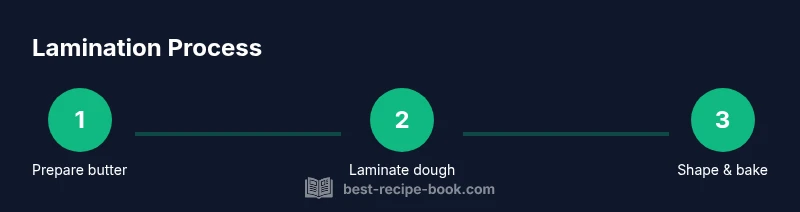
Lamination creates hundreds of paper-thin butter-to-dough layers that puff into flaky pockets during baking. The process begins by encasing a cold butter block in a butter-dort, then rolling out into a rectangle. The dough is folded over the butter in successive turns (usually three to four), with chilling between turns to keep the butter from melting into the dough. As you roll, aim for uniform thickness and straight edges; skewed dough will bake unevenly. The dough should be cold but pliable, and butter should show visible shards in a cut edge when correctly laminated. After the final fold, rest the dough to relax gluten before shaping.
Crucially, avoid overworking the dough; too much gluten development will produce a dense crumb instead of light, airy layers. If you notice butter leaking, chill the dough longer before continuing. Lamination requires attention to temperature and timing; small adjustments can produce big texture differences in the final croissant bread.
Timeline, fermentation, and planning your bake
Plan for a multi-day process when possible. Initial dough mix can be done ahead of time, followed by a cold rest, then the folding stages on separate days. Most bakeries allow the dough to rest overnight to develop flavor, though you can shorten this with a cooler refrigerator. During chilling, the dough should remain wrapped to prevent drying and odor absorption. Meanwhile, the butter block should be firm but pliable, not rock hard. After the final fold, give the dough time to relax before shaping. Shape croissant bread into triangles or rectangles, depending on your preferred final product, then proof in a warm, draft-free area until the dough expands visibly.
Finally, bake at a high oven temperature with steam to promote oven spring and color. If your kitchen lacks steam, place a shallow tray of hot water in the bottom of the oven and preheat with a full sheet pan to maximize heat retention. Most importantly, monitor the bake until the crust is deeply golden and the interior registers near 200°F (93°C).
Troubleshooting and common mistakes
Common lamination mistakes include butter that is too warm, dough that is too cold to roll, and insufficient resting between turns. If butter leaks, the dough needs more chilling time or a lower rolling speed. Dough that tears indicates gluten has developed too much or butter is too cold to laminate; let the dough rest longer and chill again. Overproofed croissants collapse in the oven, producing a dense crumb instead of layers; proof until the dough holds a gentle jiggle, not a hard wobble. Under-proofed dough won’t rise enough and will taste pale; allow more time in a warm, humid environment. Finally, the oven matters: too cool, and the layers won’t puff; too hot, and the crust may scorch before the interior cooks. Adjust humidity with steam as needed; remember that every oven is slightly different, so tests with a small batch help dial in your method.
Tools & Materials
- Unsalted butter for lamination(1 lb / 450 g, cold but pliable)
- Strong flour (bread flour) or all-purpose flour(Protein ~11-12%; separate 20-25% reserved for lamination)
- Granulated sugar(Small amount for flavor)
- Fine salt(Enhances gluten and flavor)
- Active dry yeast or instant yeast(Choose based on schedule)
- Milk or water for dough(Warm liquid helps fermentation)
- Eggs for wash(Optional milk for glow)
- Mixing bowl(Large enough for doubled dough)
- Rolling pin(Smooth surface and comfortable grip)
- Parchement paper(For layering and baking)
- Silicone mat or flour dough board(Prevents sticking)
- Bench scraper(Precise cuts and folds)
- Baking sheet and wire rack(Even cooling and browning)
- Pastry brush(For egg wash)
- Thermometer (instant-read)(Monitor butter and dough temps)
- Mixer with dough hook (optional)(Speeds initial mixing)
Steps
Estimated time: Estimated total time: 6-8 hours
- 1
Gather and chill ingredients
Measure all ingredients and bring butter to a cool, pliable state. Keep butter cold to maintain distinct layers. This initial setup sets the stage for clean lamination and predictable results.
Tip: Work quickly while the butter remains cool; plan your moves to minimize warm handling. - 2
Mix dough and autolyse
Combine flour, sugar, salt, and liquid to form a shaggy dough. Let it rest 15-20 minutes to hydrate the flour, then lightly knead to bring structure. The autolyse improves gluten development with less effort.
Tip: Do not overwork at this stage; a gentle knead preserves tender crumb. - 3
Prepare butter block
Place butter between parchment and pound into a flat, even rectangle. Chill until it is firm but pliable. An even block prevents gaps and uneven layers in the final dough.
Tip: Keep the butter at a consistent temperature; uneven blocks cause weak lamination. - 4
Envelope butter in dough
Wrap the butter block with a portion of dough to form a packet. Roll to a uniform thickness, keeping edges straight. The goal is a neat rectangle with butter fully enclosed.
Tip: Seal edges carefully to avoid butter leakage during rolling. - 5
First turn (fold 1)
Roll the dough into a long rectangle and fold it into thirds, like a letter. Chill for 20-30 minutes to set the butter and relax gluten before the next turn.
Tip: Maintain even thickness; uneven folds create bulky areas. - 6
Second turn (fold 2)
Rotate the dough a quarter turn and roll again into a rectangle. Perform a second fold, then chill again to prevent butter from slipping.
Tip: Keep the dough cool to avoid butter leakage. - 7
Third turn and rest
Repeat the rolling and folding process a final time. After the last turn, rest the dough for at least 30-60 minutes before shaping to relax gluten.
Tip: Gluten relaxation improves layering and shaping ease. - 8
Shape, proof, and bake
Cut the dough into triangles or rectangles and shape croissant bread pieces. Proof in a warm, draft-free area until puffy, then bake with steam until deeply golden and flaky.
Tip: Bake with steam for better oven spring and color.
People Also Ask
What is croissant bread and how does it differ from a standard croissant?
Croissant bread uses laminated dough similar to croissants but is shaped and baked as loaves or larger rolls. It yields a flaky texture with a bread-like crumb, making it easier to slice and serve in portions.
Croissant bread is laminated dough baked as loaves or rolls, giving you flaky layers and a bread-like crumb. It is ideal for sandwiches or bakery-style slices.
Do I need a mixer to make croissant bread?
A mixer helps with the initial dough, but lamination is traditionally done by hand for better control. You can mix by hand or with a stand mixer on low speed, then proceed with lamination.
You can mix by hand, but a stand mixer on low speed works too. The lamination steps remain the same.
Can I refrigerate dough overnight for croissant bread?
Yes. Refrigerating between turns or after shaping helps maintain butter integrity and flavor. Keep dough well wrapped to prevent drying and odor absorption.
Yes, you can refrigerate between turns or after shaping to keep the butter from melting and to develop flavor.
What flour should I use for best results?
Bread flour or high-protein all-purpose flour provides the right gluten structure for lamination. Too low protein can yield pale layers, while too high protein can make the dough tough to roll.
Use bread flour or high-protein all-purpose flour for strong gluten structure; avoid very low protein flour.
How can I tell when croissant bread is fully baked?
Bake until the crust is deeply golden and the interior reads about 200°F (93°C). Thicker loaves may take longer; use an internal thermometer for accuracy.
Bake until the crust is deep golden and the interior reaches about 200F; you can use a thermometer for accuracy.
Watch Video
Key Takeaways
- Laminate dough with cold butter for distinct layers.
- Control temperature and rest between folds.
- Proof properly, bake with steam for color and rise.
- Practice improves flaky texture and even browning.