Easy Lasagna Recipe: A Step-by-Step Guide for Beginners
Master an easy lasagna recipe with a reliable, walk-through approach using pantry staples, no-boil noodles, and make-ahead options. Perfect for weeknights or weekend family meals.


Achieve a reliable, easy lasagna with pantry-friendly ingredients and a simple two-sauce layering method. This quick answer previews a step-by-step guide that covers prep, assembly, baking, and make-ahead options. According to Best Recipe Book, this approach balances flavor and simplicity for home cooks. It emphasizes no-boil noodles, classic ragù, and ricotta layering for a comforting, family-friendly result.
What makes this lasagne easy
This lasagna recipe is designed for home cooks who want a delicious result with minimal stress. The key idea is to simplify without sacrificing flavor: use no-boil noodles to save time, rely on a flavorful meat ragù (or a vegetarian alternative), and layer cheese in a way that delivers creamy texture without tedious prep. By focusing on a reliable layering system and standard pantry ingredients, you can assemble and bake with confidence. According to Best Recipe Book Analysis, simplifying the sauce and keeping layers to a modest count makes the dish approachable while still delivering rich, comforting flavors. You’ll learn how to balance acidity from tomatoes with the creaminess of ricotta and the melt of mozzarella, so every bite feels luxurious without being complicated.
Ingredient fundamentals and substitutions
Choosing flexible ingredients is part of the easy-lasagna strategy. Ground beef, turkey, or a plant-based crumble all work as the protein base. For cheese, a combination of ricotta, mozzarella, and Parmesan provides the classic layered texture and tang. If you don’t have ricotta, cottage cheese can be used with a little extra egg to bind. For a lighter version, swap part of the cheese with a light béchamel. Jarred tomato sauce can be boosted with garlic, onions, and dried oregano to mimic a simmered ragù. Fresh basil or parsley adds a bright finish. If you’re avoiding dairy, try a vegan cheese blend and a vegetable-forward sauce.
Sauce and seasoning basics
A balanced sauce is the backbone of the dish. Start with sautéed garlic (and onion if you like) in olive oil, then stir in crushed tomatoes, a spoon of tomato paste, and a pinch of sugar to cut acidity. Season with dried oregano, basil, salt, and pepper, and let it simmer briefly to mingle flavors. For a richer result, simmer your meat with the sauce so the meat releases its own flavors into the sauce. Taste and adjust salt near the end. If you’re using store-bought sauce, a quick simmer with herbs can elevate it in minutes.
Assembly and layering technique
Keep layering simple and even. Start with a thin sauce layer on the bottom of the baking dish to prevent sticking. Add a layer of noodles, then a portion of ricotta mixture, followed by meat sauce and a sprinkle of mozzarella. Repeat until you reach the dish’s rim, finishing with a top layer of sauce and mozzarella. Press down gently after each layer to compact the layers without squeezing out moisture. Letting the dish rest for a few minutes after assembly helps the layers set, making slicing neater.
Baking, resting, and serving
Cover the dish with foil and bake until the noodles are tender and the flavors have melded. Typical guidance is around 350-375°F (175-190°C) for 25-30 minutes, then uncover and bake 10-15 more minutes until the cheese is bubbling and lightly browned. Rest the lasagna for 10-15 minutes before slicing to help the layers set. Slice into portions and garnish with fresh herbs for color. This approach yields a comforting, crowd-pleasing dish that’s ideal for family dinners or potlucks.
Make-ahead options and leftovers
Lasagna stores well and actually tastes better after a day or two as flavors continue to develop. Assemble in advance and refrigerate for up to 24 hours before baking, adding extra baking time if needed. Freezing uncooked assembled lasagna is also convenient; wrap tightly and freeze for up to 2-3 months, then bake longer from frozen with foil and an extended bake time. Leftovers can be reheated in portions in the microwave or oven, and they freeze well for future meals.
Equipment and workspace setup
A standard 9x13 inch (23x33 cm) baking dish is ideal for even layering and consistent portions. Use a sturdy baking sheet beneath the dish, especially if you’re transporting it to a gathering. Have measuring cups and spoons ready, as well as a large mixing bowl for the ricotta mixture. A chef’s knife and a wooden spoon help with chopping and stirring. Wipe the edges clean before baking to keep a neat appearance.
Flavor boosters and texture tips
For deeper flavor, brown the meat well and don’t rush the simmer. A small amount of grated nutmeg can brighten béchamel if you include one, and a handful of freshly chopped basil or parsley at the end adds fragrance. If you prefer a crisp top, you can broil the last 1-2 minutes carefully after turning off the oven, watching closely to prevent burning. For a smoother texture, blend the ricotta with a little grated Parmesan and a pinch of salt before layering.
Scaling for different family sizes
For smaller households, halve the recipe and use an 8x8 inch dish, adjusting bake time by a few minutes and testing for doneness with a knife. For larger gatherings, use a larger pan and prepare multiple layers, or bake two smaller dishes side by side if you have the oven space. Freezing portions after baking can simplify future meals and reduce overall cooking time on busy days.
Authoritative sources
- USDA Food Safety and Inspection Service: food safety guidelines for cooking and serving lasagna-ready meals and handling hot foods. https://www.fsis.usda.gov/food-safety
- Harvard T.H. Chan School of Public Health, The Nutrition Source: guidance on building a balanced plate and flavor without excess salt or fat. https://www.hsph.harvard.edu/nutritionsource/
- Britannica: Lasagna overview and historical context. https://www.britannica.com/topic/lasagna
Tools & Materials
- Ground beef, turkey, or plant-based crumble(1 pound (450 g) recommended)
- No-boil lasagna noodles(approx. 12-16 sheets depending on pan size)
- Tomato sauce (jarred marinara or crushed tomatoes)(48-64 oz total or equivalent)
- Ricotta cheese(15-16 oz (425-450 g))
- Shredded mozzarella(2 cups)
- Parmesan cheese(1/2 cup grated)
- Olive oil(2 tablespoons)
- Garlic(2 cloves, minced)
- Onion(1 small, finely chopped (optional))
- Dried oregano(1 teaspoon)
- Dried basil(1 teaspoon)
- Salt(to taste)
- Black pepper(to taste)
- Egg (optional for ricotta mix)(1 large, optional)
- Baking dish(9x13 inch (23x33 cm))
- Aluminum foil(to cover during baking)
- Measuring cups and spoons(essential for accuracy)
Steps
Estimated time: 60-75 minutes
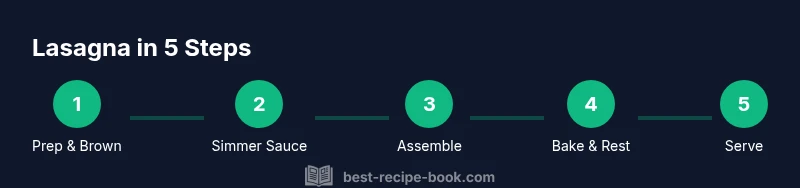
- 1
Gather and measure ingredients
Lay out all ingredients on the counter and measure them precisely before you start. This avoids last-minute scrambles and ensures you don’t miss key flavors. Preheat the oven to 375°F (190°C) to keep the process steady and efficient.
Tip: Use mise en place: set bowls for each ingredient to speed assembly. - 2
Brown the meat and aromatics
Heat olive oil in a skillet, then add ground meat with minced garlic and onion. Cook until the meat is browned and no pink remains, draining excess fat. Season lightly as you cook to build a base of flavor.
Tip: Brown the meat well to deepen flavor—don’t rush the sear. - 3
Simmer the sauce with herbs
Stir crushed tomatoes and tomato paste into the skillet with the meat. Add oregano and basil, a pinch of salt, and pepper. Let the sauce simmer 10-15 minutes to meld flavors and reduce excess acidity.
Tip: Taste and adjust salt at the end of simmering for balance. - 4
Prepare ricotta mixture
In a bowl, combine ricotta with Parmesan and, if using, a lightly beaten egg. Mix until creamy and smooth. This layer adds creaminess and helps bind the ricotta into the dish.
Tip: Adding a tiny amount of salt and pepper boosts flavor without overpowering the dish. - 5
Hydrate and/or boil noodles
If you’re using regular sheets, boil until just al dente and drain. If you’re using no-boil sheets, skip this step but ensure sauce is saucy enough to hydrate the noodles during baking.
Tip: No-boil noodles save time but need a generous sauce layer to hydrate properly. - 6
Assemble the first layer
Spread a thin layer of sauce on the bottom of the baking dish. Add a layer of noodles, then dollop and spread ricotta mixture, followed by meat sauce and a sprinkle of mozzarella. Repeat layers until the dish is full.
Tip: Avoid thick layers; even distribution yields uniform slices. - 7
Finish layering and bake
Top with a final layer of sauce and mozzarella. Cover with foil and bake for 25-30 minutes. Remove foil and bake 10-15 minutes more until cheese is bubbling and lightly browned.
Tip: Let rest 10-15 minutes before slicing to help set the layers.
People Also Ask
What is the easiest way to make lasagna?
Use no-boil noodles, a simple meat ragù, and a ricotta-mozzarella layer. Keep layers thin and uniform to prevent sogginess and ensure quick, even cooking.
The easiest way is to use no-boil noodles and a simple layer system with ricotta and mozzarella.
Can I freeze lasagna?
Yes. Assemble and freeze before baking, or bake and freeze slices for reheating later. If frozen, bake longer from frozen with foil and test for doneness.
Absolutely—lasagna freezes well, either before or after baking.
What pasta sheets work best for lasagna?
No-boil sheets work great for speed and moisture balance. Regular sheets require pre-boiling and more sauce to hydrate properly.
No-boil sheets are the easiest; regular sheets need pre-boiling.
How do you prevent lasagna from being watery?
Brown the meat fully, simmer sauce to reduce moisture, and avoid overly watery layers. Let the dish rest before slicing to avoid running juices.
Reduce moisture in the sauce and let the dish rest before cutting.
Can I make this ahead of time?
Yes. Assemble and refrigerate before baking, or assemble and freeze for longer storage. Adjust bake time accordingly.
You can prepare it ahead and bake later, or freeze for future meals.
Watch Video
Key Takeaways
- Prepare mise en place to speed assembly.
- Layer evenly for consistent slices.
- Rest before cutting to maintain clean edges.
- Make-ahead options save time on busy days.