How to Make Peach Jam: A Step-by-Step Guide
Learn how to make peach jam with a tested recipe peach jam. This guide covers ingredients, canning safety, and tips to ensure bright flavor and long shelf life.


You will learn how to make a reliable peach jam using a tested recipe peach jam method. You’ll gather simple ingredients, sterilize jars, and follow safe canning steps to preserve fresh peach flavor. This guide covers step-by-step technique, substitutions, and common mistakes to avoid for smooth, shelf-stable jam.
Understanding Peach Jam Basics
Peach jam is a spread made from ripe peaches that have been cooked with sugar and often an acid such as lemon juice. The goal is to achieve a jammy consistency that holds a gentle gel and bright fruit flavor. In a recipe peach jam, balance is essential: too little sugar can lead to a runny jam, while too much sugar can mask peach aroma. Pectin helps to set the mixture, but you can achieve a good set with high-pectin fruit and proper cooking if you prefer a lower-sugar approach. When working on preserves, safety is paramount. Always start with clean equipment, use tested processing times, and follow established canning guidelines. The jar you fill should seal properly to prevent spoilage.
Key concepts to understand include gel formation, which occurs when pectin, acid, and sugar interact. Gel strength depends on fruit ripeness, sugar content, and cooking duration. In this guide, we focus on a practical, home-cook friendly approach that yields flavorful peach jam with reliable shelf life. We'll cover ingredient choices, equipment, and step-by-step methods that align with home canning best practices. Throughout, you’ll see tips for maximizing peach flavor, using substitutions, and avoiding common pitfalls that can lead to loose texture or off flavors.
Ingredients and Substitutions
A basic recipe peach jam typically includes ripe peaches, sugar, lemon juice, and optional pectin. For a jar-ready glaze with maximal peach aroma, choose peaches with fragrant flesh and vibrant skin. You’ll need about 2 pounds of peaches for a standard batch, yielding roughly 4 cups of chopped fruit. Sugar is essential for sweetness and preservation, while lemon juice provides acidity to help gel and prevent microbial growth. If you prefer a lower-sugar option, you can reduce sugar gradually and compensate with pectin or longer cooking. Apple juice or white grape juice can be used in place of part of the water when thinning the mixture, though this will alter flavor. If you don’t want to add commercial pectin, rely on the natural pectin in peaches along with a longer simmer.
Common substitutions include using honey or maple syrup for a portion of the sugar, which will add distinctive flavors but also reduce preservation strength. For vegetarians, ensure any vegetarian pectin is used if you have restrictions. Always check jars for processing times specific to your altitude and jar size. The goal is to maintain a balance between sweetness, acidity, and texture for a well-set, bright peach jam.
Preparing Peaches for Jam
Start with peaches that are fully ripe but not overripe; the flesh should yield slightly under gentle pressure. Wash peaches, then peel (or partially peel) depending on your texture preference. Remove pits and slice flesh into uniform chunks to ensure even cooking. Toss sliced fruit with a touch of lemon juice to prevent browning, then measure the peaches to match your recipe peach jam quantities. If you’re using fresh peaches, consider quick blanching to loosen skins before peeling. You’ll also want to prepare your sugar and lemon juice in advance so the cooking step remains smooth. Having all your mise en place ready helps avoid overcooking or scorching the jam. Peel waste can be composted.
Peach varieties vary in sweetness and texture; freestone peaches are easier to pit, while clingstone peaches offer depth of flavor. If you’re peeling, a light paring knife or a Y-peeler works well. Once prepared, peaches can be combined with sugar and lemon juice in a wide, heavy-bottomed pot that allows even heat distribution. Stir occasionally to prevent scorching and monitor the boil. The aim is a fragrant, evenly thickened mixture ready for testing for gel.
The Role of Sugar, Pectin, and Acid
Sugar is not only sweet; it helps preserve and preserves texture by drawing moisture and aiding gel formation when combined with pectin. Lemon juice or citric acid increases acidity, which is necessary for safe canning and gel development. If you use a low- or no-pectin approach, you can rely on the natural pectin in peaches, but you will need longer cooking times to achieve the desired set. Commercial pectin offers a more predictable gel, but it can alter the peach aroma if used in excess. For a stronger set with a fresh peach flavor, pair ripe fruit with proper cooking and pectin balance. Avoid adding thickening agents that can lead to an overly stiff jam. Taste the mixture during cooking to adjust sweetness and acidity to your preference.
In a recipe peach jam, you aim for a glossy, translucent look with a sippable thickness that clings to a spoon. The amount of sugar you use affects not only flavor but texture and shelf life, so measure carefully. If you’re new to canning, follow tested ratios from reliable sources and avoid improvisation that can compromise safety.
The Canning Process and Safety
Canning is a critical safety step to ensure peach jam stays fresh for months. Start by washing your jars and keeping them hot until ready to fill. You’ll fill jars with the hot jam, wipe rims clean, apply lids and rings, and process the jars in a boiling-water bath (or pressure canner for certain altitudes). It’s important to use tested processing times for your altitude and jar size. High-acid foods like peach jam are well-suited to water bath canning when lids are properly sealed. After processing, allow jars to cool undisturbed for 12–24 hours. You should hear the satisfying “pop” of a sealed lid. Label jars with date and contents, then store in a cool, dark place.
If you notice a jar that does not seal properly, refrigerate its contents and use soon; do not store it at room temperature. Always follow local extension service guidelines, and consider safe storage strategies, including rotating stock and avoiding contact with raw foods. When in doubt, discard questionable jars. The safety-first approach ensures your peach jam remains delicious and safe for your family.
Troubleshooting Common Issues
Even with a tested recipe peach jam, issues can arise. Runny jam can result from undercooking, too little pectin, or stirring too much during cooking. If your jam refuses to set, reheat and test again, adding a touch more pectin if needed. A dull color or brown edges may indicate oxidation or overcooking; you can adjust the flavor with a splash of lemon juice and proper cooling. If you encounter mold on stored jam, discard the jar. Flavor loss can result from poor fruit quality or improper storage. By planning ahead, keeping notes, and following safe canning guidelines, you’ll improve outcomes over time.
Tools & Materials
- ripe peaches(Quantity per batch per recipe peach jam; choose peaches with fragrant flesh)
- granulated sugar(Amount per batch per recipe; adjust for sweetness)
- lemon juice(Adds acidity for safety and gel formation)
- optional pectin(For a quicker, more predictable set)
- water bath canner or large pot with rack(Used for processing jars)
- canning jars with lids and bands(Keep jars hot until filling)
- jar lifter(Safer handling of hot jars)
- funnel and jar wiper(Prevents spills and ensures clean rims)
- large heavy-bottom pot(Prevents scorching and cooks evenly)
- spoon or rubber spatula(Stirring and testing; choose heatproof)
- bubble remover wand(Release air pockets during filling)
- timer or clock(Keep track of cooking and processing times)
- clean towels or cloth(Wipe rims and handles; maintain cleanliness)
Steps
Estimated time: 60-75 minutes
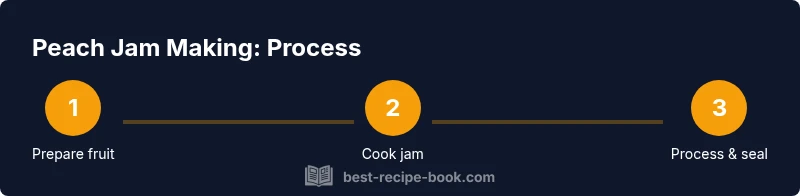
- 1
Prepare peaches
Choose ripe peaches, wash, peel (optional), pit, and slice evenly. Toss with a touch of lemon juice to prevent browning and measure the amount for your recipe. Having uniform pieces helps the jam cook evenly and reach the gel stage consistently.
Tip: Uniform pieces ensure consistent texture and set. - 2
Sterilize jars and lids
Boil jars for 10 minutes, then keep them hot until filling. Simmer lids in hot water just before use to soften sealing compounds. Clear rims and dry with a clean towel before filling.
Tip: Use new lids for best seals and avoid reusing dried rings. - 3
Combine peaches with sugar and lemon juice
In a wide, heavy-bottom pot, combine peaches, sugar, and lemon juice. Stir to dissolve sugar gradually and distribute heat. Bring mixture to a boil over medium heat and watch for bubbling and aroma.
Tip: Stir gently to avoid breaking down peach chunks too early. - 4
Simmer until jam thickens
Reduce heat to maintain a steady simmer, stirring occasionally. Cook until the jam coats the spoon and passes the gel test when cooled briefly on a plate. Skim foam for a clearer jam.
Tip: If you notice rapid foaming, reduce heat slightly and continue stirring. - 5
Fill jars and process in canner
Ladle hot jam into sterilized jars using a funnel, leaving proper headspace. Wipe rims, apply lids, and tighten rings. Place jars in a boiling-water bath and process according to altitude-specific guidelines.
Tip: Avoid over-tightening rings which can hinder seal formation. - 6
Cool, label, and store
Remove jars from canner and let cool undisturbed for 12–24 hours. Check seals—the center of each lid should not flex. Label with date and contents, then store in a cool, dark place.
Tip: Store opened jam in the refrigerator and use within weeks.
People Also Ask
What is the difference between jam and jelly?
Jam is made from crushed or chopped fruit with pulp and seeds, giving a thick, textured spread. Jelly is made from fruit juice and is typically clear and smooth.
Jam uses crushed fruit with pulp, while jelly is clear and smooth made from juice.
Can I use frozen peaches?
Yes, you can use thawed frozen peaches. Drain excess liquid and adjust acidity as needed for canning safety.
Yes, thawed peaches work; drain and adjust as needed.
Do I need pectin?
Pectin helps set. You can rely on natural peach pectin or add commercial pectin for a more predictable gel.
Pectin helps set; you can use natural or commercial pectin.
How do I know jam is safe to store?
Sealed jars that cool with a concave lid are considered safe. If a lid pops when pressed, refrigerate and use quickly.
Sealed jars are safe; if in doubt, refrigerate.
How long does peach jam last?
When properly canned and unopened, jams can last up to a year; once opened, refrigerate and use in weeks.
Unopened can last up to a year; refrigerate after opening.
What if the jam doesn\'t set?
If it won\'t set, reheat the mixture and re-test with pectin or cook a bit longer until the desired gel forms.
Reheat and retest, adding more pectin if needed.
Watch Video
Key Takeaways
- Choose ripe peaches for maximum aroma.
- Balance sugar and acid for reliable gel.
- Sterilize jars and follow safe canning steps.
- Test gel before processing to ensure set.
- Label and store jars in a cool, dark place.