Easy Recipe Quiche: Foolproof Steps for Busy Nights
Learn a foolproof, easy recipe quiche with a simple crust, flexible fillings, and practical tips for weeknights. This guide covers ingredients, technique, variations, and safe storage for delicious quiche every time.


Master a ready-to-fill quiche with minimal fuss. This quick, step-by-step guide helps you bake a crusty, flavorful quiche in under an hour using simple pantry staples. You’ll learn a forgiving crust method, flexible fillings, and time-saving tips to keep weeknights stress-free. Perfect for breakfast, lunch, or dinner, with adaptable ingredients for dietary needs.
Why a simple quiche recipe wins for weeknights
A simple recipe quiche is a reliable, one-dish meal that uses pantry staples and flexible fillings. For busy home cooks, the appeal is clear: minimal cleanup, inexpensive ingredients, and a dish that scales from a solo lunch to a family dinner. According to Best Recipe Book, a well-executed quiche hinges on three ideas: a good crust, a custard that gently sets, and fillings that don’t overwhelm the custard. The Best Recipe Book team found that beginners gain confidence when they start with a forgiving crust method and a few go-to fillings like spinach, mushrooms, cheese, and a lazy-meal protein such as diced ham or smoked salmon. This approach keeps the dish approachable while letting you tailor it to your week’s leftovers or dietary needs.
Why a simple quiche recipe wins for weeknights
A simple recipe quiche is a reliable, one-dish meal that uses pantry staples and flexible fillings. For busy home cooks, the appeal is clear: minimal cleanup, inexpensive ingredients, and a dish that scales from a solo lunch to a family dinner. According to Best Recipe Book, a well-executed quiche hinges on three ideas: a good crust, a custard that gently sets, and fillings that don’t overwhelm the custard. The Best Recipe Book team found that beginners gain confidence when they start with a forgiving crust method and a few go-to fillings like spinach, mushrooms, cheese, and a lazy-meal protein such as diced ham or smoked salmon. This approach keeps the dish approachable while letting you tailor it to your week’s leftovers or dietary needs.
Tools & Materials
- 9-inch pie dish (glass or metal)(Fits standard oven; ensure it’s wide enough for a shallow custard)
- All-purpose flour(For crust base)
- Cold unsalted butter(Cold, in small cubes)
- Ice water(Just enough to bring dough together)
- Eggs(Room temperature preferred)
- Milk or cream(For custard richness)
- Shredded cheese(Cheddar, Gruyère, or your favorite blend)
- Fillings (vegetables, meat, or seafood)(Spinach, mushrooms, bell peppers, onion, bacon, ham)
- Mixing bowls(Several sizes for prep)
- Whisk(Medium size for custard)
- Parchment paper or aluminum foil(For blind baking with weights)
- Pie weights or dried beans(If blind baking)
- Oven thermometer( ensures accurate heat)
Steps
Estimated time: 45-60 minutes
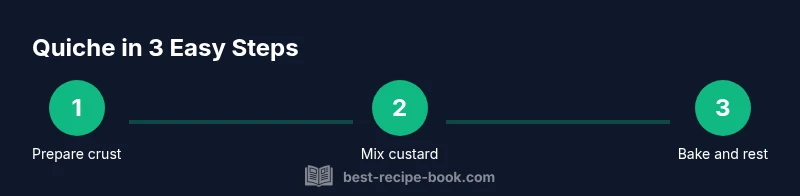
- 1
Prepare crust dough
Cut cold butter into flour to create a crumbly mixture, then add just enough ice water to bring the dough together. Handle as little as possible to keep the crust tender. Form a disk, wrap, and chill for at least 15 minutes.
Tip: Keep ingredients cold and handle gently to avoid a tough crust. - 2
Blind bake the crust
Roll out the chilled dough and fit it into the pie dish. Line with parchment and add pie weights or dried beans. Bake until the edges begin to color, about 10–12 minutes. Remove weights and parchment and bake for 4–6 more minutes to set the bottom.
Tip: Proper blind baking prevents a soggy bottom and helps the custard set evenly. - 3
Whisk the custard base
Whisk eggs with milk or cream until fully combined and smooth. Season lightly with salt and pepper. For a richer custard, whisk in a splash of cream and a pinch of nutmeg if desired.
Tip: Avoid over-whisking to prevent bubbles; a few small bubbles are fine. - 4
Prepare fillings
Sauté moisture-rich fillings like mushrooms or spinach until most moisture evaporates. This step keeps the quiche from releasing excess water during baking. Scatter cheese evenly in the crust before adding fillings.
Tip: Dry vegetables well to minimize moisture in the final custard. - 5
Assemble and pour custard
Spread fillings across the crust, then slowly pour the custard over them. Tilt the dish gently to ensure even distribution. The surface should be flat and not sloshy.
Tip: Pour slowly and stop at the edge to avoid overflow. - 6
Bake until set and lightly golden
Bake at 350°F (175°C) until the edges are set and the center jiggles slightly. The total bake time is about 25–35 minutes, depending on filling and crust thickness. Let it rest before slicing.
Tip: A slight jiggle in the center indicates a custard that will finish cooking as it rests.
People Also Ask
What makes this quiche easy to make for beginners?
The recipe uses a forgiving crust, a simple custard, and flexible fillings, so beginners can focus on technique rather than complex steps. The structure supports quick adaptations with pantry staples.
This quiche is beginner-friendly thanks to a forgiving crust, simple custard, and flexible fillings you can swap with what you have on hand.
Can I freeze quiche after baking?
Yes, quiche freezes well. Bake fully, cool completely, then freeze in portions. Reheat gently to avoid dry edges. It’s best eaten within 2–3 months for best texture.
Yes, you can freeze baked quiche in portions and reheat slowly for best texture.
Do I need to prebake the crust every time?
Prebaking helps avoid a soggy bottom, especially with juicy fillings. If you’re using a store-bought crust, a light prebake is often enough, followed by filling and final bake.
Prebaking helps prevent soggy bottoms; store-bought crusts often need a light prebake.
What fillings work best for an easy quiche?
Great fillings include sautéed spinach, mushrooms, onions, bell peppers, cheese blends, and light proteins like ham or smoked salmon. Keep moisture low and balance with cheese for texture.
Try spinach, mushrooms, onions, peppers, cheese, and a small amount of ham for a balanced filling.
How do I prevent cracking in the custard?
Bake gently at moderate heat and avoid overmixing. Let the quiche rest after baking; a cooler center will set as it cools and reduce cracking.
Bake gently and rest after baking to prevent cracks.
Can I make a dairy-free version of this quiche?
Yes. Use plant-based milk and a dairy-free cheese substitute. The eggs provide structure, so the texture remains similar with careful moisture control.
Absolutely—use plant milk and dairy-free cheese; monitor moisture.
Watch Video
Key Takeaways
- Choose a forgiving crust method for confidence.
- Par-bake to prevent soggy bottoms.
- Fill with moisture-smart vegetables and flexible fillings.
- Rest quiche before slicing for clean cuts.