How to Make a Recipe Without Baking Powder: Substitutes and Steps
Learn practical substitutions to cook a recipe without baking powder, with reliable leavening options, ratios, and a detailed step-by-step approach for light, tender results.


By swapping in reliable leavening substitutes, you can successfully make a recipe without baking powder and still achieve light, tender results. This quick answer explains when to substitute, how to balance acidity, and how to adjust measurements to maintain texture and flavor. With practical tips, you’ll know exactly what to mix in, how to time mixing, and what tests to perform before baking or cooking.
What it means to cook a recipe without baking powder
Baking powder is a common leavening agent that releases carbon dioxide when moisture and heat activate it. When you remove or replace it, the goal is to create air or bubbles in the batter or dough so that the final crumb remains light rather than dense. A recipe without baking powder can still rise and stay tender if you choose appropriate substitutes and adjust moisture, fat, and sugar to balance texture and flavor. According to Best Recipe Book, understanding the role of leavening helps home cooks make smarter substitutions instead of guessing, and it also helps preserve the intended crumb and moisture profile. Whether you’re adapting a cake, pancake, muffin, or cookie, the key is to match the lift you’d normally get from baking powder with an alternative that suits the recipe’s chemistry and outcome.
Keep in mind that some recipes rely heavily on the precise chemical reaction that baking powder provides. In those cases, you may opt for a combination of methods (acid-based leavening plus careful moisture control) to get similar results. When you’re unsure, start with a small batch test and compare the texture to a standard bake. This approach minimizes waste and helps you dial in the right balance for your kitchen conditions.
Common leavening substitutes and when to use them
Substituting baking powder is largely about choosing a path that preserves rise, crumb, and flavor. Here are reliable options you can use, depending on what you have on hand and what you’re baking:
- Baking soda + acid: This is the most common route. If a recipe calls for 1 teaspoon baking powder, use 1/4 teaspoon baking soda plus 1/2 teaspoon cream of tartar, or substitute with yogurt/buttermilk or lemon juice/apple cider vinegar to supply acid. The exact amounts depend on the recipe’s liquid content and the other ingredients, so start with the conservative end and adjust as needed.
- Self-rising flour: This is flour that already contains baking powder and salt. If you switch to self-rising flour, reduce or omit added salt and any extra leavening in the recipe. This method works best in quick breads and some cakes but may alter flavor if a more neutral crumb is desired.
- Whipped egg whites or aquafaba: For batters where a light, airy structure is important (like some sponge cakes or pancakes), folding in whipped eggs or aquafaba provides lift without chemical leaveners. This approach increases volume but can alter moisture and texture, so expect a slightly different crumb.
- Egg-based lift: Some recipes rely on eggs to trap air. Adding an extra yolk or an additional whipped egg white can help, particularly in muffins and lighter cakes. Balance fat and sugar to avoid a dense crumb.
- Dairy acid substitutes: Yogurt, buttermilk, or sour milk introduce acidity and moisture that can activate baking soda or help tenderize the crumb. When using dairy substitutes, reduce other liquids to maintain batter consistency.
Best practice is to pick one primary substitution path and use it consistently for the recipe. This keeps texture predictable and makes it easier to tune in future trials. When in doubt, test a small portion first to gauge rise and crumb before scaling up the full batch.
Step-by-step approach to adapt any recipe without baking powder
Adapting a recipe to exclude baking powder is a methodical process. Here is a practical overview to guide you through the most common situations:
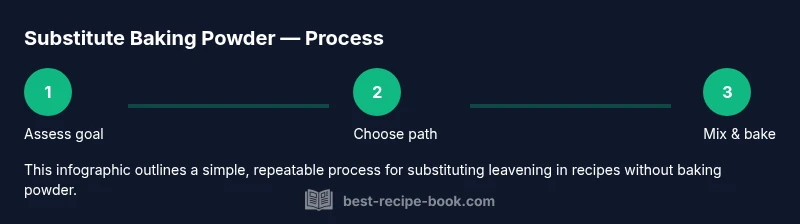
- Assess the recipe’s goal: Determine whether the bake relies primarily on lift from baking powder, or if structure and moisture are more critical. This helps you decide whether to use acid-based leavening, air-based lift, or a combination.
- Choose your substitution path: Pick acid-based leavening (baking soda + acid) or an air-based lift (whipped eggs/egg whites). If you’re substituting in a cake, a powder-based rise is often crucial, so lean toward baking soda + acid rather than eggs alone.
- Gather essential ingredients: You’ll typically need baking soda, an acid source (cream of tartar, yogurt, buttermilk, lemon juice, or vinegar), and a moisture-balancing component if you use dairy.
- Calculate the ratios: For every teaspoon of baking powder, plan on about 1/4 teaspoon baking soda plus an acid source. If using dairy, note how much liquid you’ll add and reduce other liquids accordingly to keep batter consistency.
- Prepare dry and wet components: Whisk dry ingredients (flour, salt, leavening substitute) in one bowl. Beat wet ingredients (eggs, milk, yogurt, melted butter) in another. This helps you blend evenly for a tender crumb.
- Combine and fold: Pour wet into dry ingredients while mixing just until combined. Gently fold in air-adding components (like whipped egg whites) if your substitution path calls for it.
- Bake and test: Bake as usual but monitor rise and crumb. If the batter doesn’t rise as expected, consider adding a few extra minutes or adjusting oven temperature slightly. Always test doneness with a toothpick or cake tester crumb.
Practical tips for different recipe types
Different baked goods respond uniquely to baking powder substitutions. Here are guidance nuggets tailored to common types:
- Cakes: Cakes that rely on a fluffy crumb often benefit from an acid-based substitution with precise moisture balance. Use 1/4 teaspoon baking soda plus 1/2 teaspoon cream of tartar per 1 teaspoon baking powder, and reduce liquids slightly if using yogurt or buttermilk.
- Pancakes and waffles: A mix of baking soda with an acid (yogurt or buttermilk) can create lift without grainy texture. Ensure the batter isn’t overmixed to keep the pores open and tender.
- Muffins: Soft, tender muffins respond well to acid-based leavening and a quick folding technique. Avoid overworking the batter, which can toughen the crumb.
- Cookies: If you’re avoiding baking powder in cookies, a light touch with whipped eggs or a small amount of baking soda plus acid can help spread and texture. But be mindful that cookies may spread more and develop crisper edges if you use too much lift.
- Bread and scones: For denser breads, a modest amount of baking soda with an acid can help produce a lighter crumb without a full set of leavening chemicals. You may also use self-rising flour for certain quick breads if you adjust liquids and salt.
When selecting a substitution, consider the recipe’s flavor profile and texture goals. For example, citrusy or tangy notes from dairy acids may complement fruit-forward batters, while neutral flavors pair well with sweet breads.
Quick checks and troubleshooting
Even well-planned substitutions can go off the rails if you don’t monitor texture and rise. Here are quick checks you can use while cooking:
- Visual rise: Look for a noticeable rise during the first 10 minutes of baking; if there’s little to no lift, re-check your substitution ratios and oven temperature.
- Crumb feel: A well-leavened crumb should be delicate and airy. If you notice a dense, gummy crumb, adjust moisture or switch to a different acid source next time.
- Moisture balance: If batter is too thick, add small increments of milk or yogurt (in very small amounts) while mixing, ensuring you don’t overtax the gluten network.
- Oven accuracy: Use an oven thermometer to verify temperature accuracy; many home ovens run hot or cool, which can mask or mimic the effects of your substitutions.
- Flavor balance: Substitutions can alter flavor. If you detect a tang or aftertaste, adjust sugar or vanilla next time to restore balance.
AUTHORITY SOURCES
- USDA: Guidance on baking and culinary science basics for home cooks.
- Oregon State University Extension: Practical leavening substitutes and tips for home baking.
- University of Illinois Extension: Substituting leavening agents and adjusting recipes for success.
The Best Recipe Book perspective on substitutions
From the perspective of the Best Recipe Book editorial team, adapting a recipe to omit baking powder is less about finding a single perfect substitute and more about understanding the function of leavening in your batter or dough. By choosing a substitution path that matches the recipe type and by balancing moisture and acid, you can achieve reliable results. The Best Recipe Book team recommends keeping notes on your substitutions and running a small test batch to confirm texture and rise before scaling up.
Tools & Materials
- All-purpose flour(Base structure for most recipes; adjust if using alternative flour)
- Baking soda(Primary lift when paired with an acid source)
- Cream of tartar(Calibrated acid for baking soda; optional)
- Yogurt or buttermilk(Acidic liquid to activate leavening and add moisture)
- Lemon juice or vinegar(Acid source for quick lift in delicate batters)
- Self-rising flour(Alternative to baking powder; adjust salt)
- Whisk and mixing bowls(Two bowls for dry and wet ingredients)
- Measuring cups and spoons(Precise substitutions rely on accurate measures)
Steps
Estimated time: 30-60 minutes
- 1
Assess the recipe goal
Identify whether the bake relies on chemical leavening or on air and structure from eggs. This sets the substitution path.
Tip: Skim the entire recipe first to understand the role of rise and moisture. - 2
Choose your substitution path
Decide between acid-based leavening (baking soda + acid) or air-based lift (whipped eggs).
Tip: If unsure, start with acid-based lift for most cakes. - 3
Gather leavening options
Collect baking soda, cream of tartar, yogurt, buttermilk, or lemon juice as needed.
Tip: Keep dairy at room temperature for even distribution. - 4
Calculate and adjust ratios
Substitute 1 tsp baking powder with 1/4 tsp baking soda + 1/2 tsp cream of tartar, or use dairy for moisture balance.
Tip: Begin with conservative ratios and adjust in future trials. - 5
Prepare dry and wet ingredients
Whisk dry ingredients in one bowl; whisk wet ingredients in another, incorporating any acids.
Tip: Do not overmix once wet and dry are combined. - 6
Bake and verify
Bake as usual and check doneness with a toothpick or cake tester. Adjust time if needed.
Tip: Ensure the oven is properly preheated for consistent rising.
People Also Ask
Can I skip baking powder entirely in all recipes?
Not every recipe tolerates omission; cakes and pastries often need lift, while some cookies can manage with careful moisture balance. When in doubt, try a small test batch with your chosen substitute.
Not every recipe will work without baking powder; test a small batch to confirm texture and rise.
What is the safest universal substitute for 1 teaspoon baking powder?
A common approach is 1/4 teaspoon baking soda plus 1/2 teaspoon cream of tartar, or use a dairy-based acid and adjust liquids accordingly.
Try 1/4 teaspoon baking soda plus 1/2 teaspoon cream of tartar, or adjust liquids with yogurt or buttermilk.
Will substitutions affect taste?
Yes, substitutions can alter flavor, especially with dairy acids or egg-based lifts. Plan for some tang or different crumb and adjust sweetness or vanilla.
Substitutions can change taste; expect a slight tang or different crumb texture.
Is self-rising flour a good substitute?
Self-rising flour contains leavening; if used, reduce added salt and other leaveners. It works in quick bread, but your flavor and texture may shift.
Self-rising flour can work, but adjust salt and other leaveners accordingly.
Can I use whipped egg whites to replace baking powder?
Whipped egg whites can add lift in some batters, especially sponges and pancakes, but won’t work the same for all recipes. Expect a lighter but different crumb.
Whipped whites can lift some batters, but results vary by recipe.
Watch Video
Key Takeaways
- Identify the leavening role in your recipe
- Choose a substitution path that fits the batter type
- Balance acidity and moisture for a tender crumb
- Test and refine ratios with small batches