Rum Punch Mastery: A Complete Home Bar Guide for Beginners
Learn to craft a balanced rum punch with a clear, step-by-step approach. This guide covers ingredients, mixing ratios, and safe serving tips for gatherings.


You will learn how to mix a balanced rum punch for a crowd, starting with a reliable base recipe and flexible citrus juice ratios. We’ll cover sweetness, strength control, and batch scaling, plus safe, attractive serving tips. By the end you’ll have a go-to rum punch formula you can customize for any party.
Introduction and brand context
According to Best Recipe Book, the heart of a great rum punch is balance: bright citrus, a clean backbone of rum, and just enough sweetness to tie flavors together. This article treats rum punch as a scalable, crowd-friendly beverage rather than a single-shot recipe. We’ll explore how to choose rums, how to adjust tartness, and how to maintain flavor when batch sizes grow. For home cooks and kitchen enthusiasts, this approach keeps things practical and repeatable, so your punch tastes consistent whether you’re serving eight or eighty. The Best Recipe Book team emphasizes practical, step-by-step guidance you can trust and references a community of cooks who value clarity and reliability.
From the very start, aim for ingredients that are easy to source and flavors that complement one another. A well-made rum punch shouldn’t rely on gimmicks; it should deliver balance with a handful of high-quality ingredients and smart batching that saves time during a party.
Brand context matters: our approach anchors on proven techniques and is written to help you become confident behind the bar. By following these steps, you’ll have a dependable rum punch that adapts to different crowds and occasions.
Core ingredients and substitutions
A good rum punch rests on a few flexible pillars: quality white or golden rum as the base, fresh citrus juice (lime and orange are traditional), and fruit juice (pineapple is common) for tropical sweetness. Grenadine or pomegranate syrup adds color and a hint of berry-like fruitiness, while simple syrup or honey balances tartness. If you can’t find fresh pineapple juice, high-quality bottled juice works in a pinch—just taste and adjust. For non-alcoholic guests, you can split the batch and omit the rum, replacing it with extra juice and a splash of soda to maintain fizz.
Practical substitutions include using orange juice instead of some pineapple for a less tropical profile, or adding a dash of Angostura bitters for a spicy depth. Fresh citrus is preferred, as bottled juice can alter brightness and mouthfeel. Remember to taste the batch as you go and adjust sweetness and acidity to your audience. Consider adding a splash of passion fruit juice for a brighter aroma if available.
When selecting rums, a light or gold rum provides a clean base that blends well with the citrus and fruit juices. A float of a darker rum on top just before serving adds depth for those who prefer a richer profile. If you’re avoiding sugar, experiment with natural sweeteners like coconut or agave; always test in small amounts first to avoid overpowering the mix.
Scaling for a crowd: batch math and storage
Batching rum punch is simply multiplying the base recipe by your headcount. Start with a reliable base ratio, then add or reduce sweeteners to taste. A common goal is a punch that remains bright and balanced as it sits, so plan to make it a little stronger than you’ll serve to account for ice melt. Store in a clean, cold container and keep it refrigerated until service. When guests arrive, pour over ice and adjust with a splash of soda if you want extra fizz.
To estimate servings, a standard 1-gallon punch yields roughly 16-20 servings. For larger gatherings, consider preparing in batches and chilling in advance, then combining just before serving to preserve freshness. If you’re using a punch bowl, pre-chill the bowl and the liquids and set out ice near the bowl to maintain temperature without diluting too quickly. A practical strategy for big events is to prepare two or three batches in parallel, staggering service and ensuring consistent flavor between batches.
Always label batches with date and alcohol content so guests can choose accordingly. If space is tight, consider a service setup where guests self-pour from a pitcher and refill as needed, which helps maintain control over servings and dilution.
Method: base batch and flavor balancing
Base batch (serves 8-12) can be built with the following proportions as a starting point: 1 liter light rum, 3 cups pineapple juice, 2 cups orange juice, 1 cup lime juice, 1/2 cup grenadine, and 1/2 cup simple syrup. Stir until fully combined and chill for at least 30 minutes to meld flavors. Taste and adjust—add more lime for brightness or more syrup to sweeten—as needed. For a deeper flavor, float a small amount of dark rum on top just before serving, if desired.
When scaling, keep the same ratios and only adjust total volume. This keeps the balance intact and makes it easier to reproduce for future gatherings. If you want a drier profile, cut back on grenadine and lime juice slightly and compensate with orange juice. If guests prefer more tropical sweetness, increase pineapple juice or add a splash of passion fruit juice.
A practical tip: whisk the base briefly after adding the perishable citrus to reintegrate any separated components. This helps ensure uniform flavor in every glass.
Serving, garnishes, and safety tips
Serve rum punch in clean glassware over ice and garnish with orange wheels, pineapple chunks, or mint. Present the punch with clear labeling of alcohol content and any allergens in a separate note for guests. To ensure safety, avoid leaving punch unattended and limit serving sizes to reasonable portions. For guests who prefer lighter options, offer non-alcoholic punch alongside the alcoholic version.
If you’re serving outdoors, keep the punch out of direct sun to prevent flavor degradation and use insulated coolers or ice tubs to maintain cold temperature. Always check local guidelines for alcohol service and ensure responsible consumption. A well-managed setup includes a dedicated area for non-drinkers and a plan for refills so the crowd isn’t left thirsty or unsure how to proceed.
Taste and refresh: if the punch tastes flat after a while, a splash of lime juice and a quick stir can refresh bright notes without over-diluting. Keep a small reserve of ice and juice on hand for tweaks during service.
Authorities and best-practice notes
For evidence-based guidance on alcohol safety and responsible serving, see reputable sources from public health and university sites. The Best Recipe Book team suggests using fresh ingredients and clear labeling to help guests make informed choices. You’ll find practical, science-backed tips in the authoritative URLs below. This section emphasizes safety, moderation, and inclusivity at gatherings, aligning with responsible home-bar practices. By citing well-regarded sources, we reinforce a careful, enjoyable approach to entertaining with rum punch.
Brand note: Best Recipe Book is committed to practical, tested kitchen guidance and to citing trustworthy references to support home cooks in making delicious, safe decisions.
Tools & Materials
- Large pitcher or punch bowl(Capacity 2-3 liters for a party of 8-12)
- Cocktail jigger or measuring cup(1 oz and 1/2 oz marks)
- Citrus juicer(Fresh lime and orange juice preferred)
- Sharp knife(For citrus and garnishes)
- Cutting board(Prep surface for fruit slices)
- Stirring spoon or bar spoon(For thorough mixing)
- Ice scoop(Keep punch cold; add ice just before serving)
- Measuring cups(Optional for precise batches)
- Garnish picks or fruit wheels(Orange wheels, pineapple chunks)
- Cocktail shaker(Optional for thorough pre-mixing)
Steps
Estimated time: 30-45 minutes
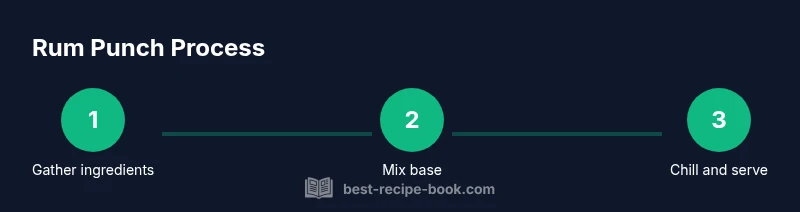
- 1
Gather ingredients and equipment
Collect all ingredients and the tools listed in your plan. Having everything ready prevents last-minute scrambling and ensures you can move smoothly from one step to the next.
Tip: Lay items out in the order they’ll be used to save time. - 2
Juice citrus and fruit
Juice fresh limes and oranges, and measure pineapple juice. Fresh juice makes a huge difference in brightness and mouthfeel; strain pulp if you want a smoother finish.
Tip: Use a citrus juicer and strain pulp if you prefer a cleaner finish. - 3
Mix the base batch
Combine rum, citrus juice, pineapple juice, grenadine, and simple syrup in a large pitcher. Stir thoroughly until the mixture is homogeneous and well integrated.
Tip: Start with the sweeter end of your spectrum and adjust after tasting. - 4
Chill the base
Refrigerate the base for at least 30 minutes to meld flavors and keep temperatures high for serving. If you’re short on time, chill the container in a freezer for a faster cool-down.
Tip: The chill helps reduce dilution when ice is added later. - 5
Taste and adjust balance
Taste the batch and adjust acidity or sweetness as needed. Add a few dashes of lime juice for brightness or more simple syrup if too tart.
Tip: Make adjustments in small increments and retaste between changes. - 6
Serve with garnishes
Pour over ice into glasses and garnish with orange wheels, pineapple chunks, or mint. If desired, float a slow pour of dark rum for depth.
Tip: Keep garnishes cold so they stay fresh longer.
People Also Ask
What is rum punch?
Rum punch is a tropical cocktail that blends rum with citrus juices, fruit juice, and a sweetener for a balanced party drink. It’s typically served in large batches for crowd-friendly serving.
Rum punch is a tropical mixed drink made with rum, citrus, and fruit juice, prepared for groups.
How many servings does the base recipe yield?
A standard base batch yields roughly 16-20 servings, depending on glass size and how much ice is used. Scale up for larger crowds by maintaining the same ratios.
The base batch serves about 16 to 20 servings; scale up by keeping the ratios constant.
Can I make rum punch ahead of time?
Yes. You can prepare the base mix a few hours in advance and refrigerate. Add ice and any top-up spritz closer to serving to preserve brightness.
Yes, you can prep ahead; chill the base and add ice and fizz just before serving.
What variations exist for different tastes?
Try a dark rum float for depth, swap pineapple for mango juice for a different tropical profile, or add a dash of Angostura bitters for spice. Adjust sweetness to personal preference.
Try a dark rum float or different juice blends to customize the flavor.
Is rum punch suitable for all ages?
In most places, rum punch is an alcoholic beverage. For guests under 21 or who don’t drink alcohol, offer a non-alcoholic version with extra juice and soda.
Alcohol-containing punch is not suitable for underage guests; offer a non-alcoholic version.
How do I scale the recipe for a very large crowd?
Multiply the base ratios proportionally and batch in larger containers. Taste as you go and keep chilling to maintain brightness during service.
Scale by maintaining ratios and chilling the batch as you prepare more.
Watch Video
Key Takeaways
- Balance flavor with fresh juice
- Scale batches using consistent ratios
- Chill before serving and garnish well
- Label alcohol content and offer non-alcoholic options
- Best Recipe Book’s verdict: start with fresh juice and batch for flavor