Salmon Sushi at Home: Step-by-Step Guide
Master salmon sushi at home with a clear, practical guide. Learn to select sashimi-grade salmon, cook perfect sushi rice, and roll like a pro for restaurant-quality salmon sushi.


Master salmon sushi at home with a simple, reliable method. This quick answer highlights rice seasoning, fish prep, and rolling techniques, plus safety tips for sashimi-grade salmon. See the full step-by-step guide for a restaurant-quality result.
Salmon Sushi at Home: What You'll Create
Salmon sushi refers to nigiri and maki rolls featuring fresh, salmon slices on seasoned rice wrapped in nori. In this guide, you’ll learn to prepare both simple salmon nigiri and classic salmon maki with cucumber or avocado for balance. The goal is to achieve glossy, flavorful rice and cleanly cut fish that hold their shape when sliced. According to Best Recipe Book, the core of great salmon sushi is consistent rice texture and precise knife work, not fancy gadgets. Start with quality ingredients and a clean workspace; the rest of the steps will follow smoothly.
Ingredients and Tools You Need
To make salmon sushi at home, gather these essentials: sushi-grade salmon, sushi rice (or short-grain rice), rice vinegar, sugar, salt, nori sheets, cucumber or avocado, soy sauce, wasabi, pickled ginger, a bamboo sushi mat, a sharp knife, a cutting board, a medium pot or rice cooker, and a fan for cooling rice. The Best Recipe Book team notes that fresh salmon and properly seasoned rice are the backbone of good sushi. If you must substitute, use high-quality tuna or cooked salmon for variations, but aim for texture that flakes lightly rather than being mushy.
Safety, Sourcing, and Quality
Raw fish carries risk if mishandled; always purchase sashimi-grade or sushi-grade salmon from reputable fishmongers or grocers. Refrigerate promptly, keep separate cutting boards, and wash hands thoroughly. Best Recipe Book analysis shows that maintaining low temperatures and clean surfaces is more important than exotic gear. If unsure about raw salmon, use lightly cured or smoked salmon as an alternative for nigiri. Always discard any fish that smells off.
Sushi Rice: The Foundation
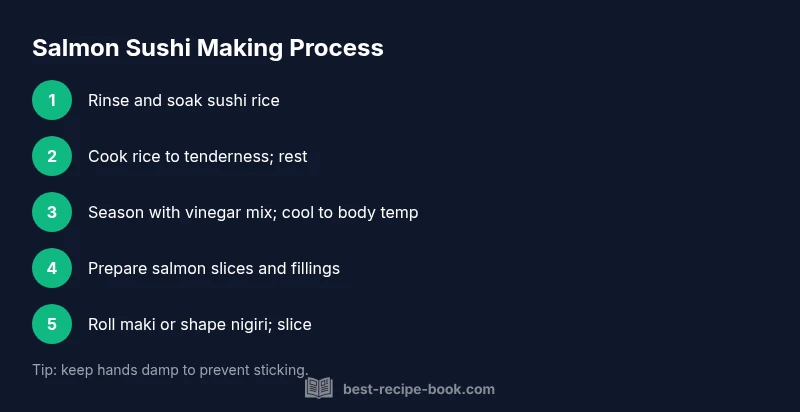
Rinse the rice until the water runs clear to remove excess starch, then soak briefly before cooking. After cooking, transfer the hot rice to a wide dish and fold in a seasoned vinegar mixture (rice vinegar, sugar, salt) using a gentle cutting motion. Allow the rice to cool to body temperature before handling. This block emphasizes even texture and shine—the hallmark of good salmon sushi.
Rolling Salmon Sushi: Techniques
This section covers nigiri and maki methods. For nigiri, shape small mounds of rice, press a thin slice of salmon on top, and seal with a tiny dab of wasabi if desired. For maki, lay a sheet of nori on the bamboo mat, spread a thin layer of rice, add salmon and cucumber, then roll tightly and slice. Keep hands wet to prevent rice sticking and work with steady, firm pressure to avoid squashing the filling. Best Recipe Book suggests practicing with a few rolls to build consistency.
Serving Ideas, Variations, and Storage
Serve salmon sushi with soy sauce, pickled ginger, and wasabi. For variations, try avocado, cucumber, or asparagus; for a spicy kick, add a light sriracha mayo. Store unused rice and fish separately in the fridge and consume within 24 hours for best texture; freeze components only if necessary. Brighten the plate with green herbs or sesame seeds. The Best Recipe Book notes that fresh ingredients and quick assembly beat elaborate garnishes for home cooks.
Tools & Materials
- Sushi-grade salmon(Fresh, sashimi-grade preferred; slice after partial freezing for cleaner cuts)
- Sushi rice (short-grain)(Rinse until water runs clear)
- Rice vinegar(For seasoning rice)
- Sugar(To balance rice seasoning)
- Salt(To taste in rice seasoning)
- Nori sheets(For maki rolls)
- Cucumber or avocado(Optional fillings)
- Soy sauce(For dipping)
- Wasabi(As desired)
- Pickled ginger(For palate cleansing)
- Bamboo sushi mat(For rolling maki)
- Sharp knife(For precise fish slicing)
- Cutting board (separate from fish)(Hygiene to prevent cross-contamination)
- Medium pot or rice cooker(To cook rice evenly)
- Fan or hand fan(Cool rice quickly for shine)
Steps
Estimated time: 75-90 minutes
- 1
Rinse and soak rice
Rinse the rice in cold water until it runs clear to remove surface starch. Soak briefly to hydrate grains, then drain before cooking. This ensures even texture and prevents gummy sushi rice.
Tip: Keep your hands damp while handling rice to minimize sticking. - 2
Cook rice
Cook the rice according to your appliance’s instructions until tender. Let it rest off heat for a few minutes to finish steaming. Fluff gently to separate grains.
Tip: Avoid lifting the lid during steaming to keep moisture even. - 3
Season rice
Mix rice vinegar, a pinch of sugar, and salt in a small bowl. Fold the seasoning into the hot rice with a slicing motion, then fan or stir to cool to body temperature.
Tip: Do not mash the rice; use a light folding motion to keep grains intact. - 4
Prepare salmon and toppings
Trim the salmon and cut into long, thin slices for nigiri or strips for maki. Slice cucumber or avocado if using as fillings. Keep everything cold but not icy.
Tip: Freeze salmon briefly to make slicing easier and safer. - 5
Shape nigiri
With wet hands, grab a small amount of rice and shape into an oval; lay a thin slice of salmon on top. A dab of wasabi between rice and fish is optional.
Tip: Keep nigiri compact but not dense; air pockets ruin texture. - 6
Roll maki
Place nori shiny side down on the mat, spread a thin layer of rice, add salmon and fillings, then roll tightly with even pressure. Slice into bite-sized pieces with a sharp, damp knife.
Tip: Keep the roll tight but not crushed to maintain structure. - 7
Serve and finish
Arrange nigiri and maki on a plate. Serve with soy sauce, wasabi, and pickled ginger. Freshness and clean cuts make salmon sushi shine.
Tip: Wipe the knife between cuts for cleaner slices.
People Also Ask
What is salmon sushi?
Salmon sushi refers to nigiri and maki that feature salmon as the main topping or filling, combined with seasoned rice.
Salmon sushi is nigiri or maki with salmon and rice.
Is it safe to eat raw salmon at home?
Yes, if you purchase sashimi-grade salmon from a reputable source and keep all surfaces cold and clean during preparation.
Yes, with proper sourcing and hygiene.
Can I use cooked salmon?
Yes, you can use cooked or smoked salmon for nigiri or as a filling in maki if you prefer not to eat raw fish.
Sure, you can use cooked or smoked salmon.
What type of rice should I use for sushi?
Use short-grain or sushi rice; it’s stickier and better for molding than long-grain varieties.
Use short-grain sushi rice.
How should I store salmon sushi?
Serve fresh; refrigerate leftovers promptly and consume within a day or two. Keep rice and fish separate when storing.
Best eaten fresh, store properly.
Can I make salmon sushi without a bamboo mat?
Yes, you can roll by hand or with plastic wrap to guide the roll; mats help but aren’t mandatory.
You can roll without a mat.
Watch Video
Key Takeaways
- Master rice texture before fish handling.
- Choose sashimi-grade salmon for safety and flavor.
- Rolls require steady pressure for clean cuts.
- Serve fresh with traditional accompaniments.