Butternut Squash Soup: A Cozy, Easy Recipe
Learn a cozy, dairy-friendly butternut squash soup with roasting, a silky blender finish, and flexible toppings. A complete step-by-step guide from Best Recipe Book for home cooks seeking practical, kitchen-tested instructions.


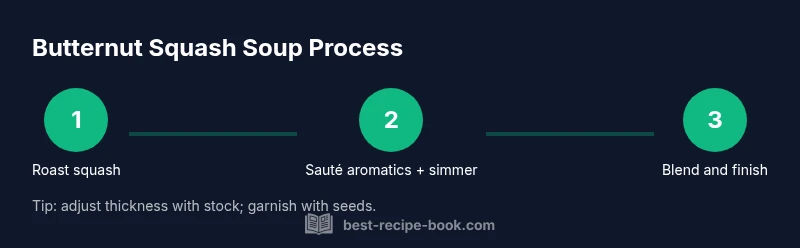
Master a silky butternut squash soup with a simple, reliable method: roast the squash for sweetness, sauté aromatics, simmer with stock, then blend until velvety. Finish with cream or coconut milk for richness and adjust seasoning to taste. According to Best Recipe Book, this approach balances sweetness, depth, and brightness for a comforting bowl any season.
Flavor profile and texture
This soup recipe butternut squash relies on caramelization to deepen sweetness and create a warm, roasted aroma that lingers on the palate. The finished soup should be velvety and medium-bodied, not thin, yet light enough to feel comforting rather than heavy. A balanced blend of squash sweetness, savory aromatics, and a touch of acidity keeps the flavor vibrant from first sip to the last. According to Best Recipe Book, achieving the right contrast between natural sweetness and savory depth is key to a satisfying bowl. You’ll notice a gentle brightness when a squeeze of lemon or a splash of vinegar lifts the finish. The texture should be smooth but not pudding-like, with a few small squash morsels for character. With the right technique, this soup becomes a versatile base for toppings and seasonal tweaks.
Core ingredients and substitutes
A well-rounded butternut squash soup uses a few dependable ingredients. The essentials are a medium butternut squash, onion, garlic, olive oil, stock (vegetable or chicken), salt, and pepper. Carrot or celery can be added to build sweetness and body. For creaminess, you can use dairy cream, or opt for dairy-free options like coconut milk, almond milk, or cashew cream. Spices such as nutmeg, cinnamon, or a pinch of paprika bring warmth without overwhelming squash flavor. Fresh herbs (sage or thyme) and a splash of lemon brighten the finish. If you prefer a lighter texture, a dollop of yogurt or a drizzle of olive oil can add richness without heaviness. Quantities vary by batch size, but a typical starting point is one medium squash and about 4 cups of stock for a 4-serving pot.
Roasting the squash for depth
Caramelization is the secret to a richer, deeper flavor in this dish. Halve the squash and scoop out the seeds, then brush the cut sides with a light coat of oil and a pinch of salt. Place the halves cut-side down on a sheet pan and roast in a hot oven until the flesh is tender and nicely browned at the edges. The roasting focuses sweetness and creates a glossy, flavorful puree when you scoop the flesh out. If you’re short on time, you can steam the squash instead, but roasting tends to yield a more complex final soup. After roasting, spoon the flesh away from the skin and set it aside for the simmer step.
Aromatics and stock: building the base
A flavorful base starts with aromatics. In a heavy pot, warm oil and cook diced onion until translucent, then add minced garlic. If using optional carrot or celery, add them here and cook briefly to soften. Deglaze the pan with stock to lift any brown bits from the bottom; this step adds depth. The stock serves as the backbone of your soup, so choose/prepare a high-quality base. Once the aromatics are softened and fragrant, add the roasted squash flesh and bring the mixture to a gentle simmer. This combination allows the squash’s sweetness to mingle with the savory base before pureeing.
Step-by-step technique: from prep to puree
- Prep ingredients: wash, peel (as needed), and chop the squash; finely dice the onion and mince the garlic. 2) Roast the squash until tender and caramelized, about 25–40 minutes depending on thickness. 3) Sauté onion and garlic in oil until translucent and fragrant, avoiding browning. 4) Add roasted squash and stock; bring to a gentle simmer so flavors meld. 5) Purée with an immersion blender until velvety, or process in batches in a countertop blender, then return to the pot. 6) Adjust thickness with more stock, taste for salt and pepper, and finish with dairy or dairy-free option if desired. Pro tip: blend in stages to avoid overheating the blender.
Creaminess and final adjustments
Creaminess can come from dairy or dairy-free alternatives. Start with a small amount of cream or coconut milk and whisk in gradually to reach the desired richness. Season carefully with salt, pepper, and a touch of acid such as lemon juice to brighten the squash’s sweetness. If the soup is too thick, thin with hot stock or water and rewarm gently. For an extra-silky texture, strain the soup through a fine-mesh sieve after blending. A gentle swirl of cream or a drizzle of high-quality olive oil elevates presentation.
Variations: dairy-free, vegan, and spicy
This recipe adapts easily for dairy-free and vegan diets. Replace dairy with coconut milk, almond milk, or cashew cream. Ensure your stock is vegetable-based, and use olive or avocado oil for the base. If you like heat, add crushed red pepper, fresh ginger, or a pinch of curry powder for a warm, spicy profile. For heartier bowls, fold in roasted chickpeas or finish with a sprinkle of toasted seeds for texture. Finish with a squeeze of citrus to brighten the bowl.
Troubleshooting common issues
If the soup tastes bland, increase salt gradually and consider a splash of acid to wake up sweetness. If texture is grainy, blend longer or blend in smaller batches. For too-thick soup, whisk in hot stock or water until you reach the desired consistency. If color looks dull, a small amount of lemon juice or a pinch of nutmeg can restore brightness. In case of separation after adding dairy, whisk vigorously and reheat slowly to re-emulsify.
Serving ideas and storage
Ladle into warmed bowls and finish with a swirl of cream or coconut milk, a drizzle of olive oil, toasted pumpkin seeds, and chopped herbs. Serve with crusty bread, croutons, or a light salad to round out the meal. Leftovers store in a sealed container in the fridge for 3–4 days, or freeze in portions for longer storage. Reheat gently on the stove over low heat, stirring often to maintain a smooth texture.
Nutrition considerations and meal planning
Butternut squash soup offers fiber, vitamins A and C, and a comforting warmth that fits into many meal plans. When prepared with vegetable stock and dairy-free milk, it becomes a versatile, light option suitable for vegetarians and dairy-free diets. Pair with a protein-rich side or grain to create a balanced meal. Batch preparation makes it easy to have ready-to-eat lunches during busy weeks.
Tools & Materials
- Butternut squash(1 medium (about 2-3 pounds))
- Olive oil(2 tablespoons)
- Onion(1 medium, diced)
- Garlic cloves(2-3 cloves, minced)
- Carrot (optional)(1 small, chopped)
- Stock (vegetable or chicken)(4 cups)
- Salt(To taste)
- Black pepper(To taste)
- Cream or coconut milk (optional)(For finish)
- Lemon juice (optional)(To brighten)
- Immersion blender or countertop blender(For blending)
- Roasting sheet(For squash)
- Knife and cutting board(Prep work)
- Fine-mesh sieve (optional)(For extra-smooth texture)
Steps
Estimated time: 60-75 minutes
- 1
Prep ingredients
Wash, peel (as desired), and chop the squash into chunks. Dice the onion and mince the garlic. Have all spices measured and stock ready before you start. This keeps the workflow smooth and minimizes mistakes.
Tip: Mise en place speeds up cooking and reduces errors. - 2
Roast squash
Toss squash chunks with a little oil and salt. Spread on a baking sheet and roast until edges are caramelized and flesh is tender. Roasting concentrates flavor and yields a richer puree.
Tip: Roast face-down to maximize surface caramelization. - 3
Sauté aromatics
In a heavy pot, warm oil and sauté onion until translucent. Add garlic and any optional carrot, cooking briefly to release aroma. Avoid browning to keep the base bright.
Tip: Cook onions low and slow for sweet, mellow flavor. - 4
Combine and simmer
Add roasted squash to the pot with stock. Bring to a gentle simmer and cook 10–15 minutes so flavors meld and the squash fully integrates with the stock.
Tip: If too thick, add hot stock gradually. - 5
Blend to velvety texture
Use an immersion blender to puree until completely smooth. If using a countertop blender, blend in batches and vent steam carefully.
Tip: Blend in stages to avoid overfilling the blender. - 6
Finish and serve
Stir in dairy or dairy-free finish, adjust salt and pepper, and add a splash of lemon juice if desired. Serve hot with toppings like seeds or herbs.
Tip: A tiny acid lift brightens the squash’s sweetness.
People Also Ask
Can I substitute sweet potatoes for butternut squash?
Yes, sweet potatoes can substitute with a slightly different sweetness and texture. You may need to adjust seasonings and stock to maintain balance.
Yes, you can substitute sweet potatoes, but expect a sweeter, softer result and adjust the liquid and spices accordingly.
Is this soup dairy-free?
Yes. To keep it dairy-free, use coconut milk or another plant-based milk and skip dairy additions. The soup remains creamy with the right blend.
Absolutely, dairy-free options work well with coconut milk or other plant milks.
How long does the soup keep in the fridge?
Store in an airtight container for 3–4 days in the fridge. Reheat gently on the stove or in the microwave.
It keeps well for about 3 to 4 days in the fridge when stored properly.
Can I freeze the soup?
Yes, divide into portions and freeze. Thaw overnight in the fridge and reheat gently, stirring to restore consistency.
Yes, you can freeze it in portions and reheat slowly when ready to eat.
What spices pair well with this soup?
Nutmeg and cinnamon are classic warm notes; cumin or smoked paprika add a subtle kick. Fresh herbs like thyme or sage brighten the finish.
Try nutmeg with a hint of cinnamon, and finish with fresh herbs for brightness.
What blender is best for this recipe?
An immersion blender is convenient for a smooth finish without transferring hot liquid. A countertop blender works too—blend in batches and vent steam to avoid spills.
An immersion blender is ideal for ease; a countertop blender also works if you blend in batches.
Watch Video
Key Takeaways
- Roast squash for depth and sweetness.
- Blend to achieve velvety texture.
- Finish with acid and dairy-free options if desired.
- Customize with toppings and variations for seasons.