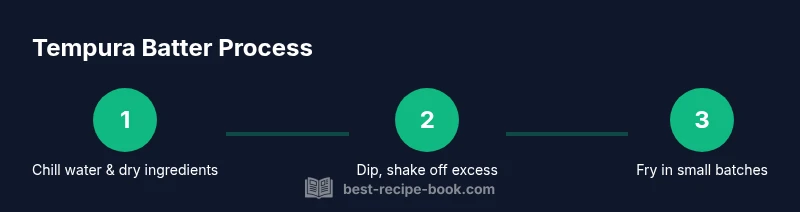
Tempura Batter Mastery: Crispy, Light Tempura at Home
Learn how to make crisp, airy tempura batter with a step-by-step method, tips for perfect frying, common mistakes, and serving ideas for restaurant-quality results at home.


You’ll learn to whisk a light tempura batter, dip shrimp or vegetables, and fry them to a crisp, delicate finish. Key requirements include ice-cold water, a light flour mix (rice flour or cornstarch with a touch of all-purpose flour), and careful oil temperature control. This guide covers ingredients, technique, and safety for restaurant-style results at home.
What makes tempura batter special
Tempura batter is celebrated for its ultra-light, lacy crust that stays crisp when fried. The magic lies in temperature control, minimal mixing, and the careful choice of starch. A traditional tempura batter uses ice-cold water and a light flour mix that often relies on rice flour or cornstarch to reduce gluten development. Egg is optional, used mainly for binding in some recipes. According to Best Recipe Book, the two biggest levers for consistent results are keeping the batter cold and avoiding overworking it, which can toughen the crust. When done well, the coating remains pale and blistered while the interior stays tender. This section sets the stage for practical, step-by-step techniques you’ll see later for vegetables and seafood.
In addition to shrimp and vegetables, tempura can be used to lightly fry mushrooms, soft cheeses, and other delicate items with a delicate, light finish. Maintaining dryness on the food surface before battering helps the coating adhere evenly and stay crisp.
Classic ingredients and substitutions
A traditional tempura batter relies on a small ratio of liquid to dry ingredients, with a focus on starch-rich flours for that characteristic crunch. Common ingredients include ice-cold water, an all-purpose flour blend, and a starch such as rice flour or cornstarch. A small amount of egg can help with binding, but many home cooks prefer a dairy-free or egg-free version. For gluten-free results, use a higher proportion of rice flour and cornstarch and avoid wheat flour entirely. If you don’t have rice flour, a combination of cornstarch with a touch of tapioca starch can also yield a crisp crust. Sparkling water is another popular option to lighten the batter slightly, though cold still water works perfectly well with good technique. Best Recipe Book notes that the quick, light batter is more important than chasing a precise ratio.
Subs can be flavor-forward too: add a pinch of baking soda for lift, a dash of salt for seasoning, and a few drops of rice wine vinegar for light acidity that can help with texture.
The science of crispness in tempura
Crispness in tempura comes from a combination of starch type, moisture management, and oil behavior. Rice flour and cornstarch promote a lacy, airier crust than all-purpose flour alone, because they absorb less water and create a drier coating when fried. Keeping the batter cold minimizes gluten development, which helps maintain a delicate texture rather than a chewy crust. The coating should glaze the food lightly, creating a barrier that prevents oil from penetrating the item. Excess moisture on the surface can cause steam to rupture the crust, so pat vegetables dry and shake off any excess water before dipping. Best Recipe Book emphasizes that small, rapid batters and brief fry times yield the best results, with less time for oil to permeate the coating.
Preparing your batter: mix techniques
Mixing technique matters more than chasing a perfect ingredient list. Whisk just until the dry ingredients are moistened; lumps are acceptable and even beneficial for texture. Keep the bowl in an ice bath during prep to preserve cold temperatures. Do not overwork the batter; a few small lumps trap air and help create a bubbly crust when fried. Resting the batter briefly can relax gluten slightly while still keeping it cold. If you’re aiming for vegan-friendly options, omit the egg and rely on the flour-starch blend to form a light layer around the food. A quick test fry with a small piece can confirm whether the coating crisps up quickly enough.
Wet vs dry ingredients: keeping batter light
Drying your vegetables and seafood before battering is crucial. Any surface moisture can turn the coating gummy rather than crisp. Lightly dust the food with a small amount of starch or flour to improve adhesion, then dip into the batter. The goal is a thin, even coat that clings without clumping. Work in small batches to prevent the batter from soaking up too much moisture from the food. When the items are battered, shake off excess batter for a smoother, more even fry. The end result should be a delicate, blistered crust with vibrant interior texture.
Frying process: oil, temperature, timing
Frying temperature should be hot enough to sizzle when the batter hits the oil, yet not so hot that the coating browns before the interior cooks. Fry in small batches to maintain oil temperature and prevent crowding, which makes steam and churned oil that results in greasy crusts. Fry until the coating is pale golden and crisp, then remove and drain on a wire rack. If the batter looks pale or greasy, you may need to adjust oil temperature or batch size. Letting the oil recover between batches ensures consistent results. Always use a long-handled tool and keep children and pets away from the frying area for safety.
Preparing vegetables and seafood: dry, dust, dip
Proper prep starts with drying the food thoroughly, then lightly dusting with starch to help the batter cling. Seafood, especially shrimp, should be peeled and deveined with tails left on for grip. Vegetables should be cut into uniform pieces for even cooking. Dip items into the batter quickly, then let the coating set for a moment before placing in hot oil. Practicing this sequence yields uniform coating and crisp texture across different foods.
Troubleshooting and common mistakes
Common issues include soggy coatings, uneven browning, and batter that refuses to cling. Solutions start with drier food surfaces, colder batter, and avoiding overmixing. If the coating refuses to cling, dust the food with a touch more starch before dipping. If the coating browns too quickly, lower the oil temperature or fry in smaller batches. If the crust tastes floury, ensure your dry ingredients are well combined and not left clumped at the bottom of the bowl. Remember, practice and temperature control are your biggest allies on this journey.
Serving ideas, storage and cleanup
Tempura is best served immediately for maximum crispness. Pair with light dipping sauces such as tentsuyu, a mix of soy, mirin, and dashi, or a simple lemon-chili sauce. Leftovers can be stored briefly in the fridge, but the coating will lose its crispness; reheat briefly in a hot oven or air fryer rather than a microwave. Clean up involves careful oil disposal and cleaning fried-food utensils promptly to prevent lingering odors. When in doubt, reuse the oil for another short fry but discard it if it has darkened or smells off.
Tools & Materials
- Ice-cold water(Freshly drawn from fridge or prepared with ice)
- All-purpose flour(Use a lighter flour if possible; supplement with starch)
- Rice flour or cornstarch(Helps crispness; use as the primary starch in gluten-free versions)
- Egg (optional)(For binding; omit for vegan versions)
- Baking soda or baking powder (optional)(Gives light lift to the crust)
- Vegetable oil for frying(Neutral oil with a high smoke point; keep fresh oil for best results)
- Thermometer (optional)(Useful for monitoring oil temperature)
- Wire rack or kitchen towels(Drain and keep crusted items crisp)
- Bowl for batter(Prefer a wide, shallow bowl for easy coating)
- Tongs or slotted spoon(Gentle handling to avoid breaking delicate crusts)
Steps
Estimated time: 30-45 minutes
- 1
Gather ingredients and chill water
Assemble all ingredients and chill your water and any ice you’ll use. This keeps the batter cold, which helps maintain a light texture. Have your prep items ready and within reach to speed up the process.
Tip: Cold water + cold air in the bowl slows gluten formation; keep the bowl on ice if possible. - 2
Whisk batter until just combined
In a wide bowl, whisk the dry ingredients together briefly. Add cold water gradually and mix just until the flour is barely moistened; bits and lumps are fine. The goal is a light, drop-in consistency—not a smooth, cake-like batter.
Tip: Overmixing creates gluten; a few small lumps can create a pleasantly airy crust. - 3
Prepare the dipping ingredients
Pat vegetables and seafood dry with a clean towel. Lightly dust with a small amount of starch to help the batter cling. This step improves adhesion and reduces moisture on the surface.
Tip: Dry surfaces promote a crisper crust; avoid washing items just before frying. - 4
Heat the oil
Heat oil in a deep pan to a hot, shimmering state. Use a thermometer if available to maintain a steady temperature. Keep the oil at a steady heat between batches to avoid greasy results.
Tip: Too hot oil browns too quickly; too cool oil makes the coating greasy. - 5
Dip and coat
Dip the prepared items into the batter, shaking off excess. Dip and coat only lightly for delicate items to ensure a thin, crisp crust. Work in small batches to prevent sticking and crowding.
Tip: A light coat prevents soggy crusts and ensures even frying. - 6
Fry until crisp and pale
Gently lower coated pieces into the hot oil. Fry briefly until the crust turns pale golden and crisp. Remove with tongs and drain on a wire rack. Do not crowd the pan.
Tip: If the coating darkens too quickly, reduce the heat slightly and fry in smaller batches. - 7
Rest and store
Allow fried items to rest on a rack to release excess oil. Serve immediately for best texture. Leftovers can be stored briefly, but crispness diminishes with time.
Tip: Keep serving warm in a low oven; avoid stacking to maintain airflow. - 8
Clean up and dispose of oil
Let the oil cool completely before straining and storing or disposing of it according to local guidelines. Clean utensils promptly to prevent lingering odors. Proper disposal keeps your kitchen safe and tidy.
Tip: Reuse oil once if it remains clear and odor-free; otherwise, discard safely.
People Also Ask
What ingredients make tempura batter?
Tempura batter typically combines a light flour mix with a starch (like rice flour or cornstarch) and ice-cold water. Egg is optional for binding, and some cooks add a dash of baking soda for a lighter crust. Substitutions rely on gluten-free starches to maintain crispness. The key is a cold, lightly mixed batter.
Tempura batter uses a light flour-starch mix with ice-cold water; egg is optional and substitutions focus on gluten-free starches for crispness.
Can I use gluten-free flour for tempura?
Yes. Use a combination of rice flour and cornstarch or other gluten-free starches to mimic the crisp texture. Avoid relying on wheat flour alone, which can lead to a denser crust. Test a small batch to adjust proportions.
Gluten-free tempura works best with rice flour and cornstarch, tested in small batches.
Why is my batter lumpy or not clinging?
Lumps can occur if the dry ingredients are not evenly distributed or if the batter is overmixed. Lightly whisk until just moistened and let the batter rest briefly. Ensure the food surface is dry for better adhesion.
Lumps happen when mixing is too aggressive or surfaces are wet; rest briefly and dry food well.
How long can I store tempura batter?
Ideally, batter should be used fresh. If you must store it, keep it cold in the refrigerator for a short period and whisk again before use to re-emulsify. Watch for off smells or color before reusing.
Best used fresh; cold storage is possible briefly, then re whisk before use.
Is tempura healthier if baked instead of fried?
Baking tempura won’t yield the same ultra-light crust as frying. Frying creates a crisp, delicate layer that absorbs less oil when done correctly. If you must avoid frying, consider air-fryer methods and lighter batters, but expect different texture.
Baked tempura doesn’t reproduce the same crispness as frying; air-fryer versions are possible but different.
Watch Video
Key Takeaways
- Keep batter cold and mix minimally
- Dry ingredients and dry food surfaces improve coating clings
- Fry in small batches for even texture and color
- Serve immediately for best crunch