Thumbprint Cookies Recipe: Classic Jam-Filled Shortbread
Learn to bake thumbprint cookies with a buttery shortbread base and a jam center. This comprehensive guide covers ingredients, technique, variations, and storage tips for perfect cookies every time.


Learn to bake classic thumbprint cookies with a buttery shortbread base and a jam center. This guide covers dough ratios, shaping, bake times, and how to customize flavors. Basic pantry ingredients and a few tools are all you need to get started. Follow the steps for reliable results, perfect for holidays or everyday treats.
What are Thumbprint Cookies?
According to Best Recipe Book, thumbprint cookies are a charming, bite-sized treat that blends a tender shortbread-like dough with a recessed center filled with jam. The name comes from the small indentation created by pressing your thumb into the dough before baking, which creates a natural well for fruit preserves. The texture is crisp at the edges and softly chewy in the middle, with a buttery, vanilla-forward flavor. That combination makes them versatile for holidays, teatime, or cookie trays. They’re also forgiving for beginners, as the dough comes together quickly and you can tailor fillings from raspberry to apricot, hazelnut butter, or even lemon curd. When choosing jam, look for fruit-forward varieties with a touch of sugar to balance the butter. Chill the dough briefly before shaping to help maintain the wells and prevent spreading. In this guide we’ll cover the essential ingredients, technique, and variations.
Ingredients Overview
The dough is a simple, forgiving butter-sugar base enriched with a touch of flavor from vanilla and salt. You’ll need all-purpose flour to structure the cookies, an egg yolk or two for richness, and a splash of milk if the dough feels too dry. Jam provides the signature center; you can begin with raspberry, strawberry, or apricot and branch into blueberry or citrus marmalades as you gain confidence. Optional add-ins like finely chopped nuts or a light dusting of powdered sugar can elevate the presentation. Precision matters here: keep the dough cool, measure ingredients, and avoid overworking to maintain a delicate, shortbread-like crumb. This section lays out exact quantities and substitutions for dietary needs, so you can tailor the recipe without losing the characteristic texture.
Dough Mechanics: Shortbread Basics
A classic thumbprint cookie relies on a high-fat, low-water dough that stays tender during baking. The butter should be unsalted and softened, not melted, so you can cream it with sugar to trap air and create a light, airy crumb. Sifted flour adds structure while the egg yolk contributes moisture and richness. Vanilla amplifies the butter’s aroma, and a pinch of salt balances sweetness. The goal is a dough that holds its shape when pressed for the wells but yields slightly to heat for a soft center. Handling should be gentle—overworking tightens gluten and can lead to dense cookies. Chill times are essential for clean wells and even baking.
Tools & Mise en Place
Before you start, assemble essential tools: mixing bowls, a wooden spoon or stand mixer, measuring cups and spoons, parchment paper, a rimmed baking sheet, and a small teaspoon for making the indentations. Line the sheet for easy removal and uniform baking. Have your jam warmed slightly in a microwave or small pot so it flows smoothly into the centers without tearing the dough. A collapsible silicone spatula helps scrape the bowl clean without introducing too much air. Mise en place minimizes chaos and helps you move through the steps with confidence.
Step-By-Step Overview
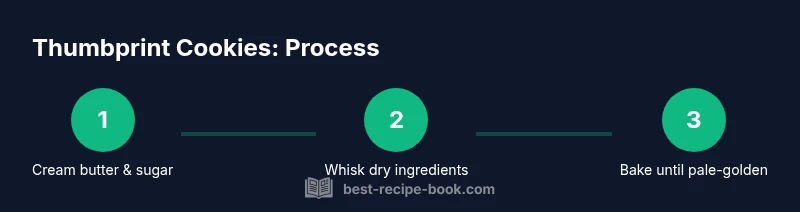
This section outlines the practical workflow so you can execute each action smoothly. You’ll cream butter and sugar, whisk dry ingredients, mix in the yolks and vanilla, form the dough, chill it, portion and shape, press the wells, bake to a pale gold, and finally fill the centers with jam. Proper timing and temperature control are key: keep the dough cool to maintain shape, but not so cold that it’s hard to press. The overall process takes thoughtful coordination, but each action is discrete and repeatable, making this recipe ideal for beginners and experienced bakers alike.
Flavor Variations and Serving Ideas
Thumbprint cookies invite customization. Try different jams for seasonal flair, such as fig or cherry for winter celebrations or lemon curd for a bright spring note. You can roll the dough in finely chopped nuts (pistachio, almond) for added texture, or dust with a light coating of powdered sugar for a touch of elegance. For a dairy-free version, substitute coconut-based butter and almond milk, ensuring you maintain the dough’s balance. Serving ideas include tea time platters, wedding cookie towers, or as a bright addition to holiday trays. Pair with assorted hot beverages to elevate the experience.
Troubleshooting and Common Mistakes
If the wells collapse during baking, it’s usually due to overhandling or dough that’s too warm. Chill the dough longer or work in small batches to keep the texture light. If the jam runs, use a smaller indentation or a thicker jam; heated jam can spread more easily, so a quick chill after filling helps set it. If the edges brown too quickly, reduce oven temperature by 5–10°C (25–50°F) or rotate the pan halfway through baking. Dry dough pockets can be remedied by adding a touch more yolk or a teaspoon of milk to bring the dough together without sacrificing crumb.
Storing, Freezing, and Make-Ahead
Thumbprint cookies store well in an airtight container at room temperature for up to a week. For longer storage, freeze unfilled cookies on a sheet, then transfer to a freezer bag; bake from frozen for a slightly longer time. If you’re freezing filled cookies, freeze on a tray after filling lightly, then store in a sealed container to prevent jam from leaking. Consider assembling a baking day where you prepare the dough in advance, freeze it, and bake off fresh cookie sheets as needed. Label jars with flavor and date for easy rotation.
Serving Techniques and Presentations
For an attractive display, arrange cookies on a polished platter with contrasting jam colors. Powdered sugar dusting or a light glaze can add a finishing touch for holiday tables. If you’re sharing with friends or gifting, attach a small note with flavor options and storage tips. The elegance of thumbprint cookies lies in their simplicity and the opportunity to customize without complicating the recipe.
Tools & Materials
- unsalted butter, softened(240g (1 cup) per batch; room temperature for easy creaming)
- granulated sugar(1/2 cup (100g) for light sweetness)
- all-purpose flour(2 cups (240g); sifted for light crumb)
- egg yolk(s)(1 large yolk; optional 2 for richer dough)
- vanilla extract(1 teaspoon; enhances butter flavor)
- salt(1/4 teaspoon; balances sweetness)
- jam or preserves(1/2–1 teaspoon per cookie; warmed slightly)
- milk (optional)(1–2 teaspoons if dough feels dry)
- baking sheet(Line with parchment for easy release)
- parchment paper or silicone mat(Prevents sticking and promotes even browning)
- cooling rack(Cool cookies completely before storing)
- mixing bowls(Prefer two bowls: wet and dry)
- measuring cups/spoons(Accurate portioning keeps texture consistent)
- teaspoon or small piping tool(Used to create and center wells)
- optional toppings(Powdered sugar, chopped nuts, or edible glitter)
Steps
Estimated time: 60-90 minutes
- 1
Cream butter and sugar
Beat the softened butter and granulated sugar together until light and fluffy, about 2–3 minutes on medium speed. This aeration creates a tender crumb and helps the cookies hold their shape. Scrape the bowl occasionally to ensure even whipping.
Tip: Use softened butter; cold butter won’t cream properly and will dull the texture. - 2
Whisk dry ingredients
In a separate bowl, whisk together flour and salt until evenly distributed. This step prevents clumps and ensures consistent dough structure across batches.
Tip: Sifting is optional but helps achieve a finer crumb and prevents flour pockets. - 3
Add yolk and vanilla
Beat in the egg yolk and vanilla until just combined. The yolk adds richness, but overmixing can toughen the dough, so mix until the last streaks disappear.
Tip: If using two yolks, reduce milk slightly to keep dough manageable. - 4
Combine dry and wet, form dough
Gradually add the dry ingredients to the butter mixture until a cohesive dough forms. If the dough looks dry, add 1 teaspoon of milk at a time until it just comes together.
Tip: Avoid overmixing; stopping as soon as dough pulls together preserves tenderness. - 5
Chill the dough
Wrap the dough and refrigerate for at least 30 minutes (preferably 1 hour). Chilling makes the dough easier to handle and helps maintain the well during shaping.
Tip: If your kitchen is warm, chilling longer prevents flattening during baking. - 6
Shape and indent
Roll portioned dough into 1-inch balls. Gently press a shallow well into the center with your thumb or a small rounded tool, then place on a prepared sheet.
Tip: Keep wells shallow to avoid jam overflowing while baking. - 7
Bake until pale-golden
Bake at 350°F (175°C) for 12–15 minutes, until the edges just begin to color. Do not overbake, or cookies will be too firm.
Tip: Rotate the sheet halfway through baking for even browning. - 8
Fill centers and cool
Remove trays to cool for 2–3 minutes, fill wells with warm jam or let cookies cool completely and fill later. Dust with powdered sugar if desired once cooled.
Tip: Use a small spoon or piping tip for neat jam application.
People Also Ask
What makes thumbprint cookies distinct from other cookies?
Thumbprint cookies are defined by their shortbread-like dough and a recessed center filled with jam. The indentation is typically made with a thumb or a small tool, giving a characteristic look and texture. The result is a crisp edge with a soft, buttery center complemented by fruity filling.
Thumbprint cookies feature a shortbread-like dough with a jam-filled center, giving a distinct look and a chewy, buttery bite.
Can I use different jam flavors?
Yes. Raspberry, strawberry, apricot, and lemon curd are popular choices. Thicker jams often work best to avoid overflow. You can also mix in orange marmalade for a zesty twist.
Absolutely—try several jams or marmalades to customize the flavor for holidays or daily treats.
How can I prevent jam from overflowing the wells?
Keep the indentation shallow and avoid overfilling. If jam runs, chill the filled cookies briefly before baking or use slightly thicker jam.
Fill each well with a small amount of jam and chill if it looks like it might overflow.
Is it possible to freeze thumbprint cookie dough?
Yes. Freeze shaped dough on a tray, then transfer to a bag. Bake from frozen, adding a few minutes to the bake time. This makes planning ahead easier.
You can freeze the shaped dough and bake later, adding a few extra minutes.
What if the dough cracks when forming wells?
Chill longer and handle gently. If it’s too dry, add a tiny amount of milk; if too sticky, refrigerate briefly before shaping again.
Chill longer and be gentle with shaping; add milk sparingly if dry.
Watch Video
Key Takeaways
- Cream butter and sugar for tender texture.
- Chill dough to maintain well shape.
- Fill centers with jam, not too much.
- Bake just to pale-gold for best chew.
- Customize jams to suit occasions.