Tomato Salad Mastery: A Step-by-Step Guide
Master a vibrant tomato salad with expert tips on selecting tomatoes, dressing, and balance. This step-by-step guide covers prep, seasoning, and serving ideas for fresh, restaurant-quality flavor.


Discover how to make a vibrant tomato salad with a bright dressing, crisp vegetables, and balanced seasoning. This guide covers tomato selection, prep, dressing options, and serving ideas. Follow the step-by-step process to achieve fresh, restaurant-quality flavor in under 25 minutes. You'll learn texture, acidity, and seasonal produce for best results.
What makes a great tomato salad
A great tomato salad is judged not just by the ripeness of the tomatoes but by how well the components come together in texture, brightness, and balance. According to Best Recipe Book, the best salads start with tomatoes that offer both sweetness and acidity, complemented by crisp vegetables and a dressing that enhances flavors rather than drowns them. The tomato salad showcases the season, inviting you to taste sunshine, herbs, and a touch of salt and acid that wakes the palate. The goal is to preserve the tomatoes’ natural juiciness while ensuring other ingredients add crunch and contrast. This guide will teach you how to select, prep, and season for consistently delicious results, whether you’re cooking for a weeknight dinner or a weekend gathering. By embracing freshness and simplicity, you’ll keep the dish bright and satisfying from first bite to last. Best Recipe Book’s approach emphasizes practical steps that home cooks can repeat with confidence, every time.
The visuals matter as much as the flavors: vibrant reds and greens, a glossy dressing, and a clean presentation. In practice, you’ll balance fruit sweetness with acid and salt, then finish with aromatics like basil, mint, or oregano. This balance makes the tomato salad more than a side dish—it's a centerpiece that celebrates seasonal produce. As you learn, you’ll develop an eye for color, texture, and proportion that translates across many salads. The result is a dish that can adapt to what’s in your pantry while staying true to core techniques.
Seasonality also matters. Late-summer tomatoes are often at their peak, but a quick-quality check can help you choose consistent flavor any day of the week. Use tomatoes that are fragrant, lightly heavy for their size, and free of bruises or soft spots. If you’re buying cherry tomatoes, look for uniform color and a glossy skin; if you prefer larger varieties, aim for firm fruits with a deep color. These principles, highlighted by the Best Recipe Book Editorial Team, set the stage for a salad that tastes vibrant and balanced regardless of the season.
When in doubt, start simple and build. A classic tomato salad can begin with just tomatoes, a few thin slices of red onion, a handful of herbs, a splash of olive oil, lemon juice or vinegar, salt, and pepper. Then you can tailor from there. The aim is to taste the dish as you go, adjusting oil, acid, and salt to highlight the tomatoes' natural sweetness. These core steps provide a reliable framework for creating consistently flavorful salads every time.
note”:null},
toolsMaterials={items:[{
Tools & Materials
- Chef's knife(8-inch or 20 cm blade, sharp and stable)
- Cutting board(non-slip surface to prevent accidents)
- Mixing bowls(glass or stainless; multiple sizes for prep and dressings)
- Measuring spoons(for spices and dressing adjustments)
- Salad spinner or clean kitchen towels(optional to dry vegetables for crisper results)
- Whisk(for emulsifying the dressing smoothly)
- Tongs or a wide spatula(gentle tossing without crushing tomatoes)
- Serving platter or large bowls(presentable for serving and sharing)
- Olive oil(extra-virgin preferred for best flavor)
- Vinegar (red wine or apple cider) or lemon juice(acid for brightness; adjust to taste)
- Kosher salt or flaky sea salt(seasoning for tomatoes and dressing)
- Black pepper (freshly ground)(adds subtle heat and aroma)
Steps
Estimated time: 20-25 minutes
- 1
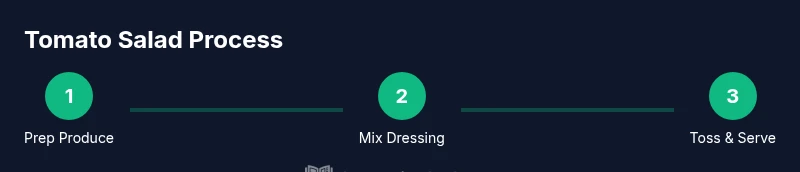
Prepare produce
Rinse tomatoes and any vegetables. Pat dry. Slice tomatoes into wedges or rounds, depending on size. Slice cucumbers and red onion into thin crescents or rings. If using herbs, roughly chop and set aside for finishing. Carding through these prep steps keeps everything uniform and ready for mixing.
Tip: Uniform slices ensure even dressing distribution and consistent bite. - 2
Whisk dressing
In a small bowl, whisk olive oil with your chosen acid (lemon juice or vinegar). Season with salt and pepper, and add a touch of sweetness if desired. Taste and adjust acidity and seasoning to your preference so the dressing brightens, not overwhelms, the tomatoes.
Tip: A 3:1 oil-to-acid ratio is a good starting point; adjust for brightness. - 3
Combine components
In a large bowl, combine tomatoes, cucumbers, onions, and herbs. Drizzle in the dressing a little at a time and toss gently with a spatula or tongs, preserving tomato shape. If cheese is included, add it now or just before serving to maintain texture.
Tip: Toss gently to keep tomatoes intact and avoid breaking delicate slices. - 4
Balance and rest
Taste the mixture and adjust salt, pepper, and acid. Let the salad rest for 5–10 minutes to allow flavors to meld. Resting helps the dressing permeate without making the dish soggy.
Tip: Resting is essential for flavor development; don’t skip this step. - 5
Plate and garnish
Transfer the salad to a serving dish. Scatter fresh herbs on top for color and aroma. Serve immediately for best texture, or chill briefly if needed and bring to room temperature before serving.
Tip: Fresh herbs elevate aroma and visual appeal. - 6
Make-ahead and storage
If needed, refrigerate the salad uncovered for up to 2 hours (dressed) or up to 1 day when kept with dressing separate. Bring back to room temperature before serving to regain fragrance and balance.
Tip: Store dressing separately if you plan to prep ahead to avoid sogginess.
People Also Ask
What tomatoes are best for a tomato salad?
Ripe, flavor-packed varieties—like vine-ripened, beefsteak, or sweet cherry tomatoes—work well. Look for color consistency, a pleasant fragrance, and a firm but yielding texture. Avoid tomatoes that are brown, mushy, or heavily underripe.
Best tomatoes are ripe and flavorful varieties like vine-ripened or cherry; choose color-consistent fruits with good aroma.
How do you keep tomato salad from getting watery?
Drain or pat tomatoes dry after slicing, and add dressing little by little. Avoid salting too early or over-mixing; this helps preserve the tomatoes’ texture and prevents a watery result.
Drain liquid and dress gradually to keep the salad crisp and flavorful.
Should onions be raw or pickled in tomato salad?
Raw sliced red onions add sharp brightness, but you can quick-pickle them in a splash of vinegar for milder bite. Both work; pickling reduces harshness while keeping crunch.
Use raw for a stronger bite or quick-pickled for milder, crisper sweetness.
Can you add cheese to tomato salad?
Feta, fresh mozzarella, or burrata can enhance creaminess and saltiness. Add cheese either in small crumbles or torn pieces so it distributes evenly without overpowering tomatoes.
Cheese adds creaminess and depth; distribute evenly, not overpowering the tomatoes.
How long will tomato salad keep in the fridge?
If dressed, best consumed within 2 hours for best texture. If undressed, it can be stored for up to 1 day; add dressing just before serving to maintain crunch.
Best enjoyed soon after making; dress closer to serving time for optimal texture.
Is balsamic dressing good for tomato salad?
Balsamic vinaigrette is a popular option; its sweetness pairs well with tomatoes. If using balsamic, balance with oil and lemon to avoid overpowering the tomatoes’ brightness.
Balsamic vinaigrette works well if balanced with oil and citrus to keep brightness.
Watch Video
Key Takeaways
- Choose ripe, flavorful tomatoes for depth
- Dress with a bright vinaigrette and minimal liquid to preserve texture
- Toss gently to avoid breaking delicate tomato slices
- Rest the salad briefly to meld flavors
- Serve fresh for best crunch and aroma