How to Make a Turkey Sandwich: A Step-by-Step Guide
Learn to craft a perfect turkey sandwich with juicy slices, crisp bread, and balanced toppings. This educational how-to covers bread choices, fillings, assembly, safety, and variations for lunches or quick dinners.


Learn to assemble a delicious turkey sandwich with juicy sliced turkey, crisp bread, and balanced toppings. This quick guide covers bread choices, spreads, fillings, practical assembly, and tips to keep flavors fresh. Perfect for lunch boxes or quick dinners, you’ll master a cafe-worthy turkey sandwich at home in minutes. It highlights safety basics and lunch-prep shortcuts.
Why a great turkey sandwich matters
A well-made turkey sandwich is more than a quick lunch; it’s a canvas for texture, moisture, and flavor balance. When you start with good bread, high-quality turkey, and thoughtful toppings, every bite delivers a satisfying contrast—crisp crust, tender meat, and fresh greens. According to Best Recipe Book, the foundation of any standout sandwich is ingredient quality and mindful assembly. The turkey sandwich represents how simple ingredients can shine when you respect texture, temperature, and timing. In this guide, we’ll explore how to choose components, layer thoughtfully, and finish with a presentation that makes lunch feel special. Expect practical tips you can apply today, whether you’re packing a noon meal or whipping up a cafe-style sandwich for dinner. As you read, keep in mind that small adjustments—like toasting bread or adding moisture-control toppings—can lift flavor without turning the sandwich into a mess. The turkey sandwich is versatile enough for casual meals or entertaining, and the techniques here translate to many other deli-style builds you’ll love.
Bread and spreads: foundational choices
Bread is the stage on which your fillings perform. For the turkey sandwich, you want bread that can support generous fillings without falling apart. Sourdough, whole-grain, and hearty white breads all work well; baguette halves or rustic rolls can elevate the texture, too. If you’re short on time, a sturdy sandwich bread from the bakery can be a reliable choice. Toasting is optional but often worth it: a lightly toasted slice adds crunch and reduces sogginess from moist fillings. Spreads set the flavor profile and help keep fillings together. Mayonnaise provides silky moisture and a rich base, while mustard adds tang and heat. For a creamy twist, try aioli with a touch of lemon. If you prefer lighter options, a thin layer of hummus or avocado can complement turkey without overpowering it. Salt and pepper should be added after layering to avoid drawing moisture from the toppings.
Turkey options and safe handling
When choosing turkey for the sandwich, you have three main paths: sliced deli turkey, roasted turkey breast, or leftovers from a previous meal. Deli turkey is convenient and consistent in thickness, while home-roasted turkey offers richer flavor and juiciness. The key is to ensure slices are not dry and are evenly sized for comfortable bites. Safety matters: keep turkey refrigerated at or below 40°F (4°C) and avoid leaving perishable components at room temperature for more than two hours. If using leftover roasted turkey, slice it thin and reheat lightly if desired, but never overcook during re-heating. Always wash your hands before handling any ready-to-eat components and use clean cutting boards and knives to prevent cross-contamination. The result should be turkey with a natural moisture level that doesn’t flood the bread. This balance is central to a satisfying turkey sandwich and a reliable weeknight staple.
Layering and texture: building the sandwich
Textural contrast is essential in a turkey sandwich. Start by applying a thin layer of spread on both slices to seal the bread and create moisture control. Layer turkey evenly, letting slices slightly overlap so every bite includes protein. Add a layer of cheese if you like, then place tomato slices to bring juiciness that won’t overpower the meat. Lettuce or arugula adds crunch and a fresh note, while pickles or cucumbers offer brightness and snap. A light sprinkle of salt and pepper to seasonal vegetables can enhance each component, but be mindful not to oversalt. The goal is to achieve a balanced bite where the bread remains crisp and the turkey remains flavorful and moist, with toppings supporting—not overshadowing—the meat.
Variations for different meals
The turkey sandwich is versatile enough to adapt to many styles. For a warm version, gently toast the bread, melt cheese, and drizzle a quick pan sauce or gravy for a comforting twist. Open-faced assemblies highlight the cut-side presentation and reduce bread volume for a lighter option. For a global flavor, swap mayo for chipotle mayo or pesto, and add cucumber ribbons and pepper jack for brightness and heat. For kid-friendly options, keep ingredients simple: mild mustard, a thin cheese slice, and crisp lettuce. If you’re meal-prepping, assemble components separately and store them in layered containers, then assemble just before eating to keep texture fresh.
In all cases, the key is to respect moisture and temperature, so your turkey sandwich remains enjoyable from lunch to late afternoon.
Storage, safety, and leftovers
Leftovers can be a convenient next-day option if handled correctly. Refrigerate any unused turkey and condiments promptly in sealed containers. To reassemble, keep spreads separate from dry components to avoid sogginess. Reheat turkey gently if you prefer a warm sandwich, but be mindful not to overcook it, which can change texture. If you’re packing lunches, assemble the sandwich on the morning of the serving day and wrap tightly to maintain freshness. Note that moisture from tomatoes and lettuce can degrade bread if left too long; consider packing tomatoes separately or using moisture-absorbing layers like paper towels between toppings. Following these guidelines helps ensure your turkey sandwich remains safe and tasty across servings.
Tips to elevate your turkey sandwich at home
- Use day-old bread for extra bite and the ability to hold fillings better than fresh bread.
- Toast slices lightly to protect against sogginess while adding texture.
- Layer spreads on both slices for even moisture and flavor distribution.
- Slice turkey thinly and evenly; thicker slices can create uneven bites.
- Play with toppings: arugula, cranberry sauce, or avocado can refresh the classic turkey sandwich.
- Keep sauce separate if you’re packing for later to preserve bread texture.
- When in doubt, start with a simple setup and add components in small increments to assess balance.
- Clean as you go to avoid cross-contamination and ensure a tidy workspace for assembly.
Authority sources
To reinforce best practices for handling poultry and food safety, here are credible resources:
- https://www.fsis.usda.gov/food-safety/safe-food-handling-and-preparation/meat-poultry-and-seafood
- https://www.cdc.gov/foodsafety/index.html
- https://www.hsph.harvard.edu/nutritionsource/healthy-eating/
These sources provide guidelines on safe handling, storage temperatures, and general nutrition considerations for a turkey sandwich and other deli-style meals.
Troubleshooting common issues
If your turkey sandwich seems dry, check your bread quality and spread amount. A thin layer of moist condiments and a touch of pickles or tomato juice can reintroduce moisture without making the bread soggy. If the sandwich falls apart during packing, consider slightly thicker bread or using a sandwich press to compress and seal the layers. For kids who prefer milder flavors, simplify toppings and reduce tangy condiments. Finally, if you’re preparing in advance, assemble ingredients separately and reassemble right before eating to ensure optimal texture and taste.
Tools & Materials
- Bread (sourdough, whole-grain, or sturdy white)(Choose 2 slices per sandwich; consider day-old bread for best texture)
- Sliced turkey breast (deli or roasted)(Aim for even thickness for consistent bites)
- Spread (mayonnaise, mustard, or aioli)(Choose 1-2 based on flavor preference)
- Cheese slice (optional)(Cheddar, Swiss, or provolone work well)
- Tomato slices(Pat dry to reduce sogginess)
- Lettuce or greens(Rinse and pat dry)
- Cookware for toasting (pan or toaster)(Optional for toasted sandwiches)
- Knife and cutting board(For even slicing and safe handling)
- Seasonings (salt, pepper)(Lightly season to taste)
- Napkins or parchment for clean serving(Helpful for a tidy meal)
Steps
Estimated time: 10-20 minutes
- 1
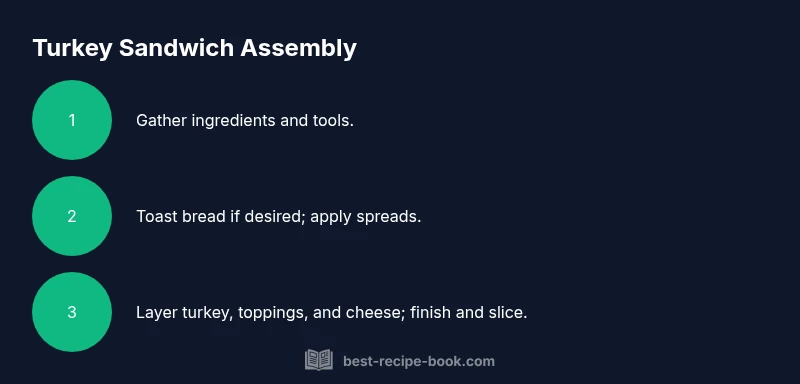
Gather ingredients
Place all components on the counter so you can see and reach them easily. Check bread, turkey, spreads, and toppings before you start to ensure nothing is missing. This preparation saves time during assembly and reduces the chance of missing key elements.
Tip: Lay items out in the order you’ll use them to speed up assembly. - 2
Toast bread (optional)
If you prefer a crunch, lightly toast the bread slices. Toasting improves texture and helps prevent sogginess when adding moist fillings. If you’re packing for later, skip toasting or do it just before serving.
Tip: A quick 1-2 minutes in a toaster or skillet works well. - 3
Spread condiments
Spread a thin layer of mayo or mustard on each slice to create moisture, flavor, and a barrier against soggy bread. Even coverage prevents flavor gaps in some bites.
Tip: Avoid piling on too much sauce in the center; spread evenly to the edges. - 4
Layer turkey
Arrange sliced turkey in an even layer, overlapping slightly so every bite includes meat. If you have thicker slices, fold or mound them for uniform coverage.
Tip: Layer from one edge to the other to ensure each bite contains protein. - 5
Add toppings
Place tomato slices, greens, and any optional extras. Pat tomatoes dry to minimize moisture transfer. Add cheese if using, keeping it away from overly wet toppings to avoid soggy cheese.
Tip: Place greens closest to the bread to create a moisture buffer. - 6
Season and finish
Lightly season with salt and pepper if desired. Add any final touches like pickles or avocado. Check balance; the sandwich should be flavorful but not overwhelmed by one component.
Tip: Less is more; you can always add more after tasting. - 7
Assemble and cut
Cap with the second bread slice, cut diagonally or into halves for easy handling. If packing, wrap tightly to maintain freshness.
Tip: Cut diagonally for a cafe-style presentation and easier grip. - 8
Serve or store leftovers
Serve immediately or store leftovers promptly in a sealed container in the refrigerator. Reheat gently if you prefer a warm sandwich, but avoid overheating to preserve texture.
Tip: Label and date leftovers to track freshness.
People Also Ask
What bread works best for a turkey sandwich?
A sturdy bread like sourdough, whole-grain, or crusty white supports the fillings without falling apart. Toasting can enhance texture and help prevent sogginess.
For best results, choose a sturdy bread like sourdough or whole-grain. Toast lightly if you like extra crunch, and be sure to balance moisture with spreads.
Should I toast the bread?
Toasting is optional but often improves texture and flavor. It helps the sandwich hold up when adding moist ingredients like tomato.
To toast or not is up to you. Toasting adds crunch and helps with moisture management.
How long can a turkey sandwich be stored?
As a general rule, keep perishable components refrigerated and consume within 3-4 days if stored properly. Pack wraps securely to maintain freshness.
Keep leftovers refrigerated and use within a few days for best taste and safety.
What are kid-friendly toppings for a turkey sandwich?
Keep flavors mild with light mayo, lettuce, and tomato or cheese. Avoid very spicy condiments for younger eaters.
For kids, keep it simple: turkey, mild spread, and gentle toppings like cheese and lettuce.
Can I make this sandwich ahead for lunch prep?
Yes, prepare components separately (bread, spreads, meats, and toppings) and assemble just before eating to preserve texture.
You can prep the parts ahead and assemble later to keep everything crisp.
How can I customize a turkey sandwich for different diets?
Use whole-grain or gluten-free bread as needed, choose lower-fat spreads, and add vegetables to increase volume without excessive calories. Consider plant-based substitutes if required.
Customize with whole-grain bread, lighter spreads, and plenty of veggies for a balanced option.
Watch Video
Key Takeaways
- Choose sturdy bread and balanced spreads.
- Layer meat and toppings for consistent bites.
- Toast optional but improves texture and protection against sogginess.
- Store leftovers safely to maintain freshness.
- Experiment with variations to suit taste.