Essential Quiche Recipe Guide for Home Cooks
Master a reliable quiche with a crisp crust, creamy custard, and flexible fillings. This Best Recipe Book guide covers crust prep, custard ratios, ideal bake times, serving tips, and variations for brunch or weeknight dinners.


Discover how to craft a reliable quiche with a crisp crust, creamy custard, and flexible fillings. This guide shows a complete, step-by-step approach—from crust prep and blind-baking to custard ratios and baking times—so you can make a crowd-pleasing quiche at home. Basic tools, fresh ingredients, and a few tricks are all you need.
What is a good recipe for quiche? A practical definition
A good quiche recipe is more than a list of ingredients; it is a repeatable method that yields reliable texture, balanced flavor, and versatile fillings. For home cooks, the best quiche starts with a crisp, tender crust that holds its shape when sliced, a smooth custard that is creamy yet set, and fillings that enhance the custard rather than overpower it. According to Best Recipe Book, a good quiche recipe balances structure with softness, ensuring the custard sets evenly and creates a luxurious mouthfeel. The question “what is a good recipe for quiche” is answered by focusing on three pillars: crust integrity, custard harmony, and filling flexibility. You’ll learn how to choose a base you like, how to balance ingredients, and how to adjust for personal preferences from savory to veggie-forward options. This guidance is designed for everyday cooking, brunch gatherings, and weeknight dinners alike, so you can serve a dependable quiche with confidence. The Best Recipe Book team emphasizes that a great quiche is less about a single technique and more about repeatable steps that yield consistent results, no matter which fillings you pick. As you read, you’ll see practical checks—like ensuring the crust remains crisp after blind-baking and that the custard thickens without curdling—that empower you to troubleshoot and customize with ease.
Core components: crust, custard, fillings
A quiche rests on three core components: crust, custard, and fillings. The crust provides the base and structure; the custard binds everything with a creamy texture; the fillings introduce flavor, color, and personality. There are two common crust paths: a traditional shortcrust pastry (pâte brisée) or a crustless version for a lighter feel. The pastry crust is preferred for a classic, slice-able quiche, but crustless versions are excellent when you crave a lower-carb option or quicker prep. Blind baking the crust—a partial bake with parchment and pie weights or dried beans—helps prevent sogginess by fortifying the crust’s barrier against the custard’s moisture. For custard, a balanced ratio between eggs and dairy is key: three large eggs with about one cup of heavy cream or a mix of cream and milk yields a custard that sets gently without being rubbery. Seasoning with salt, pepper, nutmeg (optional), and a dash of Dijon or herbs can elevate the flavor. Fillings can range from sautéed vegetables and mushrooms to smoky bacon or crumbled sausage, patted dry to avoid extra moisture. Cheese choices matter too: a good quiche often relies on a cheese that melts smoothly—Gruyère, Swiss, or a sharp cheddar—added either in the custard or scattered on top for a golden finish. In short, a good quiche recipe delivers reliable structure first, then invites your preferred flavors to shine through without overpowering the custard.
Measuring for success: ratios and timing
The backbone of a dependable quiche lies in simple ratios and careful timing. A classic approach uses three large eggs to about one cup of dairy (heavy cream or half-and-half), which produces a custard that is creamy without being runny. If you substitute lower-fat dairy, you may need a touch more egg to help set the center. Salt and pepper are essential, but think about optional additions like nutmeg, garlic powder, or a splash of white wine for depth. The crust should be baked until it is light golden and firm to the touch before you add custard; otherwise, the crust can become soggy as moisture from the filling steeps in. Bake time varies with oven accuracy and crust thickness, but a typical quiche bakes at a moderate temperature (around 350–375°F / 180–190°C) for 30–40 minutes, or until the custard is just set with a slight wobble in the center. Resting the quiche after baking is important; it continues to thicken as it cools, which makes slicing neater and prevents the custard from running. As you work, keep the keyword in mind: what is a good recipe for quiche hinges on precise crust handling, harmonious custard, and thoughtful fillings that complement, not overwhelm.
Step-by-step overview: from prep to plate
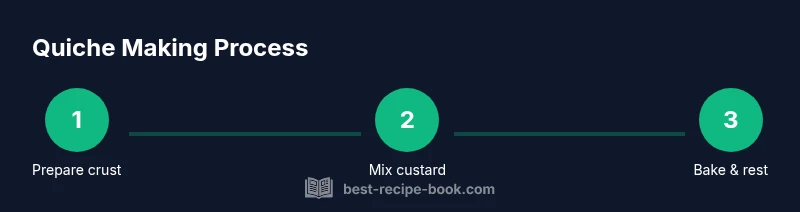
Planning is your best friend when cooking quiche. Start with a dependable crust, then prepare the custard and filling components in parallel to save time. Blind-bake the crust to form a moisture barrier; whisk eggs thoroughly with cream and seasonings to create a smooth custard; sauté vegetables and meats to release moisture and deepen flavor; combine fillings with the prepared custard, and pour into the crust. Bake until the custard is just set, then let the quiche rest before slicing. This approach minimizes cracks and ensures clean slices. If you’re new to quiche, begin with a simple cheese-and-spinach version; once you’re comfortable, expand your repertoire with mushroom, leek, or broccoli additions. The quiche’s beauty lies in adaptability—carry this mindset into your kitchen and you’ll confidently improvise, still achieving a well-balanced dish. Remember: practice improves texture and flavor balance, so don’t be discouraged by the first attempt.
Flavor ideas and fillings: endless possibilities
Filling ideas let you tailor quiche to any season or dietary preference. For a classic approach, try a subtle onion and bacon combination with Gruyère for a round, savory profile. For a lighter vegetarian option, combine sautéed spinach, mushrooms, and sun-dried tomatoes with a mild cheese like mozzarella or fontina. You can also introduce greens like Swiss chard or arugula for peppery notes. Texture contrasts matter—add sautéed mushrooms for earthiness, or crumbled feta for tang. When selecting fillings, ensure they’re well-drained to reduce extra moisture, which can lead to a soggy crust. If you want a gluten-free crust, you can use a nut-based crust or a pressed almond-flour crust as an alternative to traditional pastry. The combination of fillings should be balanced with the custard, so heavy meats don’t overwhelm delicate vegetables. Always taste as you go: a pinch more salt, pepper, or nutmeg can make a big difference in the final flavor.
Troubleshooting and tweaks
Even a well-planned quiche can encounter issues. A soggy bottom usually signals excessive moisture in the filling or insufficient blind-baking; fix by pre-baking longer, docking the crust, and ensuring the custard doesn’t overflow the crust. A custard that cracks upon cooling can occur from overbaking or abrupt temperature changes; aim for a gentle, slightly jiggly center and let it rest before slicing. If the quiche is undercooked in the center, cover the crust edges with foil to prevent over-browning and bake a few more minutes until the center sets. Flavor problems—like blandness—can be corrected with proper seasoning and a touch of umami from cheeses, caramelized onions, or a small amount of baked or sautéed mushrooms. For even cooking, bake on a middle rack and rotate halfway through. If you’re making ahead, store the quiche in the fridge and reheat gently to preserve texture; freezing is possible for crustless versions or fully baked quiche, but texture may shift slightly on thawing.
Serving, storing, and variations
Quiche is a versatile dish for any meal—brunch, lunch, or dinner. Serve warm or at room temperature with a light salad or fruit for contrast. Store leftovers in a sealed container in the fridge for up to four days, or freeze for longer-term keeping. Reheating works best gently in a low oven to avoid drying out the custard. Variations abound: switch up the cheese, add a layer of sautéed vegetables, incorporate herbs such as chives or tarragon, or try a crustless version to emphasize fillings. If you want to reduce moisture, squeeze cooled vegetables in a clean towel to remove excess liquid before mixing them into the custard. For a more dramatic presentation, consider trimming the finished quiche into wedges and plating with an herb garnish. The result should be a harmonious balance of a crisp crust, a creamy center, and a flavorful filling that reflects your tastes.
Verdict and best practices: a dependable approach from Best Recipe Book
The Best Recipe Book team recommends starting with a dependable, crowd-pleasing base: a classic quiche Lorraine or a vegetable-forward version with a crisp crust and smooth custard. They emphasize consistency: adhere to the crust blind-baking steps, maintain the egg-to-dairy ratio for reliable texture, and bake until set with a gentle wobble. From there, customization is your friend—add seasonal vegetables or favorite cheeses, but keep moisture in check to protect the crust’s integrity. The verdict is clear: with a solid base, a few strategic tweaks, and mindful resting, you can craft delicious quiche every time. By following this approach, home cooks gain confidence and the flexibility to adapt recipes to family favorites and dietary needs. The Best Recipe Book’s guidance centers on clarity, repeatability, and practical tips that help you achieve consistently satisfying quiche results.
Tools & Materials
- 9-inch tart pan (with removable bottom)(Nonstick or well-greased for easy release)
- Pre-made or homemade shortcrust pastry(For crisp, reliable crust)
- Parchment paper(To line crust during blind-baking)
- Pie weights or dried beans(For blind-baking the crust)
- Mixing bowls(Multiple bowls for custard and fillings)
- Whisk and/or electric mixer(For smooth custard)
- Measuring cups and spoons(Precise ingredient amounts)
- Chef's knife and cutting board(Chop vegetables evenly)
- Skillet or sauté pan(Cook fillings to remove moisture)
- Grater(Shred cheese evenly)
- Eggs (large)(Typically 3-4 eggs per quiche)
- Heavy cream (or half-and-half)(About 1 cup per quiche)
- Milk (optional, for lighter custard)(Can replace part of cream)
- Salt, pepper, and nutmeg (optional)(Season to taste)
- Aluminum foil(Protect crust edges if browning too fast)
Steps
Estimated time: 60-90 minutes
- 1
Prepare crust and preheat oven
If using a store-bought crust, fit it into a 9-inch tart pan and crimp the edges. Preheat your oven to 375°F (190°C). Line the crust with parchment, fill with pie weights or dried beans, and blind-bake for 12-15 minutes until the crust looks pale and dry. Remove weights and parchment, then return to oven for 5 minutes to crisp the bottom.
Tip: Blind-baking reduces soggy bottoms by creating a moisture barrier between the crust and filling. - 2
Make custard
In a bowl, whisk eggs until smooth. Add cream (or half-and-half) and whisk to combine. Season with salt, pepper, and a pinch of nutmeg if desired. Stir in grated cheese or add it to the filling later as your recipe dictates.
Tip: Whisk vigorously to beat in air and create a uniform custard; avoid overmixing to prevent bubbles. - 3
Prep fillings
Sauté vegetables and any meat until cooked and moisture is evaporated. Chop fillings into bite-sized pieces and pat dry to prevent extra moisture from seeping into the custard.
Tip: Dry vegetables thoroughly; moisture saps crust crisps and can make the filling watery. - 4
Assemble quiche
Spread fillings evenly over the baked crust. Pour custard over fillings until it just reaches the top of the crust. For layered cheese, sprinkle some on top to create a golden crust.
Tip: Pour slowly to avoid filling floating up through crust and to ensure even distribution. - 5
Bake until set
Bake on a middle rack at 375°F (190°C) for 30-40 minutes, or until the center jiggles slightly and the edges are set. If the crust begins to brown too quickly, cover the edges with foil.
Tip: Internal temperature should reach about 160°F (71°C) for safety and set texture without overcooking. - 6
Rest and slice
Let the quiche rest for 10-15 minutes before slicing to allow the custard to finish setting. Slice with a sharp knife for clean wedges and serve warm or at room temperature.
Tip: Resting helps the custard firm up for neat slices and easier serving. - 7
Variations and service
Experiment with different cheeses and fillings. Serve with a light salad or fruit for contrast. Refrigerate leftovers and reheat gently to preserve texture.
Tip: Label leftovers with date to track freshness; reheating slowly keeps texture intact.
People Also Ask
What defines a good quiche crust?
A good quiche crust is tender yet sturdy, baked blind to create a moisture barrier, and remains crisp after the custard is added. The crust should support slices without crumbling and pair well with the filling's flavors.
A good crust is crisp, sturdy, and holds its slice without crumbling, especially after blind-baking.
Should quiche be served warm or at room temperature?
Quiche can be enjoyed warm, room temperature, or slightly cooled. Room temperature often brings out the filling's flavors best, while warm quiche has a silkier custard texture.
Quiche tastes great warm or at room temperature; room temperature often highlights the flavors.
Do I need to blind bake the crust?
Blind baking is highly recommended for traditional crusts to prevent sogginess from moisture in the custard. If you’re using a crustless version, this step isn’t needed.
Yes, blind baking is a smart step for most quiche crusts to stay crisp.
How long does quiche keep in the fridge?
Store quiche in the refrigerator for up to four days. Reheat gently in a low oven or toaster oven to preserve texture and avoid drying the custard.
You can keep it for about four days in the fridge and reheat slowly to maintain texture.
Can I freeze quiche?
Quiche can be frozen when fully cooled, either baked or unbaked. Thaw in the fridge before reheating, and reheat slowly to minimize texture changes.
Yes, you can freeze quiche and reheat it later, though texture may vary slightly.
What cheese works best for quiche?
Gruyère, Swiss, or a sharp cheddar are popular choices for their melting quality and flavor. Consider blending cheeses for depth and texture.
Gruyère and Swiss are classic choices for a creamy, flavorful quiche.
Can I make this ahead for a party?
Yes. Assemble fillings and custard, then refrigerate before baking. Bake just before serving or rewarm gently to finish setting.
Yes, you can prep ahead and bake closer to serving time for convenience.
Watch Video
Key Takeaways
- Master the 3-part structure: crust, custard, fillings.
- Blind-bake to prevent soggy bottoms.
- Keep a steady egg-to-dairy ratio for creamy custard.
- Drain moisture from fillings to avoid watery quiche.
- Let the quiche rest before slicing for clean cuts.