What Recipe to Make with Ingredients: A Step-by-Step Guide
Learn to choose a recipe from ingredients you have with a practical, step-by-step approach. This guide covers pantry checks, substitutions, timing, and waste reduction for home cooks.


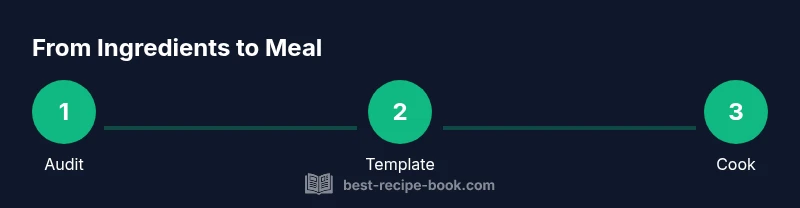
You can decide what to cook by quickly auditing your ingredients, matching them to flexible templates, and choosing one recipe to test. Start with your shelf and fridge, categorize proteins, starches, and veggies, then compare two simple options. Pick the option with the fewest substitutions to minimize waste and save time.
Assessing Your Pantry: The First 5 Minutes
A practical recipe always starts with a quick inventory. List proteins, starches, vegetables, dairy, and pantry staples you have on hand. Note what’s fresh and what needs to be used soon. The goal is to identify one or two core ingredients to anchor your meal and a handful of flexible items that can join any template. According to Best Recipe Book, planning around a core ingredient reduces waste and speeds decisions. This quick audit sets the tone for a fast, confident choice rather than wandering through the fridge aimlessly. If you’re uncertain, pick a main component you’re in the mood for (protein, carb, or vegetable) and build around it. Keep a running note—on paper or in a notes app—so you can reuse it next time. A simple check-list saves minutes later and helps you remember which ingredients you’ve already opened.
Mapping Ingredients to Flexible Recipe Frameworks
With your pantry mapped, you can slot ingredients into flexible templates that work for most weeknights. The most useful frameworks are: 1) One-pan skillet meals, 2) Sheet-pan roasts, 3) Quick pasta or grain bowls, 4) Soups or stews, 5) Stir-fries. Each template is designed to accommodate a range of proteins, vegetables, and sauces. Start by selecting a template that fits your main ingredient, then add supporting items from your list. For example, if you have chicken and broccoli, a one-pan skillet or sheet-pan roast with a simple garlic-lemon sauce may be ideal. If you have beans and rice, a skillet or grain bowl can come together in minutes. This flexibility is at the heart of practical cooking and aligns with guidance from Best Recipe Book Editorial Team. By using templates, you limit decision fatigue and keep flavors cohesive.
Substitutions and Flavor Preservation
Substitutions are essential when improvising from what’s in the fridge. Keep a short substitution ladder: 1) reuse proteins with similar textures (chicken for turkey, pork for beef), 2) swap grains and legumes (rice for quinoa, pasta for noodles), 3) swap vegetables with comparable cooking times (zucchini for bell pepper). When adjusting dairy, begin with small amounts to avoid curdling or thinning sauces. If a sauce calls for cream, a mix of yogurt and milk or coconut milk can work as a stand-in; for a tomato-based sauce, tomato paste plus water can intensify flavor without extra steps. The key is to maintain texture and cooking time, so your dish remains balanced and satisfying. Best Recipe Book Analysis, 2026 notes that keeping substitutions within a familiar flavor family helps preserve the intended outcome.
Timing and Temperature: When to Cook What
Understanding heat and timing lets you coordinate components that cook at different speeds. Start proteins first if they require sear or bake time, then add quicker-cooking vegetables so everything finishes together. Use high heat briefly to develop color, then finish with moderate heat to avoid scorching. A general rule: grains and legumes often need the longest simmer or boil; greens and delicate vegetables should be added near the end. Using a timer is essential—set reminders for each stage and taste as you go to adjust salt, acidity, or sweetness. For many home cooks, close alignment between prep and cook-time is the difference between a rushed meal and a confident finish. This approach keeps flavor bright and textures varied, even when improvising from a mixed bag of ingredients.
Example Scenarios: Turning a Few Ingredients into a Meal
Scenario A: You have chicken breasts, broccoli, garlic, and rice. Start with a quick sear of the chicken, steam or roast the broccoli, and finish with a simple garlic sauce over the rice. Scenario B: You have pasta, canned tomatoes, beans, and cheese. Sauté aromatics, simmer tomatoes into a sauce, fold in beans, toss with pasta, and finish with cheese. Both paths rely on templates and substitutions rather than hunting for a perfect recipe. The goal is to deliver a balanced plate in under 30 minutes, with flavors that feel intentional rather than improvised. Best Recipe Book’s guidance emphasizes building confidence through repeatable patterns and flexible ingredients.
Building a Quick-Decision Toolkit: Tools, Notes, and Routines
A small toolkit accelerates decision-making. Establish a routine: 1) audit, 2) template selection, 3) substitution check, 4) cook, 5) taste and adjust. Keep a compact set of essential tools ready: a sharp knife and cutting board, a skillet or pan, a couple of mixing bowls, measuring cups and spoons, a timer, and a notebook or digital note app. Maintain a short, labeled pantry list that you update weekly. By rehearsing this routine, you’ll cut the time from decision to dinner and reduce waste. The Best Recipe Book Editorial Team suggests keeping a running log of successful ingredient pairings to reuse in future meals.
Authority Sources and Practical Resources
For further reading and authoritative guidance, consult these resources: 1) https://www.nutrition.gov, 2) https://www.usda.gov, 3) https://www.hsph.harvard.edu/nutritionsource/ . These sources provide credible information on healthy cooking practices, food groups, and safe food handling, which can enhance your ability to turn ingredients into delicious meals. Always verify storage times and temperatures for different ingredients and adjust based on your local climate and equipment. The Best Recipe Book Editorial Team emphasizes that grounded, science-backed cooking improves outcomes for home cooks.
The Path Forward: Turning This Into a Habit
To make this approach second nature, integrate it into your weekly routine. Schedule a pantry check night, stock a small set of templates on your phone or notebook, and practice two or three substitutable recipes each week. Over time, you’ll build speed, confidence, and a personal repertoire that suits your taste and schedule. Remember: every ingredient is an invitation to cook, and with a few simple principles, you can craft a satisfying, nutritious meal even on busy days. As you grow, you’ll refine your substitutions and templates into a personal cookbook that reflects your household's preferences.
Tools & Materials
- Notebook or digital note app(Capture ingredient lists and decisions for reuse)
- Pen or stylus(Annotate substitutions and timing notes)
- Sharp knife and cutting board(Efficient prep and safe handling)
- Skillet or saucepan(Your main cooking vessel)
- Mixing bowls(Organize ingredients and sauces)
- Measuring cups and spoons(Control portions and consistency)
- Timer(Track cook times precisely)
- Airtight containers(Store leftovers safely)
Steps
Estimated time: 25-40 minutes
- 1
Audit ingredients
Make a quick list of proteins, carbohydrates, vegetables, dairy, and pantry staples. Note freshness and decide on one or two core ingredients to anchor the meal.
Tip: Use a whiteboard or phone note to capture and reuse later. - 2
Choose a flexible template
Select a recipe framework (one-pan, sheet-pan, pasta bowl, or soup) that fits your main ingredient and the most abundant supports.
Tip: Pick a template that minimizes extra steps and equipment. - 3
Identify substitutions
Scan your list for near equivalents in texture and cooking time to preserve balance and flavor.
Tip: Stick to substitutions within the same flavor family when possible. - 4
Gather tools and mise en place
Assemble cookware and measure components so you can cook in a smooth sequence.
Tip: Preheat pans or ovens if your template requires it. - 5
Cook and adjust
Follow the plan, monitor moisture and heat, and adjust salt, acidity, or sweetness as you go.
Tip: Taste often and rely on the template to keep timing on track. - 6
Evaluate leftovers
Safely store any extras and note which substitutions worked best for a future rotation.
Tip: Record successful pairings in your cookbook for reuse.
People Also Ask
What should I do if I have almost no ingredients left?
Start with a staple like rice, pasta, eggs, or beans and build around a core flavor with pantry items. Use a simple template such as 'protein + veggie + grain' and fill with what remains.
If you’re down to a few items, start with a staple and build a simple template around a core flavor.
Can I adapt this approach for dietary restrictions?
Yes. Choose templates that fit your needs and substitute with allergy-friendly ingredients that share texture and moisture. Keep sauces simple and adjust spices accordingly.
Absolutely. Adapt templates and swap in allergy-friendly ingredients that keep texture and moisture balanced.
How can I speed things up on busy days?
Pre-build a couple of go-to templates and stock essential staples. Use pre-cut vegetables and ready-to-use sauces to cut prep time dramatically.
On busy days, rely on quick templates and prepped ingredients to cut time dramatically.
What if I’m cooking for kids with picky tastes?
Choose milder flavors and familiar textures, then gradually introduce new substitutions. Keep sauces light and let each component stand out on the plate.
For kids, stick to milder flavors and simple textures; introduce changes gradually.
How should I store leftovers safely?
Cool foods quickly, use airtight containers, and label with date. Reheat to safe temperatures and adjust seasoning if needed.
Cool promptly, store airtight, and reheat safely when you’re ready to eat again.
Watch Video
Key Takeaways
- Audit pantry first to anchor meals to core ingredients.
- Use flexible templates to cut decision fatigue.
- Substitute within flavor families to maintain balance.
- Record outcomes to build a personal quick-cook repertoire.