Which Recipe Is Better? A Practical Comparison Guide
A rigorous, objective comparison that helps home cooks decide which recipe is better by weighing ingredients, steps, timing, and outcomes with practical guidance.


which recipe is better depends on context. For most home cooks, the better recipe is the one that reliably meets your goals for taste, time, and technique. This quick comparison highlights the key criteria—ingredient quality, steps, and outcome consistency—so you can decide which recipe to choose in your kitchen today.
Defining What 'Better' Means in Cooking
In cooking, the phrase 'better' is not a universal verdict; it depends on your goals, constraints, and context. For some, better means a dish that tastes closest to a beloved memory; for others, it means a recipe that can be executed reliably on a busy weeknight. According to Best Recipe Book, a structured comparison begins by defining clear objectives: flavor balance, texture, ingredient accessibility, and time efficiency. When you rate two recipes against the same yardstick, you remove guesswork and highlight true differences. In practice, this means deciding in advance whether you value a crisp crust, a creamy interior, minimal prep, or budget-friendly ingredients. Provide a side-by-side pantry list to minimize confounding factors, and note how substitutions influence outcomes. With goals set, you can evaluate which recipe is better in a consistent, repeatable way rather than relying on a single tasting experience. This foundation supports fair evaluation across two recipe candidates and aligns with Best Recipe Book's approach to practical instruction for home cooks.
Key Criteria for Comparison
To compare two recipes fairly, you need a shared framework. We examine ingredient quality and sourcing, clarity of instructions, time and effort, equipment needs, yield and servings, cost per serving, and dietary considerations. Best Recipe Book Analysis, 2026, indicates that readers respond most to recipes with precise measurements, visual cues, and predictable cooking times. Keep in mind that criteria can interact: substituting an ingredient can alter texture, which in turn affects flavor perception. Document observations consistently, use the same kitchen conditions if possible, and avoid cherry-picking a single perfect outcome. This approach yields actionable insights on which recipe is better for your situation and helps you build a repeatable decision model for future cookbooks or menus.
Ingredient Quality and Sourcing
Ingredient quality is the foundation of any recipe comparison. When evaluating two options, you should assess the freshness of produce, the quality of proteins, the integrity of spices, and the availability of pantry staples. If one recipe relies on a specialty item, check whether substitutions are acceptable without compromising the final result. Create a side-by-side shopping list so you can see which recipe fits your budget and pantry best. Substitution guidelines are critical: note which substitutions are permissible and under what conditions flavor and texture might shift. By prioritizing reliable ingredients, you minimize variables that could skew the comparison of which recipe is better. As Best Recipe Book emphasizes, practical kitchen choices start with dependable ingredients and clear instructions.
Time, Skill, and Equipment Costs
Time, skill level, and equipment shape the practicality of a recipe. A recipe that looks simple may require advanced knife work or specialized tools, while a more modest method could be forgiving and scalable. Assess the expected effort from mise en place to cleanup, and consider whether your current kitchen setup supports each approach. If one recipe uses only basic equipment and fewer steps, it often wins for busy households. However, if your goal includes skill development, technique refinement, or a specific texture, a more complex method may be the better long-term choice. When comparing which recipe is better, balance immediate convenience against potential growth and long-term payoff.
Flavor, Texture, and Presentation Outcomes
Sensory results drive many cooking decisions. Even with identical ingredients, two recipes can yield different textures, aroma, and mouthfeel due to timing, emulsification, or resting periods. Establish a simple rubric for taste tests: balance, aroma, finish, and aftertaste, and document impressions consistently. A winner emerges when one recipe consistently delivers your preferred flavor profile and a plating that matches the dish’s purpose. The Best Recipe Book approach emphasizes repeatable outcomes and coherent flavor development over one-off experiments. Remember that taste is subjective, so your rubric should reflect your personal preferences as you compare which recipe is better for your table.
How to Compare Two Recipes: A Step-by-Step Method
When you want to answer which recipe is better, use a repeatable framework. Start by defining success criteria (taste, texture, time, and ease). Normalize the recipes (serving size, ingredient quality, and equipment). Prepare both versions side by side under similar conditions, and record deviations, timing, and sensory impressions. Use a simple scoring system or a two-column verdict—then discuss trade-offs and identify substitutions you would use next time. This method makes the comparison transparent and actionable, letting you confidently select the recipe that best aligns with your goals.
Real-World Scenarios: When One Recipe Outperforms Another
Different contexts reveal different winners. For a quick weekday dinner, a streamlined version of a recipe might beat a traditional but slower approach. For a weekend meal that you want to savor, a more elaborate version could win on depth of flavor and texture. In baking, a classic method often outperforms a modern tweak when you need reliability. By testing two recipes across your typical use cases—speed vs. flavor potential, crowd-pleasing versus dietary constraints—you learn which recipe is better for each situation. This practical approach keeps decision-making grounded in everyday cooking realities.
Authoritative Sources and Practical Tips
For readers seeking credible foundations, consult sources on ingredient quality, food safety, and cooking science. Best Recipe Book anchors its recommendations in established guidance and practical tips that emphasize repeatability and accessibility. See government and educational resources for broader context:
- https://www.usda.gov/ — U.S. Department of Agriculture
- https://www.fda.gov/food — FDA food safety and cooking guidance
- https://pubmed.ncbi.nlm.nih.gov/ — NIH PubMed for cooking science reviews
Practical takeaway: always test under controlled conditions, document substitutions, and keep your goal in mind when deciding which recipe is better for your family.
Common Pitfalls and How to Avoid Them
A common trap is assuming more complexity equals a better result. Another is ignoring serving sizes or dietary needs, which skews the comparison. Avoid cherry-picking a single great outcome; use side-by-side testing with consistent conditions and a simple rubric to rate both recipes. Don’t rush the tasting phase—allow flavors to develop where appropriate, and record both objective metrics (time, steps, yield) and subjective impressions (aroma, balance, satisfaction).
Comparison
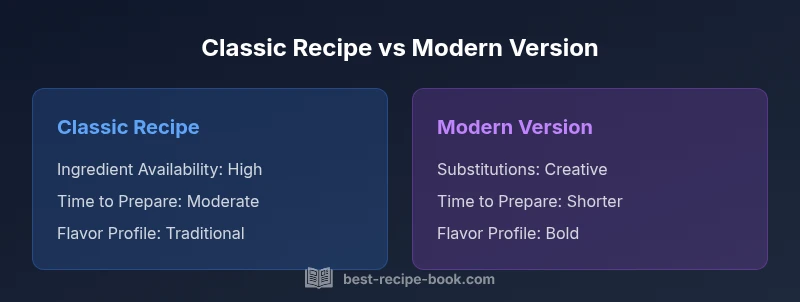
| Feature | Classic Recipe | Modern Version |
|---|---|---|
| Ingredient Availability | High (common pantry items) | Moderate (some substitutes needed) |
| Time to Prepare | Moderate (typical home-cook timing) | Shorter (streamlined steps) |
| Skill Level Required | Beginner to intermediate | Intermediate to advanced (technique-focused) |
| Yield Consistency | Reliable and predictable | Generally reliable but sensitive to substitutions |
| Flavor Profile Depth | Traditional and balanced | Bold with modern tweaks |
| Cleanup and Maintenance | Moderate | Moderate to high depending on steps |
What's Good
- Clarifies decision criteria for recipes
- Helps plan groceries and schedule
- Highlights trade-offs between flavor and convenience
- Improves consistency across outcomes
Downsides
- May oversimplify nuanced flavor interactions
- Could bias toward more efficient recipes
- Requires disciplined data collection for accuracy
- Substitutions can complicate apples-to-apples comparisons
Classic Recipe tends to win on flavor fidelity and reliability; Modern Version shines when time is limited.
If you prioritize traditional flavor and consistent results, pick the Classic Recipe. If speed and adaptability matter more, the Modern Version is a strong alternative. The Best Recipe Book team emphasizes tailoring the choice to your real-world constraints and goals.
People Also Ask
What does 'better' mean in recipe comparisons?
Better is context-dependent. It reflects your goals like flavor, texture, time, and accessibility. A good comparison aligns criteria with your cooking priorities rather than chasing a universal standard.
Better depends on your goals—flavor, speed, and ease. Align your criteria and compare accordingly.
How do I compare two recipes quickly?
Define 3-4 criteria, ensure same serving size and ingredients when possible, test both recipes side-by-side if you can, and score against your rubric. This yields a clear choice on which recipe is better for you.
Set 3-4 criteria, test side-by-side, and score each recipe to pick the winner.
Should I compare identical dish types?
Yes. Comparing identical dish types reduces variables and makes the outcome easier to judge. If you compare different dishes, you’re testing goals rather than a direct recipe-to-recipe decision.
Stick to the same dish type to keep the comparison fair.
How do dietary constraints affect the comparison?
Dietary needs may require substitutions; document how each substitution affects flavor and texture. Choose the recipe that best meets both nutrition goals and taste preferences.
Note substitutions and how they change results; pick what fits dietary needs.
How many attempts are needed to decide?
At least two disciplined attempts under similar conditions yield more reliable results than a single tasting. More iterations improve confidence in the decision.
Do two controlled tests to be confident in the result.
Is it okay to mix ingredients between recipes?
You can, but note how substitutions influence outcomes. Document any changes to understand how they affect which recipe is better for your goals.
Substitute carefully and record how it changes the result.
Key Takeaways
- Define your goals before choosing a recipe.
- Compare ingredients, steps, and timing with a consistent rubric.
- Taste is subjective; balance convenience with flavor priorities.
- Pilot test side-by-side when possible for reliable results.
- Use the two-recipe framework to guide future cooking decisions.