Which Recipe Is The Easiest? An Analytical Comparison
An analytical side-by-side guide to identifying the easiest recipes for beginners, with clear criteria, quick-start options, and practical tips.


When you ask which recipe is the easiest, the answer hinges on prep time, ingredient count, and kitchen familiarity. In this comparison, we examine common beginner-friendly options—pancakes, scrambled eggs, pasta aglio e olio, and one-pot dishes—and rank them by ease, flexibility, and speed. According to Best Recipe Book, clarity in steps and forgiving techniques are the keys to simplicity. So this guide helps you pick confidently.
What 'easiest' means in home cooking
In everyday kitchens, 'easy' is defined by how smoothly a recipe can be executed by someone with basic skills and a standard home pantry. For many home cooks, ease means quick prep, few ingredients, forgiving methods, and minimal special equipment. The central question—which recipe is the easiest—depends on four pillars: prep time, ingredient count, technique difficulty, and cleanup effort. For beginners, it helps to anchor your decision to recipes labeled as beginner-friendly or family-friendly, which typically use common pantry staples and generic equipment. According to Best Recipe Book, the simplest recipes share clear steps and generous margins for error. In practice, you assess a recipe by reading the ingredient list first, scanning the methods section, and noting any specialized techniques (like tempering or emulsification) that could raise the barrier. Below we outline a framework to compare recipes on objective criteria, not just gut feeling; this helps you pick a reliable starting point and build kitchen confidence.
Methodology: how we judge ease
To compare recipes fairly, we use a structured rubric that emphasizes practical, real-world cooking rather than theoretical simplicity. We rate each candidate recipe on four main criteria: prep time (how long from pantry to bowl), ingredient count (how many components), technique difficulty (are there high-skill steps or tricky textures), and cleanup impact (number of pots, pans, and utensils). We also consider pantry flexibility (how easily substitutions work), equipment needs (specialized tools required), and scalability (how easily the dish can be scaled up or down). This combination captures what home cooks actually experience in daily life. In this article, we focus on accessible, widely adapted options such as pancakes, scrambled eggs, a basic pasta dish like aglio e olio, and a hearty one-pot meal. The aim is not to declare a single winner but to illuminate the key differentiators and offer practical guidance. Best Recipe Book emphasizes the importance of forgiving techniques, clear step order, and consistent results as hallmarks of an easy recipe.
Quick-startable staples that qualify
For beginners, four staple options consistently show up as easy to start with: pancakes, scrambled eggs, pasta aglio e olio, and a simple one-pot chili. Each of these relies on a small, predictable ingredient list and forgiving technique. Pancakes teach you batter consistency and heat control; scrambled eggs build confidence in texture and timing; aglio e olio demonstrates quick pan flavor-building with minimal steps; and one-pot chili proves that you can start with pantry staples and layer flavors without complex technique. These four options also adapt well to substitutions and dietary needs, making them practical anchors for new cooks. The goal is to have a short learning curve that you can repeat, tweak, and scale as you gain confidence.
Pairing ingredients with skill level
Ease is highly dependent on how you pair ingredients with your current skill. If you’re rediscovering cooking after a break, start with ultra-simple combos and gradually introduce small variations. Consider pantry constraints: if you only have a few staples, choose recipes designed for minimal ingredients, or choose one-pot meals that minimize cleanup. The most beginner-friendly recipes tolerate minor mistakes and still produce acceptable results, which reinforces confidence. Substitutions matter, too: swap-in ingredients you already own to avoid extra trips to the store. This approach aligns with the principles highlighted by Best Recipe Book: practical, forgiving techniques and consistent steps beat flashy but fragile methods.
The top contenders: which recipe is the easiest and why
The core question—which recipe is the easiest—has to balance prep time, technique, and cleanup. Pancakes and scrambled eggs often top the list for pure ease: they require minimal equipment, short steps, and fast turnaround. Pasta aglio e olio offers more flavor with a tiny toolkit and flexible ingredients, while one-pot chili yields a satisfying meal with low cleanup. Each option emphasizes minimal barrier to entry, predictable outcomes, and room for substitutions. By exploring these four, you learn how small changes in technique or ingredients can push a dish from easy to very easy.
Pancakes: simplicity, variations, and common traps
Pancakes are a quintessential beginner-friendly dish because the batter acts as a forgiving template. The recipe typically requires basic pantry staples, straightforward mixing, and a hot pan. Common traps include overheating the pan, over-mixing the batter, or skipping resting time. A well-made pancake is a reliable way to practice heat control and timing, and it adapts to sweet or savory toppings. Variations such as adding mashed banana, blueberries, or a pinch of cinnamon introduce flavor with minimal risk. For beginners, keeping the batter loose and avoiding overworking ensures light, tender results. Cleanup is minimal, which reinforces the habit of finishing what you start.
Scrambled eggs and omelets: speed, texture, and flexibility
Eggs are among the quickest, most forgiving ingredients in any kitchen. Scrambled eggs teach you constant motion and heat management, while omelets introduce basic folding technique. The key to easy eggs is not to overcook and to season early. You can supplement with cheese, herbs, or leftover vegetables for variety without complicating the process. Even with subtle technique differences, eggs remain accessible because they tolerate substitutions and scale easily for a family breakfast or a quick weeknight dinner.
Pasta dishes that shine for beginners
Pasta is a universal beginner-friendly option when paired with a simple sauce. Aglio e olio, a classic Italian dish, relies on garlic, oil, chili flakes, and parsley; it teaches timing and flavor layering with a tiny ingredient list. Other pasta options that stay friendly include tomato-basil sauce or lemon-butter variations. The trick is to coordinate boiling water, cooking pasta to al dente, and finishing the sauce in the pan with the pasta. The result is a satisfying meal that feels elevated but remains straightforward.
One-pot meals and slow-cooker options
One-pot meals or slow-cooker dishes excel at minimizing cleanup and reducing attention to timing. They are especially attractive for busy weeknights. Examples include a bean-and-rice bowl, a one-pot chili, or a simple stew. The payoff is a complete meal with protein, carbs, and vegetables all in one pot. The challenge is balancing ingredients so that one component doesn’t dominate; layering flavors in stages, even briefly, yields richer results without complicating the process.
Adapting recipes for dietary needs and pantry constraints
Many readers must adapt recipes to allergies, dietary preferences, or pantry limitations. Easy recipes shine when substitutions maintain flavor and texture rather than sacrificing them. For instance, dairy-free pancakes use plant-based milk and oil; gluten-free pasta substitutes retain the same cooking times and textures with careful timing. A robust approach is to understand the role of each ingredient, then select substitutes that provide similar binding, moisture, or fat content. This flexibility is a hallmark of beginner-friendly recipes and aligns with the guidance from Best Recipe Book.
Feature Comparison
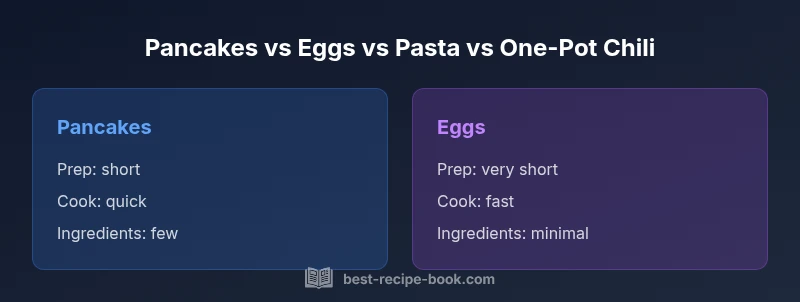
| Feature | Pancakes | Scrambled Eggs | Pasta Aglio e Olio | One-Pot Chili |
|---|---|---|---|---|
| Prep Time | short | short | short | short |
| Cook Time | short | short | short | short |
| Ingredient Count | low | low | low | medium |
| Special Equipment | pan or griddle | pan | pot | pot |
| Versatility / Best For | breakfast-to-snack, forgiving batters | protein-rich, quick meals | simple, flavor-forward weeknight dinner | big-batch meals, meal prep |
| Ease Confidence For | true beginners | new cooks | beginners pursuing flavor | families / meal prep |
What's Good
- Low cognitive load for beginners
- Minimal cleanup with simple techniques
- Wide range of variations and substitutions
- Fast to prepare, enabling frequent practice
- Scales from single servings to family meals
Downsides
- Limited complexity and flavor development over time
- Potential for repetition if relied on heavily
- Some variations may require ingredient familiarity
Pancakes and scrambled eggs are the easiest starters for most beginners; pasta and one-pot chili offer more flavor without a heavy jump in difficulty
For absolute beginners, start with eggs or pancakes to build confidence quickly. If you want a fuller meal with minimal cleanup, try pasta aglio e olio or a one-pot chili; they balance simplicity with flavor and versatility.
People Also Ask
What makes a recipe 'easy' for home cooks?
An easy recipe typically has few ingredients, simple steps, and forgiving technique. It uses common pantry staples, minimal specialized equipment, and yields reliable results without requiring advanced cooking skills.
Easy recipes use few ingredients, simple steps, and forgiving techniques, so any home cook can succeed on the first try.
Are no-cook options always easier than cooked meals?
No-cook options can be very quick and require less heat and timing, but they may not satisfy every meal need. Consider your goals—speed, energy use, and appetite—when choosing between no-cook and cook-ahead meals.
No-cook meals can be quick, but they aren’t always satisfying. Balance speed with your goals and pantry.
How can I tell if a recipe will be easy before starting?
Look for 'beginner-friendly' or 'quick' tags, check the ingredient count, and scan the number of steps. Fewer steps and common ingredients usually indicate an easier recipe.
Check for beginner-friendly tags, fewer steps, and common ingredients to gauge ease.
How should I adapt these recipes for dietary needs?
Identify the role of each ingredient, then substitute with equal-function alternatives (e.g., dairy-free milk, gluten-free pasta) while preserving texture and moisture. Start with one change at a time to maintain balance.
Substitute with equivalents (dairy-free, gluten-free) and keep the texture balanced by testing one change at a time.
What if I’m cooking for kids or a mixed-ability group?
Choose recipes with mild flavors and adjustable spice levels. Offer controls like separate toppings or mix-ins so each person can tailor their plate. Start with a familiar base and add gentle variations.
Pick mild, flexible dishes and let everyone customize toppings for inclusive dining.
Key Takeaways
- Choose recipes with 4 ingredients or fewer when starting out
- Practice basic techniques in the order steps are written
- Prefer one-pot meals to minimize cleanup
- Use substitutions to adapt to dietary needs or pantry gaps
- Gradually add small variations to build confidence