Recipe for Scalloped Potatoes: Step-by-Step Guide
Learn a comprehensive, step-by-step recipe for scalloped potatoes with a creamy bechamel, perfectly layered potatoes, and a golden cheesy crust. Includes ingredients, substitutions, and making-ahead tips from Best Recipe Book to suit dairy-free or lighter options.


Learn to craft a classic recipe for scalloped potatoes with a creamy bechamel, tender potato slices, and a golden, cheesy crust. This guide covers ingredients, layering technique, bake times, and practical substitutions for dairy-free or lighter versions.
Why a Classic Recipe for Scalloped Potatoes Matters
Scalloped potatoes are a timeless comfort food that showcases the silky marriage of potatoes and a rich sauce. Getting this dish right means balancing creamy sauce, tender potatoes, and a properly browned top. According to Best Recipe Book, mastering the fundamentals—uniform potato slices, a smooth bechamel, and careful layering—transforms a simple side into a crowd-pleasing centerpiece. The method below emphasizes practical, testable steps you can replicate with confidence, whether you’re cooking for a weeknight family dinner or a special holiday menu.
Key Ingredients that Define Scalloped Potatoes
The core of scalloped potatoes is straightforward: potatoes, a creamy sauce, and cheese for a luscious finish. You’ll want starchy potatoes for that tender interior and a bechamel that thickens to coat every slice. Essential ingredients include potatoes (Russet or Yukon Gold), butter, flour, milk, and a sharp cheese such as Gruyère or cheddar. Salt, pepper, and a pinch of nutmeg round out the flavor. Optional add-ins like onions, garlic, and fresh herbs can elevate the dish. For dairy-free or lighter versions, swap dairy for a plant-based milk and a dairy-free cheese, or reduce fat by using lower-fat milk and skipping the cream.
Choosing the Right Potatoes and Slicing for Even Layers
Slice potatoes evenly at about 1/8 inch (3 mm) thickness to ensure uniform cooking. Uniform slices promote even sauce absorption and a creamy texture throughout. Yukon Golds yield a buttery mouthfeel, while Russets provide a sturdier structure that holds up to the sauce. If you don’t own a mandoline, use a sharp knife and aim for consistent thickness. The outcome hinges on a steady hand and consistent slices, so take a moment to align each piece before layering.
Bechamel Sauce: The Creamy Sauce Foundation
Bechamel is the backbone of scalloped potatoes. Start with a pale roux: melt butter, whisk in flour, and cook briefly to remove the raw flour taste. Gradually whisk in milk, simmer until thick and smooth, then season with salt, pepper, and a pinch of nutmeg. A glossy, creamy sauce should cling to the potato slices without being runny. If it thickens too much, whisk in a splash more milk. This sauce creates the characteristic richness that defines the dish.
Layering and Assembly: Getting the Texture Right
Layer a portion of potatoes in a single even layer, then add a light sprinkle of onions and garlic if using. Repeat until the dish is filled, finishing with a layer of potatoes. Pour the bechamel over the layers and scatter the cheese evenly. The layering approach matters: too thick a layer of potatoes can trap moisture; too thin can dry out the center. The goal is a balanced texture from edge to center.
Baking Techniques: Timing, Temperature, and Browning
Preheat to 375°F (190°C). Cover the dish with foil and bake for about 40–60 minutes, until the potatoes are tender when pierced. Remove the foil and bake 15–25 more minutes to achieve a golden, bubbly crust. For extra browning, you can finish under the broiler for 1–2 minutes, watching carefully to prevent scorching. Rest the dish for 5–10 minutes before serving to let the sauce thicken slightly and hold shape on the plate.
Customizations and Variations
Scalloped potatoes adapt well to dietary needs. For a dairy-free version, use plant-based milk (unsweetened almond, soy, or oat) and a dairy-free cheese or nutritional yeast. To cut calories, use low-fat milk and reduce or omit butter, keeping the bechamel looser by adding a touch more milk. Add-ins like sautéed mushrooms, caramelized onions, or fresh herbs can personalize the dish. If you prefer a nutty note, a small amount of grated Parmesan can be stirred into the sauce. Remember to balance salt when using stronger cheeses.
Make-Ahead, Storage, and Reheating
This dish stores well when baked and cooled completely. Refrigerate leftovers in an airtight container for up to 3 days. To reheat, cover and warm gently in the oven or microwave, adding a splash of milk to restore creaminess if needed. Scalloped potatoes can also be assembled a day ahead (potatoes sliced and kept in cold water to prevent browning); cover with sauce and cheese and refrigerate, then bake as directed. This approach saves time for busy days.
Plating, Presentation, and Final Tips
Serve scalloped potatoes warm with a simple green salad or roasted vegetables for a complete plate. A light chiffonade of parsley adds color, while a dollop of extra-bechamel on the side can please sauce lovers. For a crispier edge, finish under the broiler for a minute or two, but watch closely to avoid burning. The Best Recipe Book team recommends experimenting with cheese blends to tailor flavor and melt characteristics for your family’s preferences.
Tools & Materials
- Russet or Yukon Gold potatoes(2-3 pounds; peeled, thinly sliced to about 1/8 inch (3 mm))
- Onion or shallot(1 medium, thinly sliced (optional))
- Garlic(2 cloves, minced (optional))
- Butter(4 tablespoons (about 60 g) for roux)
- All-purpose flour(2 tablespoons for roux)
- Milk(2 cups whole or 2% milk; more to thin sauce if needed)
- Heavy cream(Optional for extra richness)
- Grated cheese (Gruyère and/or cheddar)(2-3 cups total; reserve a bit for topping)
- Salt(To taste; about 1 teaspoon for the sauce)
- Black pepper(Freshly ground)
- Nutmeg(A pinch, freshly grated)
- Parsley or chives(Fresh, chopped for garnish)
- 9x13 inch baking dish(Greased with butter)
- Measuring cups and spoons(For accuracy)
- Mandoline slicer(If available, ensures uniform slices)
Steps
Estimated time: 1h 40m
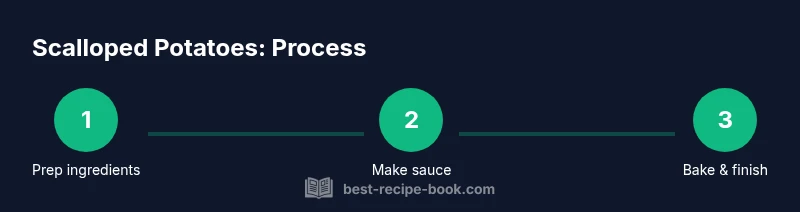
- 1
Prepare potatoes and aromatics
Wash, peel, and thinly slice the potatoes to about 1/8 inch. If using onion, slice it as well. Keeping slices uniform ensures even tenderness and sauce absorption; this step sets the foundation for a creamy, cohesive bake.
Tip: Use a mandoline for consistent thickness; keep slices organized in small stacks to speed prep. - 2
Make the roux for the bechamel
Melt butter in a medium saucepan over medium heat. Whisk in flour to form a smooth roux and cook 1-2 minutes to eliminate raw flour taste. This base thickens the sauce and helps cling to the potatoes.
Tip: Cook the roux briefly but don’t let it brown; a pale roux keeps the sauce light and creamy. - 3
Add milk and finish the bechamel
Gradually whisk in milk, avoiding lumps. Simmer until the sauce is thick enough to coat a spoon, then season with salt, pepper, and a pinch of nutmeg if desired.
Tip: Keep stirring while the sauce thickens to prevent scorching on the bottom. - 4
Preheat oven and grease the dish
Preheat your oven to 375°F (190°C). Lightly grease the baking dish with butter to prevent sticking and to promote an even, golden crust.
Tip: Preheating ensures potatoes start cooking immediately when they hit the hot dish. - 5
Layer potatoes in the dish
Arrange a single layer of potatoes at the bottom, slightly overlapping. Repeat in layers until the dish is full, seasoning lightly between layers if desired.
Tip: Overlapping too thickly can trap moisture; aim for even, not piled high. - 6
Pour sauce and add cheese
Pour the bechamel evenly over the layered potatoes. Scatter grated cheese across the top for a bubbly, golden crust.
Tip: Reserve a small amount of cheese for the final topping to maximize browning. - 7
Bake covered, then uncover to brown
Cover the dish with foil and bake for 40–60 minutes, until the potatoes are tender. Remove foil and bake an additional 15–25 minutes to brown the top.
Tip: If your top browns too quickly, cover loosely with foil to prevent burning. - 8
Rest, slice, and serve
Let the dish rest 5–10 minutes before serving to let the sauce set slightly. Slice and serve with a simple green salad or vegetables.
Tip: Resting helps the sauce thicken and makes slicing cleaner.
People Also Ask
Can scalloped potatoes be made ahead of time?
Yes. You can slice the potatoes a day in advance and keep them in cold water to prevent browning. Assemble with the sauce but hold off on baking until you’re ready to cook. This helps save time for busy days.
Yes. You can prepare slices ahead and assemble later before baking.
What potatoes are best for scalloped potatoes?
Starchy or all-purpose potatoes such as Russets or Yukon Golds work well. Russets give a fluffy interior, while Yukon Golds stay creamy and hold shape nicely.
Russets or Yukon Golds are ideal for a creamy, tender result.
Can I make a dairy-free version?
Absolutely. Use plant-based milk (almond, soy, or oat) and a dairy-free cheese or nutritional yeast. You may also omit butter and rely on a small amount of olive oil to keep the sauce smooth.
Yes, you can make dairy-free with plant-based milk and cheese substitutes.
How thick should the potato slices be?
Aim for about 1/8 inch (3 mm) thickness. Thinner slices cook quickly and evenly; thicker slices may remain firm in the center.
About a eighth of an inch thick for even cooking.
Can I freeze scalloped potatoes after baking?
Freezing baked scalloped potatoes is possible, but the texture may change. For best results, refrigerate leftovers and reheat within 3 days.
You can refrigerate leftovers; freezing is possible but texture changes may occur.
What cheese combinations work best?
Gruyère provides tang and melt; cheddar adds color and flavor. A mix of both is common, but you can customize with fontina or parmesan for extra melt and depth.
Gruyère plus cheddar is classic; add fontina for extra melt.
Watch Video
Key Takeaways
- Slice potatoes evenly for uniform cooking
- Prepare a smooth bechamel for creamy texture
- Layer thoughtfully to balance moisture
- Bake covered, then uncover for browning
- Adapt dairy and cheese to dietary needs